

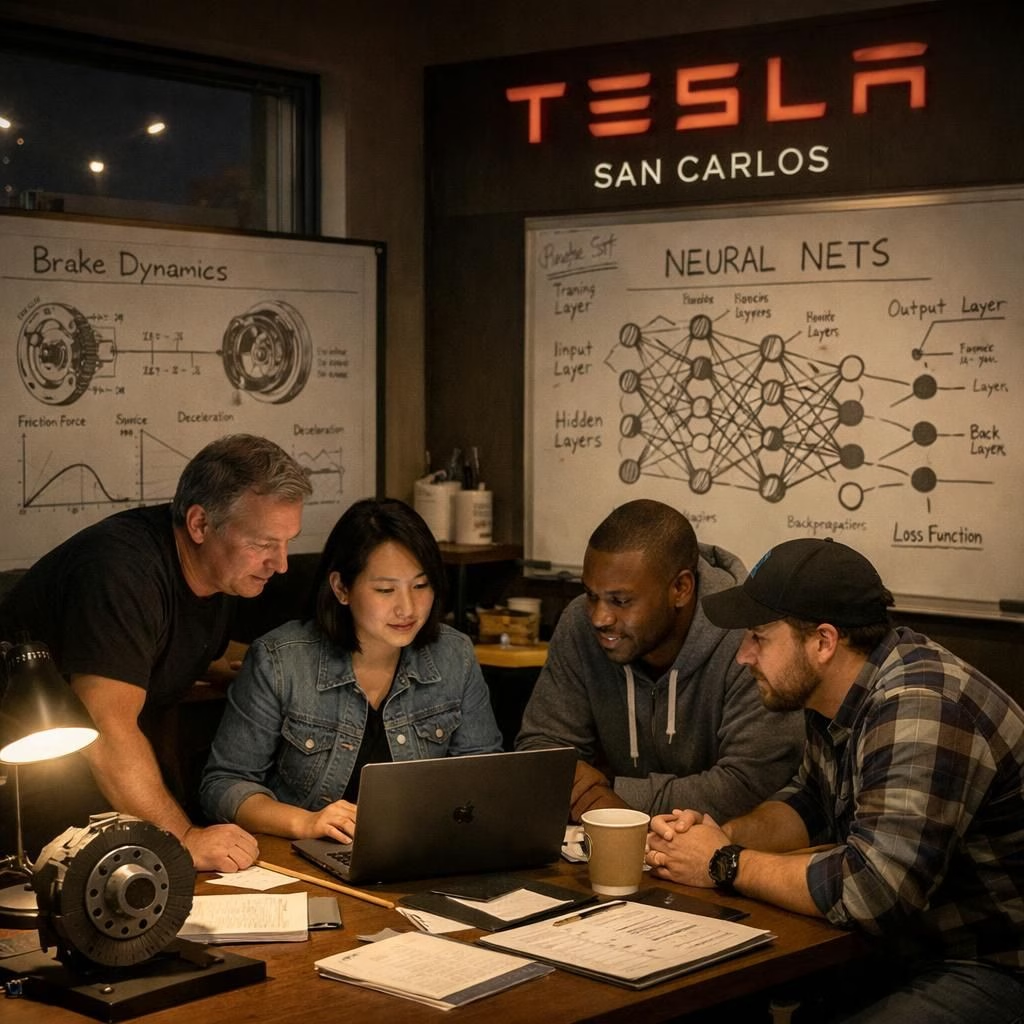
In Tesla’s early days, lights flickered in San Carlos as Sendil Palani joined the Finance team—weeks after what he calls the company’s near-death moment. That seventeen-year run helped shape a global EV future, and the culture born in those days still informs how the company operates today. The blend of Finance acumen with hardware and software know-how remains a defining strength.
Palani shared his memories on X, writing with warmth about a team that made the impossible look easy. He praised the Finance crew for turning complexity into choreography—managing hardware, software, digital assets, and global capital deployment, all in harmony. The blend of Tesla’s engineering grit and Finance’s number-minded discipline created a culture that feels almost magical on a Monday morning.
Tesla: A Survival Story That Built a Finance Culture
When the going got tough, the tough got collaborative. Palani recalls late nights and cross-functional sessions where brake rotor physics would collide with neural network training, all while capital markets buzzed in the background. The sessions were less about memorizing formulas and more about translating physical truths into budgets, risk measures, and practical product choices. In those rooms, ambitious engineering challenges met disciplined financial planning, and the momentum gave the entire team a sense of purpose.
Palani notes the culture wasn’t a slogan but daily practice: the one team mindset across Tesla, where engineers, operators, and financiers learned to trust the fusion of skill sets. The nights weren’t about fear; they were curiosity wearing a hard hat. And yes, a few of us laughed at the idea that a spreadsheet could help design a braking system, yet the numbers kept proving that theory plus application was a powerful combo.
Elon Musk replied briefly to Palani’s homage: ‘Thanks for an epic contribution over many years.’ The social-media exchange captured the moment: a founder acknowledging a relentless, twelve-hour drumbeat of effort across disciplines. The note wasn’t just politeness; it was a compact acknowledgment that the entire company runs on first-principles thinking, at scale, every day.
Finance: From Late-Night Sessions to First-Principles Leadership at Tesla
And what did Palani take away as a lesson for the broader organization? He highlighted the Finance team’s role as the engine that turns blueprints into cash flows and the ever-shifting capital plan into tangible milestones. The one team idea extended beyond a department—the Finance discipline became part of a systemic capability that helps Tesla pursue hardware, software, and service ambitions worldwide. The result is a culture where rigorous analysis supports audacious goals, and where the path from concept to customer is measured in impact as much as in dollars.
Across the company, Palani’s reflections emphasize the value of first-principles thinking: if a problem seems stuck, go back to basics, challenge assumptions, and build a clean approach, step by step. He gives credit to colleagues in engineering, manufacturing, and customer support who learned to speak a common language, bridging gaps with data, prototypes, and a shared sense of mission. The one team ethos isn’t a bumper sticker; it’s a practical operating model that makes the work feel meaningful and, frankly, enjoyable—especially when you’re racing toward a big, audacious market.
Palani has not publicly announced what comes next. The next chapter remains undisclosed, which only adds to the sense that this moment is less about an ending and more about the ongoing evolution of a company that has learned to move quickly without losing its core identity. He hints that the experiences of this journey—bridges between hardware, software, and finance—will continue to inform how teams collaborate under pressure and how leaders make decisions in real time.
For anyone curious to read more, you can read Sendil Palani’s full memo here: Full memo from Palani. And for context, we owe a thank-you to the original article and its authors for the material that inspired this reflection. Original article: Original source material.
Across the board, the core story remains: Tesla built a fortress by balancing grit, innovation, and a Finance core that could deploy capital as deftly as it analyzes risk. If you’re reading this, consider how a Finance-driven culture can turn late-night problem solving into real-world progress. We’d love to know your take on the lessons from Palani’s journey. Share your thoughts below and join the conversation.
We invite you to share your thoughts in the comments. And again, thanks to the original article for the material that sparked this thoughtful tribute.
Original article: Original source material.