

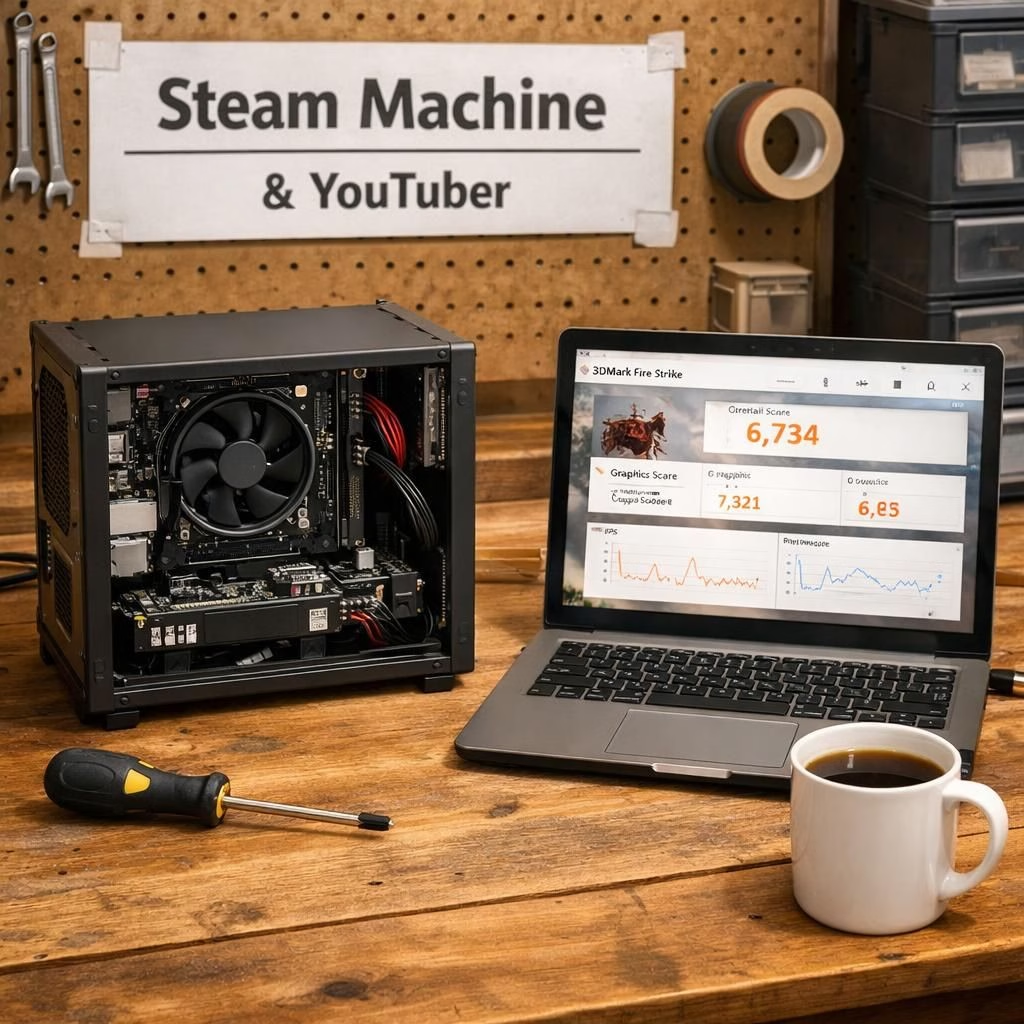
Like a curious mashup of garage tinkering and the lingering whispers of old rumors, the Steam Machine era rises again. A bold YouTuber dares Valve to prove it can build a box that actually sings, while fans debate price, power, and practicality. The Steam Machine story isn’t dead; it’s rebooted as a lesson in how DIY spirit can collide with big-platform reality in 2026.
Steam Machine and YouTuber collide with DIY zeal
The latest headlines began when a YouTuber challenged Valve to beat his own $950 DIY Steam Machine. The goal is simple: show the math, show the parts, and show the bench tests so viewers can decide if this model earns space on the living room shelf. In practice, the Steam Machine concept remains alive because DIYers love options and because hardware can still surprise us when price and performance align in clever ways.
Valuing openness, the narrative shifts from will it work to how close it gets. The YouTuber‘s numbers suggest a Steam Machine that plays current titles at modest settings while staying under a grand—if you swap aesthetics for practical airflow and sensible thermals. Critics will question energy use and driver stability; the YouTuber answer emphasizes that big platforms ship refined hardware for a reason, even as independent builders chase the margins where imagination still matters.
By the way, the five recent articles that sparked this burst of conversation include Kotaku’s coverage of the challenge, PC Gamer’s bragging rights moment, GAMINGbible’s promising uptick for 2026, AOL.com’s take on a PlayStation-competitive machine, and OpenCritic’s pricing round-up. Taken together, they sketch a world where the Steam Machine isn’t a one-off stunt but a living case study in how communities probe hardware expectations. The YouTuber thread threads through each piece, turning raw numbers into curious public experiments.
Steam Machine pricing myths and Valve drama
OpenCritic’s line that Steam Machine pricing leaves gamers in agreement captures the central tension: price parity versus perceived value. The 2026 updates show a moving target, while GAMINGbible’s chatter hints at a future where the idea survives as a configurable product family, not a relic. A former Sony developer’s comment about a new gaming machine entering the PlayStation space adds drama but also a reminder: hardware momentum comes from iterative improvements, not a single blockbuster release. The YouTuber angle—documenting parts, benchmarks, and real-world usability—helps separate hype from practicality and keeps Valve honest about what fans actually want from a living room-friendly PC.
Meanwhile, PC Gamer’s coverage of the moment when someone beat Valve to the punch reinforces the broader point: speed matters, but credibility matters more. The Steam Machine tale continues to matter because it asks how far a console-like PC can go before it stops feeling like a PC at all. The YouTuber narrative demonstrates how transparency, community feedback, and iterative tinkering can move a niche effort into a broader conversation about upgrade paths, noise, heat, and the total cost of ownership.
By 2026 the story has matured from a niche hackathon into a broader education project. Steam Machine pricing and parts ecosystems shift as new components enter the market and drivers improve. The OpenCritic roundups and AOL commentary remind us there’s room for debate: the Steam Machine isn’t a guaranteed hit, but it remains a credible option for explorers who value modularity and learning over pristine marketing. The YouTuber-driven format—video walk-throughs, real-world tests, and viewer questions—continues to push the conversation forward because it makes the hardware world feel reachable to everyday readers.
For shoppers, the takeaway is practical balance: buy once, don’t regret the upgrade path. For hobbyists, the takeaway is meticulous documentation: note each screw, each fan curve, each BIOS setting. For Valve, the takeaway is simple: keep listening to communities even as you ship products that scale. And for the wider YouTuber ecosystem, the takeaway is momentum: a solid build, a clear plan, and a few transparent benchmarks can nudge a big-market decision in a more honest direction.
If you enjoyed this look at the Steam Machine landscape, share your thoughts in the comments. Tell us how you’d balance price, performance, and noise in a minibox PC built for the couch.
External context: For hardware context, see Valve’s official Steam Deck hardware overview: Steam Deck hardware. For broader coverage of DIY hardware experiments, Ars Technica’s take on Steam Link and related projects is a useful companion: Valve brings native Steam Link app to Apple’s Vision Pro.
Original article: YouTuber Challenges Valve To Beat His $950 DIY Steam Machine — Thank you for the original reporting and for sparking this engaging conversation.
YouTuber angle: tests, benchmarks, and transparency
The practical YouTuber angle in this story is simple: document the parts, document the benchmarks, and share the real-world results with readers. The goal isn’t hype but useful data that helps a couch-facing PC feel approachable. Expect to see hands-on tests, heat and noise readings, and discussions about upgrade paths tied to price brackets.
Practical steps for evaluating a DIY Steam Machine
- Set a clear budget: identify a realistic price ceiling and plan for future upgrades.
- Choose drivers and firmware carefully: compatibility matters for stability and long-term support.
- Document thermal design: note fan curves, airflow, and heat dissipation in real use.
- Benchmark with real games: test modern titles at settings that reflect living-room use.
- Assess total cost of ownership: consider power draw, noise, and upgrade cadence over 2–3 years.
FAQ
- What’s the realistic goal for a DIY Steam Machine in 2026? A compact box that handles current titles at comfortable settings without breaking the bank is plausible, but it won’t replace a purpose-built console or a high-end PC for demanding titles.
- Do I need specialized tools to build one? Basic tools plus a sane case, thermal solution, and mounting hardware will cover most builds.
- Is it worth the effort if I already own a PC or a Steam Deck? That depends on your appetite for customization, learning, and upgrade flexibility—the DIY route remains appealing for some enthusiasts.
In the end, the Steam Machine conversation in 2026 isn’t about a single gadget. It’s a broader look at how communities explore hardware, test assumptions, and push each other toward more affordable, more capable living-room PCs.
Conclusion: a practical takeaway and next steps
Takeaway: a Steam Machine built around calm thermals and transparent testing can sit happily beside a Steam Deck or a traditional PC. The next step is to follow ongoing tinkering, watch benchmarks, and decide what balance of price, performance, and noise makes sense for your living room.