

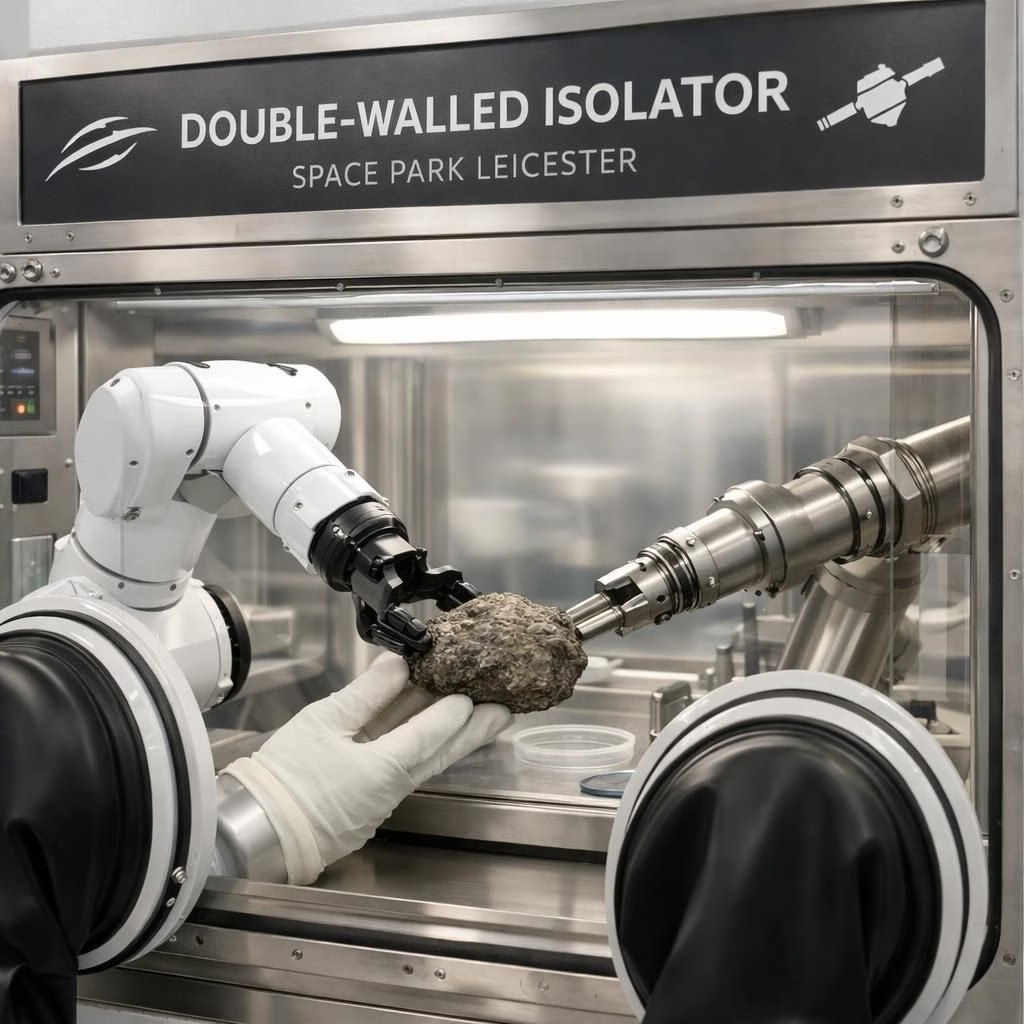
In Leicester, a tiny yet mighty space rock laboratory hums with energy as the double-walled isolator glints behind a glass wall. It keeps space rock samples pristine while scientists study them with care and a wink. This ultra-clean setup is not just science fiction; it is a practical, scalable solution for future missions. The core aim is simple: prevent Earth life from hitching a ride onto Martian and lunar rocks, while ensuring that any discoveries are credible and not muddled by earthly contaminants. Welcome to space rock science made practical here on Earth, with a touch of British ingenuity.
Space Rock Confidence: Leicester’s Ultra-Clean Lab
The team at Space Park Leicester has built a compact, highly disciplined lab that borrows the grammar of a cleanroom but fits inside a research hub. The double-walled isolator plays a starring role, offering dual containment and a controlled atmosphere to keep samples unspoiled. This isn’t just about keeping things tidy; it’s about speeding up initial characterisation so scientists can catalogue rocks and flag any signs of life without dragging in terrestrial microbes. The result is space rock science that’s safer, faster, and more scalable than ever before.
Originally conceived to support a potential mission to bring back Martian material, the double-walled isolator is now pitched as a workhorse for future endeavours like Artemis II. NASA described its interest as a sign that Leicester’s space tech could join the ranks of mission-critical tools. The demonstration involved a dummy sample being unpacked, weighed, and repacked with robotic precision—an elegant ballet of sensors, gears, and careful choreography that would impress even the most jaded lab tech. When you watch a sample move from cradle to chute with such poise, you start to believe space rock study could be this smooth.
Double-Walled Isolator Tech: Containment Meets Robotics
The double-walled isolator is not just a single gadget; it is a philosophy of containment, designed to prevent terrestrial organisms from contaminating space rock materials while protecting Earth from potentially hazardous extraterrestrial matter. The lab’s two-layer design minimizes risk, and robotics handle delicate handling tasks that would be slow or risky for human hands. We’re talking precise weighing, careful unpacking, and meticulous repacking, all while a digital catalog keeps track of every stone. This blend of space rock containment with robotic dexterity accelerates results without compromising safety, and it makes the entire process feel less like a laboratory ritual and more like a well-oiled assembly line for discovery.
Planetary protection isn’t a buzzword here; it’s a practical mandate. The team emphasizes that solid containment and robust procedures are essential to ensure any signs of life detected in space rocks are genuine and not artifacts of contamination. In short: if the rocks could talk, they’d thank Leicester for keeping their environment pristine so scientists can listen clearly. The lab’s protocols also help safeguard Earth’s ecosystems, which is a nice reminder that science, when done responsibly, benefits more than just the researchers in the room.
NASA’s visit to the UK extended beyond Leicester. Delegates also met with curation specialists The Natural History Museum and containment experts at the Francis Crick Institute in London. These collaborations illustrate how space agencies, researchers, and containment specialists can join forces to tackle the most stubborn questions about life beyond Earth. It’s a reminder that space rock science is not a solo act but a coordinated performance featuring museums, institutes, and space agencies working in harmony to safeguard both science and stewardship.
Practical Steps with Space Rock Handling
- Unpack and reseal samples using dual containment, with double-walled isolator robotics guiding every motion.
- Accurately weigh and log each specimen in a digital catalogue to support rapid initial characterisation.
- Carefully re-pack samples for transport, maintaining a pristine environment to prevent earthly contamination.
- Run quick on-site checks for any signs of contamination, then plan deeper analyses back at a central facility.
How the double-walled isolator Accelerates Results
By pairing robust containment with robotic manipulation, the lab can move from handling to interpretation more quickly than traditional workflows. Clearer detection of possible extraterrestrial biosignatures reduces false positives caused by earthly microbes, while rapid initial cataloguing speeds up data sharing with the wider community. This approach also envisions future missions where initial on-site analysis guides decisions about sample retention and further study, preserving precious material for long-haul investigations.
Impact on Future Missions
Looking ahead, Leicester’s model could influence how agencies design sampling campaigns and planetary protection protocols for Artemis II and beyond. If lunar or meteoritic material is brought back, the DWI-style approach offers a blueprint for safe, fast initial analysis that safeguards sample integrity for the long voyage home. The collaboration with major research institutions signals a growing ecosystem where space rock containment, robotics, and astrobiology come together to propel discovery while protecting Earth.
As the day ends, the Leicester space rock lab stands as a bright example of practical science: rigorous, ambitious, and quietly cool in its mission to weigh rocks while keeping our planet safe. The combination of planetary protection, rapid data generation, and precise handling shows that thoughtful design and strong partnerships can turn bold ideas into reliable, trusted results.
FAQ
- What is planetary protection? It is a set of practices designed to prevent Earth life from contaminating other worlds and to protect Earth from potential extraterrestrial life that could be brought back by missions.
- Why test space rocks on Earth? On-Earth testing allows researchers to conduct initial analyses in a controlled, contamination-free environment before any material is studied more deeply elsewhere, preserving sample integrity.
- How does Artemis II relate to Leicester’s work? NASA has shown interest in Leicester’s containment and robotic handling approach as a potential tool for future lunar sample return and preliminary analyses during missions like Artemis II.
- What is the Double-Walled Isolator? It is a dual-containment system with robotic handling designed to protect samples and Earth from cross-contamination, enabling safer, faster characterization of space rocks.
In short, Leicester’s space rock lab demonstrates how careful hardware design, smart robotics, and international collaboration can push space exploration forward while keeping planetary protection front and centre.