

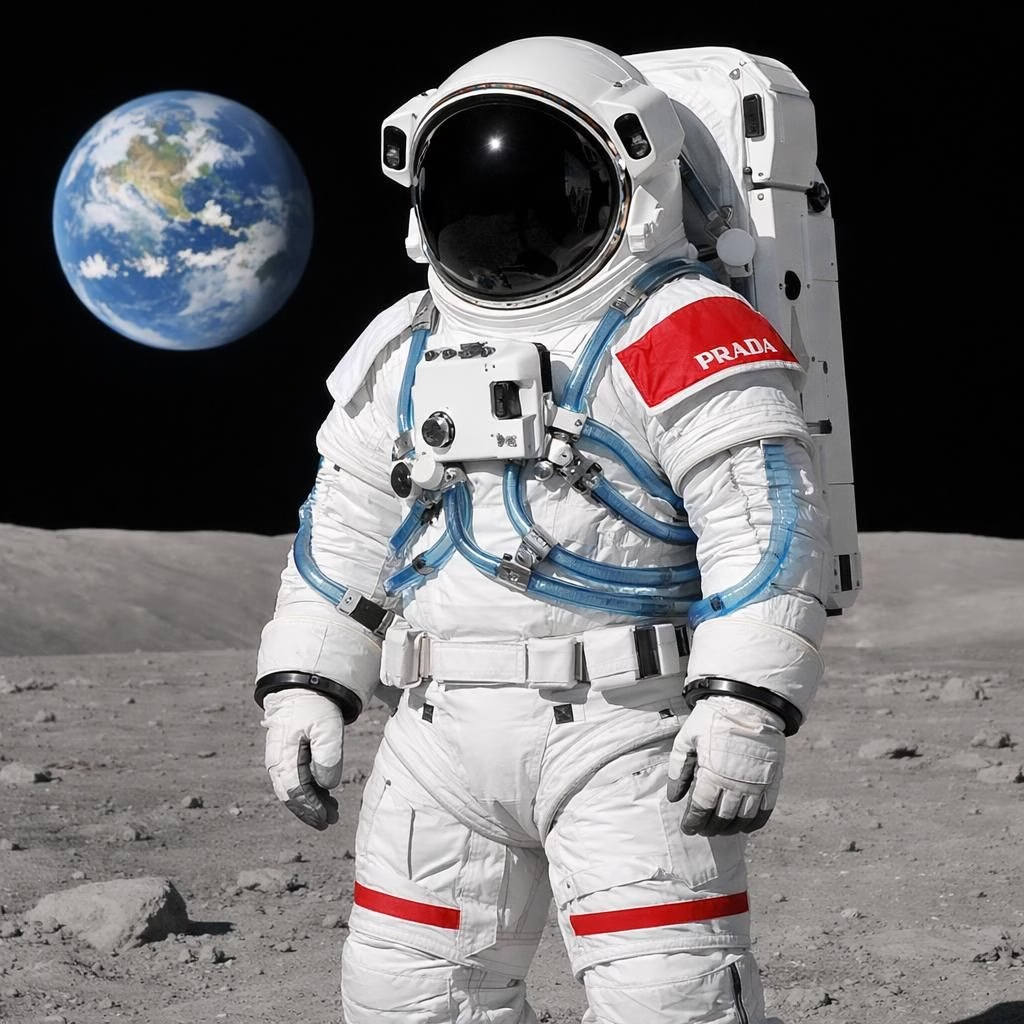
Prada’s foray into space fashion meets real astronaut tech as the two partners unveil the next-generation Liquid Cooling and Ventilation Garment (LCVG) for the AxEMU spacesuit, built for NASA’s Artemis missions. This is more than style; it’s a safety-critical underlayer designed to handle extreme lunar temperatures and dust while looking like a high-fashion undergarment.
space fashion meets lunar gear: AxEMU LCVG in action
The LCVG sits inside the suit like a smart undergarment, weaving cooling channels into the fabric with embedded tubes that circulate a cooling liquid. This design upgrades earlier models that threaded tubing through mesh, easing maintenance. The cooling system pairs with larger black tubes that deliver air first to the wearer’s face and then across the body, aiding carbon dioxide management and providing oxygen on inhale. The garment is designed to be worn under a protective shell while maintaining stable temperatures as the Moon shifts between sun and shade, a core piece of astronaut tech architecture.
Prada’s involvement goes beyond branding. The ballistic outer material supplied by Prada helps keep the suit intact under lunar stress, while the modular approach means components can be sized and swapped without replacing the whole garment. The LCVG is intended for future moonwalks but may first see testing on the International Space Station and in NASA’s Neutral Buoyancy Laboratory, where giant pools simulate microgravity for practice. These tests aim to validate temperature control and breathing dynamics in real-world environments before stepping onto the lunar surface.
astronaut tech upgrades: safety, modularity, and fit
AxEMU and its undersuit are not just about cooling; they reflect a broader push toward safer, more accessible astronaut tech spaceflight. The LCVG’s cooling channels circulate fluid that maintains comfortable skin temperatures, while the air tubes handle carbon dioxide and oxygen exchange. The emphasis on modularity suggests an upgrade path that could lower costs and increase flexibility as missions scale up. Astronauts may someday pick sized components or swap out sections rather than buying a whole suit—a small but meaningful step toward mass space travel.
NASA notes that the Moon’s south polar region will be a very complex environment, with sunlight and shadow cycles driving temperature swings that can reach hundreds of degrees. The LCVG is part of a family of improvements designed to help crews cope with such extremes. A lighter color on the suit helps reflect sunlight, reducing heat absorption, while making lunar dust more visible for cleaning—another practical benefit for long missions. This detail blends practical engineering with a fashion-forward mindset, a hallmark of the Prada-Axiom collaboration.
Historically, spacesuits blended fashion sense and protection. Apollo-era suits prioritized mobility and life support, while today’s designs show that aesthetics can go hand in hand with safety. The project aligns with Artemis program goals and recognizes that fit, comfort, and reliability are essential as missions grow longer. The LCVG’s approach could influence how future suits are designed, tested, and deployed for lunar exploration and beyond.
fit, modularity, and space fashion: a future-proof approach
In this era of expanding crewed missions, modularity matters. The LCVG concept suggests components that can be sized or swapped, reducing waste and speeding updates—an important step for astronaut tech readiness as ambitions grow.
In short, the Prada-Axiom collaboration signals a shift in how we think about spacesuits: the line between apparel and life-support has blurred for many missions, not just a single historic walk. The LCVG wraps practical technology in a design that invites people to imagine space exploration as both serious science and human expression. Space fashion and astronaut tech are living side by side—and this is happening now.
We’d love to hear what you think about space fashion and astronaut tech marching forward together. Share your thoughts in the comments below.
Original reporting and details from Space.com. Thank you to Space.com for the original reporting. Read more at Space.com.
Practical takeaways for readers
- How LCVG cooling channels work: embedded tubes circulate a cooling liquid to regulate skin temperature inside the suit.
- Modularity matters: sized components can be swapped, lowering costs and enabling rapid upgrades.
- Visual and dust-management benefits: a lighter color helps reflect heat and makes lunar dust easier to see and clean.
- Real-world testing path: ISS experiments and the Neutral Buoyancy Laboratory help validate performance before lunar use.
External sources
- NASA Artemis program — overview of Artemis goals and lunar exploration plans.
- Space.com — additional context on space fashion and astronaut tech developments.