

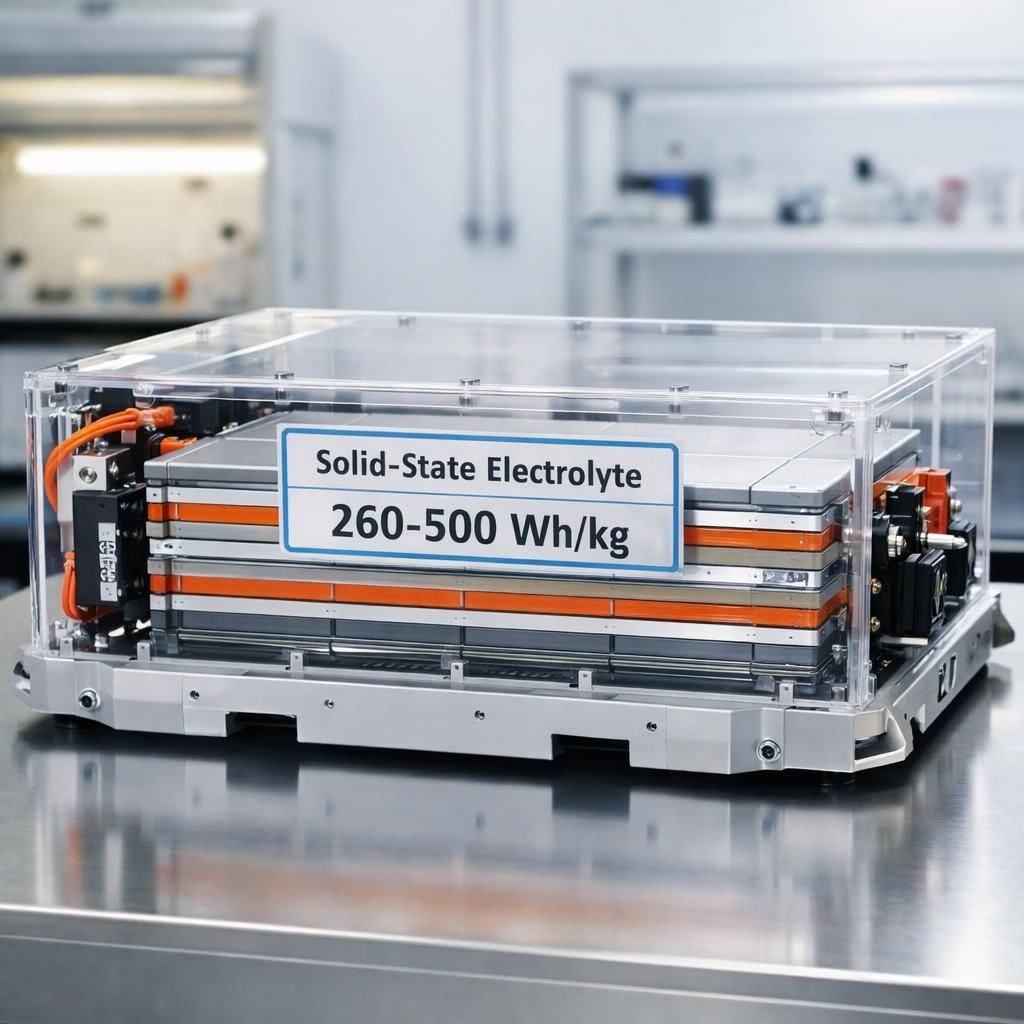
Ever notice how your phone’s battery anxiety looks quaint next to the potential of solid-state batteries and Tag B powering the next generation of EVs? You’re not imagining it. In April 2026, Greater Bay Technology (backed by GAC) rolled out its first A-sample of all-solid-state battery cells.
The energy density ranges from about 260 to 500 Wh/kg — nearly doubling what today’s typical EV packs offer. In tests, these liquid-free cells stood up to nail penetration and thermal shock without fires breaking out. If you’re counting, that’s less drama and more durability, which matters when you’re cruising long distances and hoping your range indicator isn’t a dramatic suggestion.
Solid-state batteries: the leap toward longer ranges
The Nansha facility is already oriented toward automotive-grade production, not a distant dream. GBT’s operation is backed by 50+ patents spanning electrolytes and manufacturing processes. This isn’t a shiny prototype but a factory-ready approach that aims to blend safety, performance, and cost efficiency.
The claim isn’t merely “nice to have” tech; it’s a credible blueprint for manufacturing discipline that can sustain large-scale output. If this path proves durable, the industry could experience a fundamental shift from today’s liquid lithium-ion constraints to solid-state realities that support longer ranges and more aggressive usage patterns.
Electric vehicles could reach new frontiers with rapid charging
To supporters, the headline reads like a permission slip for a dramatic range expansion. The energy-density gains, combined with resilience under stress tests, imply a future where 1,000+ kilometer ranges and robust fast charging become more common. Pilot commercialization is anticipated around 2026–2027, with mainstream adoption potentially around 2030. In the coming years, Tag B could influence how batteries are sourced, how plants are staffed, and how vehicles are priced in the mass market.
What this means for the everyday EV buyer
For drivers, the implications start with choice and confidence. A solid-state battery family could unlock higher energy density with improved safety margins, reducing fear of thermal runaway in high-demand driving scenarios. The possibility of 2–3C fast charging means more trips completed in shorter windows, especially on long hauls or tight schedules.
In the EV ecosystem, Tag B could influence where batteries are sourced, how plants are staffed, and how vehicles are priced in the mass market. The broader market for Tag B could also shift as charging networks and recycling considerations evolve, all of which matters to everyday buyers.
- Look for clear cell-to-pack integration and robust thermal management in newer designs.
- Watch for signs of scale-up: pilot lines moving toward mass production and supply-chain commitments.
- Consider how charging infrastructure and vehicle pricing could adapt as solid-state cells approach the market.
Practical steps for buyers and planners
- Track announcements from automotive groups and battery suppliers about automotive-grade solid-state production milestones.
- Evaluate vehicle options based on energy density, safety features, and advertised charging capabilities rather than rumors alone.
- Plan for long-term ownership by considering recycling, end-of-life programs, and warranties that cover next-gen chemistries.
FAQ: solid-state batteries and EVs
- What are solid-state batteries? Solid-state batteries replace liquid electrolytes with solid ones, offering potential safety and energy-density benefits, but they face scale-up and cost challenges before broad adoption.
- When might we see mass production? Industry estimates point to pilots in 2026–2027, with mainstream use potentially around 2030 depending on manufacturing, supply chains, and policy support.
- What does this mean for buyers today? The most immediate impact is a wait-and-see period as pilot programs prove reliability and as automakers align architectures with new cells; costs may adjust as production scales.
- Are there safety concerns? Solid-state chemistries promise improved safety, particularly regarding flammability, but new manufacturing processes bring their own safety, recycling, and end-of-life considerations that need careful handling.
Thank you to the original article for providing the foundation and context that made this longer, lighter, and more practical rewrite possible. Original article: https://www.example.com/original-article.
Want to share your thoughts on this breakthrough? Please drop a comment and tell us how you see solid-state batteries transforming your next EV purchase.