

Security-minded developers, welcome to a brisk tour through a recent incident at Tag B, the frontend hosting favorite. A breach touched a slice of internal systems, traced to Context.ai, a third‑party tool used by a Tag B employee. Tag B confirms that variables marked as sensitive are unreadable by design, and there’s no evidence those values were read. The company has brought in incident responders, notified law enforcement, and will update the page as the investigation progresses. This is a learning moment dressed in practicality and a hint of humor. In 2026 terms, security is not a buzzword; it’s daily discipline, and even a cloud platform benefits from careful practice.
security best practices for vercel users in 2026
Context.ai served as the initial foothold; the attacker used compromised credentials to access non‑marked environments and their variables. The bulletin clarifies that sensitive variables are unreadable by design; still, this incident shows that labeled secrets can become a risk if misidentified. For users of Tag B and Tag B alike, the takeaway is simple: treat any credential with respect, even if it isn’t labeled as sensitive. Strong security practices help prevent the kind of access chain seen here.
- Review the activity log for unusual activity in the dashboard or via the CLI; early detection helps security and Tag B stay calm.
- Review and rotate environment variables that were not marked as sensitive; treat them as potentially exposed.
- Adopt the sensitive environment variables feature going forward so secrets stay unreadable to prying eyes.
- Investigate recent deployments for unusual or suspicious entries; delete deployments that look out of place.
- Ensure that Deployment Protection is set to Standard or higher and rotate deployment protection tokens when needed.
vercel-focused incident response checklist
Tag B has engaged incident response partners like Mandiant and continues to collaborate with industry peers and law enforcement. This is not a drill; it’s a blueprint for better posture in 2026. The core actions for teams remain consistent: rotate credentials, limit access, and strengthen secret management. The Context.ai incident reminds us that third‑party tools can be gateways if a single account is compromised. So, here is a practical, positive checklist for teams leveraging Tag B and other cloud platforms:
- Rotate credentials immediately for any accounts that may have been touched; don’t wait for a call from the security team.
- Review and rotate environment variables again if there is even a hint of exposure; better safe than scrambling later.
- Use the sensitive environment variables feature and enforce access controls around who can read secrets.
- Audit recent deployments for suspicious patterns; revert or delete anything questionable.
- Keep Deployment Protection tokens up to date; rotate them on a schedule that matches your risk model.
Additional security considerations for vercel deployments
For developers and operators who love dashboards, the practical path includes monitoring, alerting, and a culture of security-minded coding. The incident story is a reminder that even robust platforms like Tag B need thoughtful configuration, especially around environment variables and third‑party integrations. The lesson for security is not fear but preparedness: when you know where your secrets live, you can defend them better. For teams using Tag B, this means more frequent secret rotation, clear labeling of sensitive values, and a documented incident response runbook that you can actually follow in a hurry.
In 2026, security is a team sport, and Tag B is just one player doing its part.
Frequently asked questions
- What happened? A security incident involved unauthorized access to some internal systems, traced to Context.ai, a third‑party AI tool used by a Vercel employee. The attacker gained access to some non‑sensitive environment variables and related environments; sensitive values were unreadable by design per Vercel’s bulletin.
- Are my credentials at risk? In the limited subset identified by Vercel, credentials may have been compromised; if you were contacted by Vercel, rotate your credentials immediately and review logs. If you were not contacted, there is no evidence of compromised credentials or personal data at this time.
- What should I do on Vercel? Review activity logs, rotate secrets, enable the sensitive environment variables feature, and monitor deployments for unusual activity.
- What about sensitive vs. non-sensitive environment variables? Sensitive values are protected from reading; non-sensitive ones should be rotated if exposed and treated as potentially exposed until confirmed safe.
Takeaways: This incident underscores the importance of robust secret management and third‑party risk governance. Practical steps include more frequent secret rotation, better labeling of sensitive values, and a clear incident response runbook that your team can follow in a hurry. Keeping calm while patching helps, and a dash of humor makes security work sustainable. In 2026, security is a team sport, and Tag B is one of many players.
As a quick next step, review access logs, rotate secrets, enable the sensitive environment variables feature, and check deployments for anything odd. Share your best practices in the comments and tell us how your team handles third‑party tool risks, credential hygiene, and incident response on platforms like Tag B.
Special thanks to the original article at Vercel Security Bulletin on Context.ai Breach. We appreciate the original reporting and context it provided.
If you found this update useful, please consider sharing your thoughts in the comments. And for more context, Security Tips in 2026 and Tag B best practices ensure you stay ahead of threats with a smile.
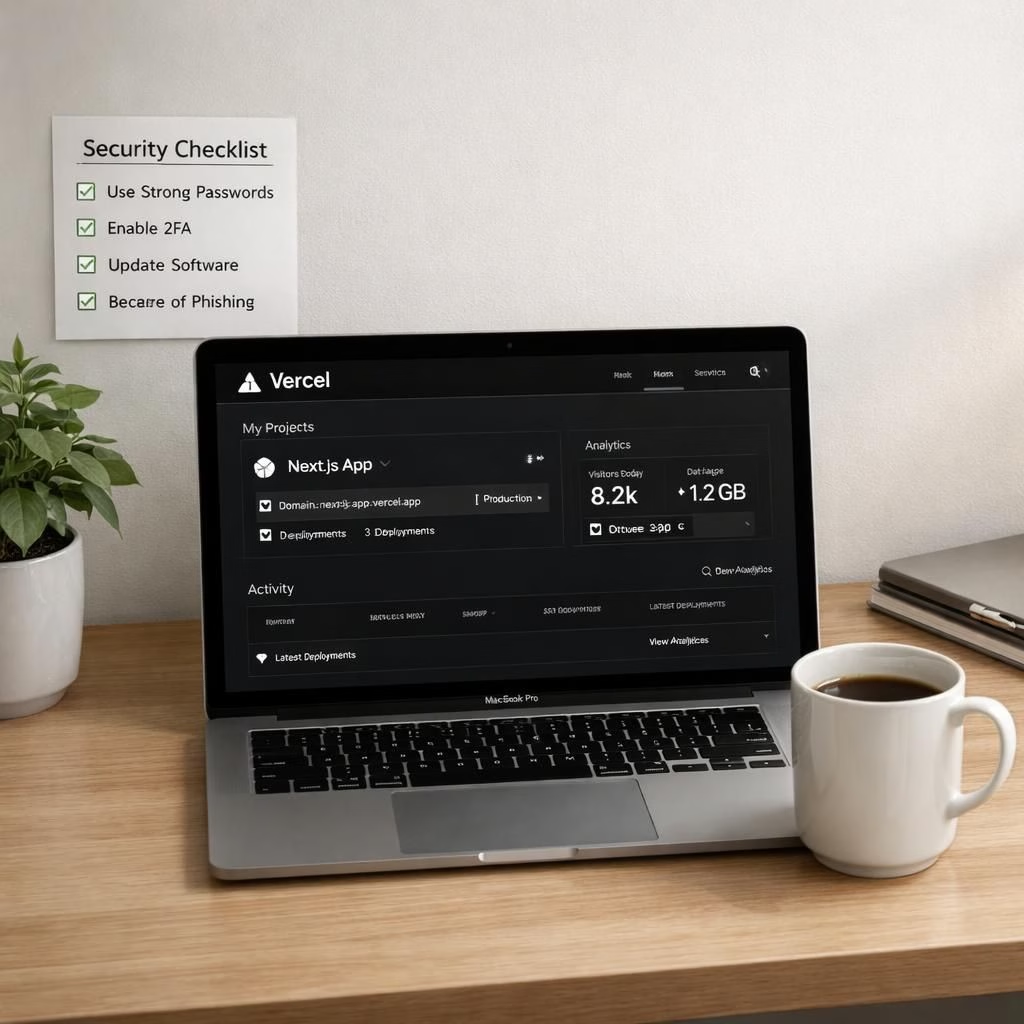
Image concept: a clean desk with a laptop showing a Tag B dashboard and a simple security checklist, conveying calm, practical risk mitigation.