

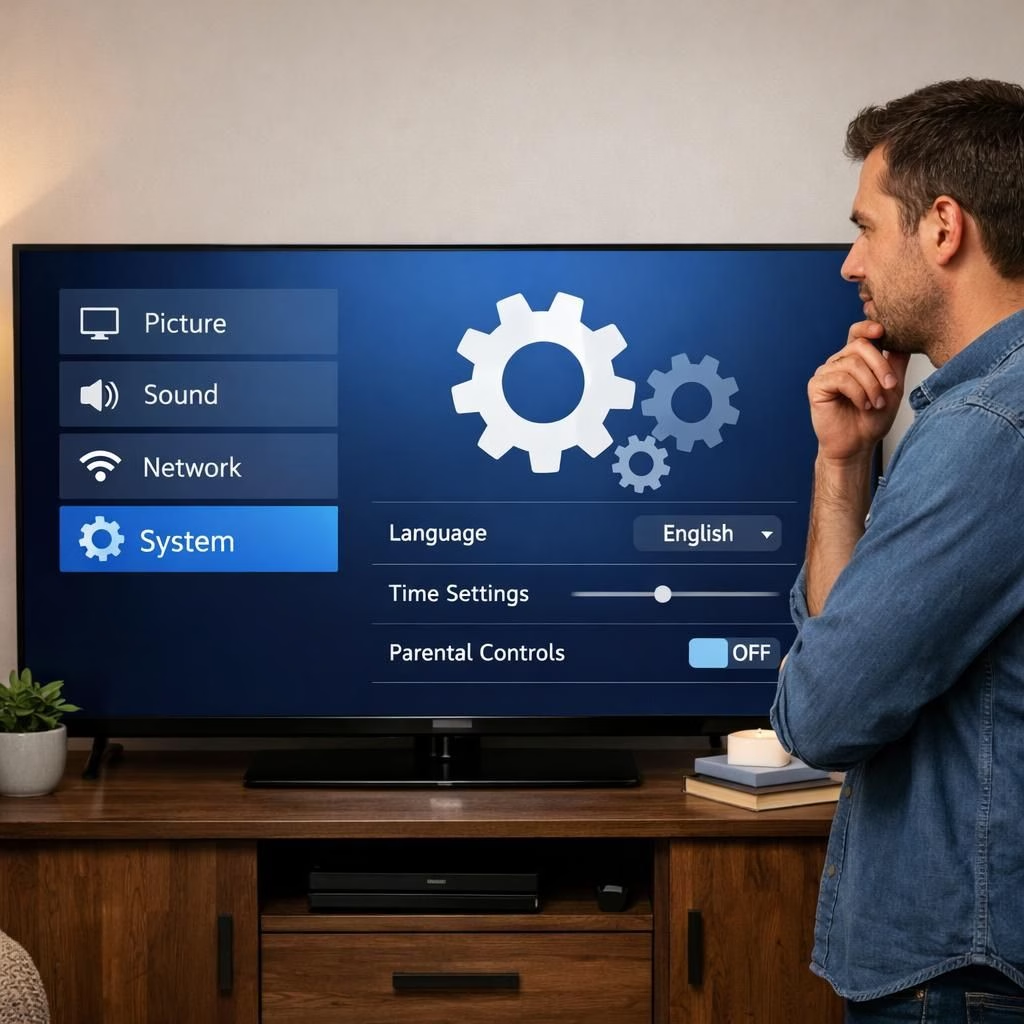
Welcome to a brisk tour through a years-long clash over user agency in devices built to entertain. Security tips and smart tv software are not just buzzwords. These terms frame a debate about control, openness, and who defines the rules when your TV boots up. The arc here is simple in shape but long in duration: users want to tinker; manufacturers want to protect their platforms; lawmakers want to draw a line between tinkering and chaos; courts want to decide who gets to claim the property of a digital kitchen shelf. The result is a case study in modern consumer tech, a saga that might feel like homework for adults and a treasure hunt for independent developers.
On paper, the dispute reads like a simple clash between consumer rights and product security. In practice, it spans firmware updates, encryption, EULAs, and the unglamorous details of who controls the code that runs a smart tv software device. The tension isn’t just about hardware but about who has the right to modify the software that powers the living room frontier—the place where entertainment meets engineering. To many households, the phrase security tips remains a practical anchor as they weigh protection against the lure of tinkering.
Security Tips in 2026: The Smart TV Software Saga
From the vantage point of a curious owner, this saga feels less like a courtroom and more like a tavern debate about knobs and levers. Manufacturers argue that robust security tips and the integrity of the smart tv software keep everyone safe from malware and slippery firmware. Critics counter that lock-in harms innovation, discourages repair, and transforms a capable device into a black box. The real story sits in the middle: there is room for legitimate safety, but it should not silence legitimate curiosity about how the device runs under the hood. The conversation keeps circling back to two ideas—security tips for everyday users and the broader ambition of smart tv software to become a platform rather than a product.
As courts weigh the policy questions, reform-minded engineers push for clearer paths to verify updates, easier rollback options, and transparent firmware signatures. The phrase security tips migrates from a checklist to a design principle, shaping how manufacturers document changes and how retailers present options to households. Meanwhile the term smart tv software shows up in policy memos, court briefs, and grassroots blogs, signaling that this is not a niche debate but a public trust issue about open access versus protected ecosystems.
In practice, the debate translates into tangible outcomes: can a user disable certain prompts, choose alternative app stores, or replace a portion of the software with something more open? The answer depends on jurisdiction, device, and the willingness of stakeholders to negotiate guardrails rather than harsher restrictions. The tension is not a mere inconvenience; it affects how people learn, repair, and enjoy technology without fear of breaking a warranty or violating a license. The heart of the matter is a balance between robust security tips that keep families safe and smart tv software autonomy that invites experimentation and customization.
Practical implications for Security Tips and Smart TV Software rights
What does this mean for everyday users who care about control and curiosity? It means a future where you can expect more than a single, locked user experience. It means better, clearer guidance on how to apply security tips without turning your TV into an inert brick. It also means more opportunities for developers to build on top of smart tv software in responsible ways, with safety baked into the design rather than appended as a postscript. In short, compromise is not a dirty word here; it is the craft people use to align the needs of households with the realities of modern device manufacturing.
For families, the stakes are practical: faster, safer updates; the option to roll back problematic changes; and a predictable path to privacy settings that matter. For hobbyists and small businesses, there is potential to experiment with new user interfaces, alternative app ecosystems, and more transparent licensing. For policymakers, the key is to craft rules that encourage responsible tinkering while maintaining strong protections against threats that could ripple across households. The core idea remains straightforward: security tips should empower, not punish; smart tv software should be extensible without inviting chaos.
Along the way, the discussion offers concrete tips for readers who want to stay informed without getting mired in legalese. Stay aware of how updates are delivered and what permissions are requested. Look for options that disclose technical details and provide opt-ins rather than coercive defaults. Favor devices that publish security tips, offer clear documentation, and support community-driven fixes. In short, demand transparency, insist on guardrails, and celebrate the moments when openness and security tips walk hand in hand with smart tv software enhancements.
As this story unfolds, remember that the goal is not to pick sides but to improve the design of the everyday tech we rely on. The path forward blends robust security tips with smarter, more flexible smart tv software policies. It invites manufacturers to codify openness without compromising safety, and it invites users to experiment with purpose, not rebellion for rebellion’s sake. The outcome matters because a living room full of devices should feel like a workshop, not a fortress.
Original article: Yearslong fight over users’ right to tweak smart TV software heads to trial. Thank you to Ars Technica for the original reporting.
If you enjoyed this analysis, feel free to share your thoughts below. What is your take on security tips versus tinkering rights for smart tv software? Do you see a future where both coexist smoothly in living rooms around the world?
FAQ: Security tips and smart tv software rights
- What are security tips in this context? They are practical steps households take to reduce risk while using a TV, from firmware checks to careful permission management.
- Can I legally modify my TV’s software? It depends on local law, the device’s license terms, and whether a manufacturer’s protections prohibit altering core software.
- How can I stay informed without legalese? Look for official update notes, documented rollback options, and community-driven, clearly explained fixes.
- Why should policymakers care about tinkering? Because well‑designed guardrails can balance safety with user autonomy, reducing security gaps while enabling responsible experimentation.
External sources
References
Original article (Ars Technica): Yearslong fight over users’ right to tweak smart TV software heads to trial.