

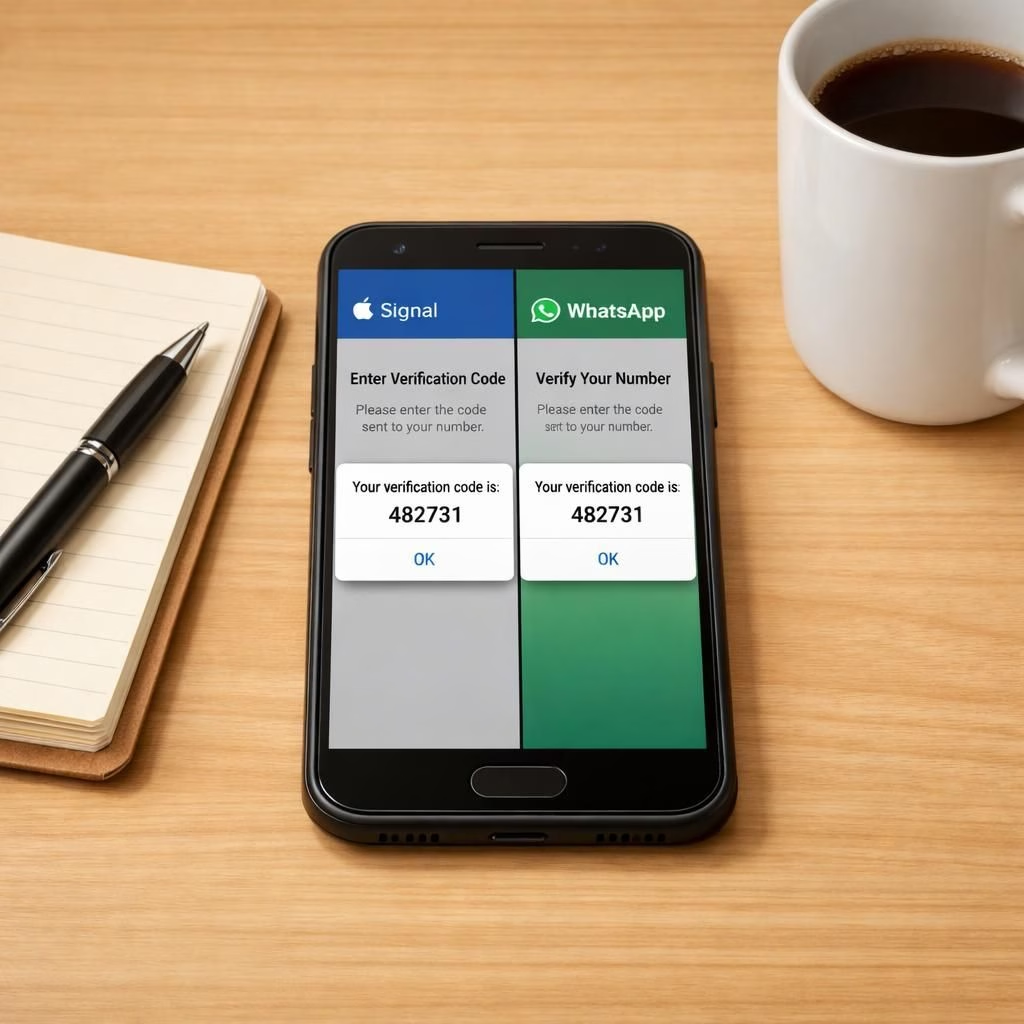
In an unexpectedly hopeful corner of the cyber universe, Russian-backed hackers have kicked off a wave of phishing that targets everyday heroes: Signal and WhatsApp users, including officials, military personnel, and journalists. The Dutch intelligence services warned that this is not a garden-variety scam; it is a polished operation designed to grab security verification codes and PINs, unlocking private chats and group conversations. The attackers stroll in with a confident swagger, but the punchline is on them: their tactic reveals the simple math of human habits. For ordinary users, success hinges on staying alert, resisting obvious prompts, and keeping conversations away from suspicious links at odd hours.
Security- and phishing-aware readers: what 2026 has in store
Phishers deploy convincing pages that ask for verification codes and six-digit PINs, and then guide victims to drop their guard. The attackers aim to slip into personal accounts and even into group chats used by colleagues and reporters. The tone is professional, the visuals are polished, and the sting is simple: a crafted phishing prompt looks routine until it’s not. Officials warn that no message is truly private once a phishing page is opened, highlighting the role of security practices in daily use.
phishing tactics versus encryption: why security still matters
Even with end-to-end encryption, the Dutch warning reminds us that encryption protects messages from eavesdroppers, not from the person you hand your codes to. WhatsApp urged users to keep their six-digit codes confidential, while Signal said its systems remain uncompromised but admitted the attack’s sophistication. In practice, criminals exploit trust and timing: a phishing prompt that looks like a routine check. The threat is real, but awareness is simple: treat any unsolicited code as a red flag. Turn on two-factor authentication, review active sessions, and never share verification codes in chat windows. The security posture improves when people connect the dots between a suspicious prompt and the possibility of loss. The payoff is quieter security and less phishing in daily life.
What can individuals do? Start with a healthy skepticism. Do not click links from unknown sources. Use the official apps from trusted stores. Enable two-factor authentication using authenticator apps rather than SMS codes when possible. Check device access requests in settings. Regularly audit connected devices and stop sessions. In organizations, run phishing awareness training for defenders and reporters. The goal is not to quash curiosity but to reward careful habits and quick reporting. By combining training, safer practices, and clear policies, we reduce the risk of a successful phishing attempt and preserve overall security in communications.
It helps to build routines around verification: keep your apps updated, review permissions monthly, and practice reporting suspicious prompts. If you ever question a message, pause, verify through a separate channel, and document the experience. The combination of learning, caution, and quick action creates a barrier that is much stronger than cryptography alone. The path to safer conversations is practical and within reach for most users, teams, and organizations.
For those who manage teams or run news desks, set clear protocols: if a prompt asks for codes or PINs, treat it as a potential phishing attempt until verified by a secondary step. If you suspect a breach, disconnect the device, rotate keys if needed, and notify the IT or security lead. The aim is continuous improvement, not panic. When practice becomes habit, the chance of a successful phishing attempt shrinks. Your everyday communications gain resilience, even when encryption remains a cornerstone of modern messaging.
As we wrap up, remember that vigilance is a shield you can wear with confidence. For security and against phishing, share these best practices with colleagues, friends, and family. Encourage others to pause before tapping, to verify, and to report suspicious activity. The more people participate in this culture of caution, the less effective phishing becomes.
Original article: Dutch intelligence warns of a sophisticated phishing campaign targeting Signal and WhatsApp. Thank you to the original source for the material that inspired this rewrite.
We’d love to hear your thoughts. Please share your experiences and questions in the comments below.
Practical steps for security
- Enable two-factor authentication via an authenticator app (not SMS) to strengthen security and reduce phishing risk.
- Never share verification codes or PINs, even if the message appears to come from a trusted contact; if unsure, verify via a separate channel.
- Regularly review active sessions and device access in the app’s settings; revoke access for unknown devices.
- Keep apps updated and enable built-in security features that warn about suspicious links. For more on phishing, see phishing guidance.
- If you suspect a phishing attempt, pause and report it through the app’s reporting feature.
For a deeper dive into practical messaging security, see this related guide on WhatsApp Web voice and video calls.
FAQ
-
What is phishing in messaging apps?
Phishing is a social-engineering tactic that tricks you into revealing codes or login details. See the UK NCSC phishing guidance for more.
-
How can I protect my account?
Use authenticator-based 2FA, review sessions, and never share codes. If unsure, verify through a separate channel. phishing awareness is essential.
-
What should I do if I suspect a breach?
Immediately disconnect the device, rotate keys, contact IT, and report suspicious prompts. Quick action limits damage, especially after a phishing attempt.
-
Are the apps still secure?
Encryption protects message content, but user behavior matters. Maintain good hygiene to keep security strong and reduce phishing risk.
References
References are kept to acknowledge the original reporting and provide readers with credible sources for further reading.