

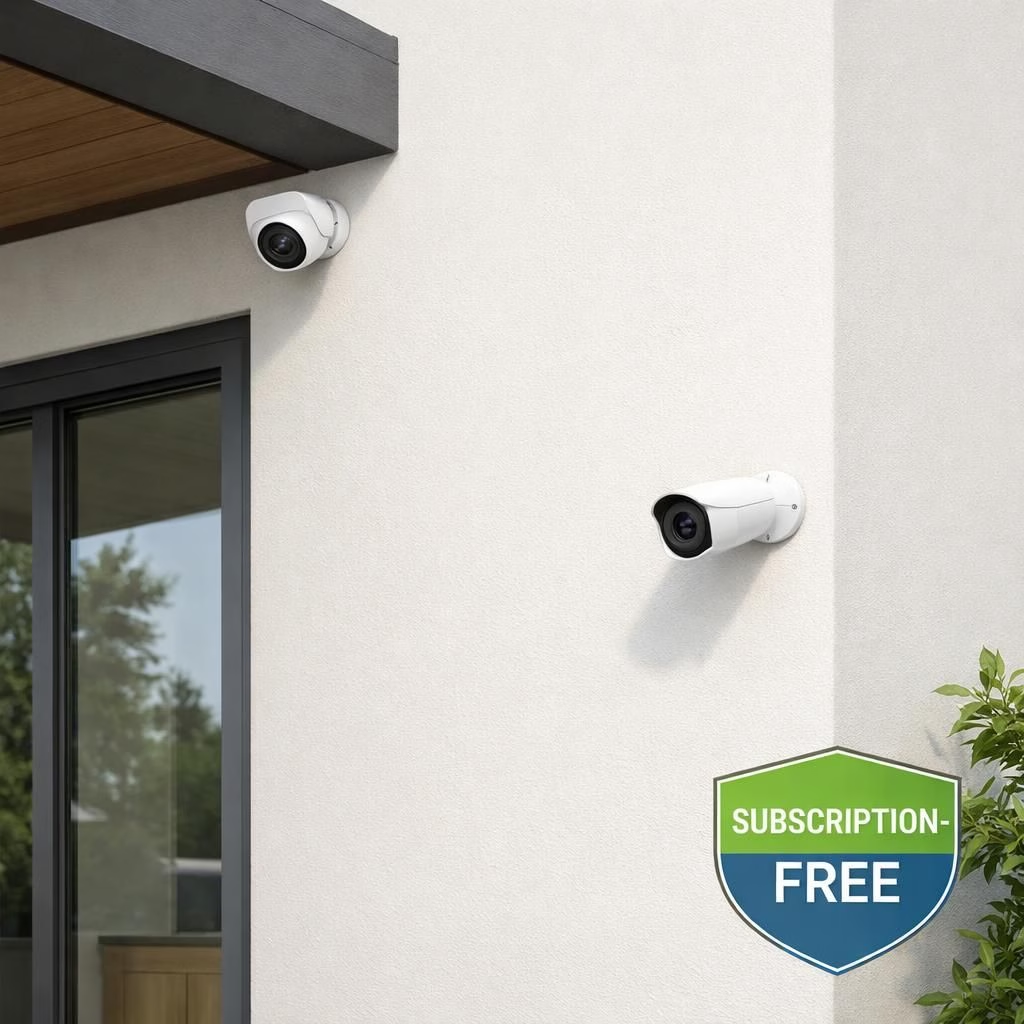
Welcome to a practical, slightly wry tour of home security in 2026. If you hate monthly fees, you’re in luck: this guide highlights subscription-free options that stay useful after you forget to pay the invoice. You’ll get clear footage, straightforward setup, and predictable costs from a one-time purchase, not a rolling bill. In short, the right security cameras can fortify your space without turning your budget into a scarecrow.
Security cameras and the appeal of subscription-free setups
Here’s the core truth: a subscription-free setup doesn’t mean you skip cloud storage forever; it means you control where and how data is stored and who can access it. For many households, local storage on a microSD, a tiny NAS, or a direct USB backup feels liberating compared to constant fees. The difference isn’t only monetary; it’s peace of mind. With the right security cameras, you get reliable 1080p or 2K footage, adaptive motion detection, and solid night vision—without locking you into a service plan that hikes the price every year. The subscription-free path charges up once and then stays loyal to its one-time price tag, which is a very welcome perk in 2026.
In practice, this approach asks you to weigh two simple questions: where does your footage live, and how risky is it to lose the cloud for a day or two? If you care about privacy and speed, the local-storage route shines. If you value effortless offsite backups for truly important events, you’ll want a light cloud option that you actually control rather than something that controls you. Ultimately, the idea of a subscription-free approach remains the same: quality cameras, local storage, and predictable costs. The objective remains unchanged: quality security cameras that do not turn into recurring bills. And yes, you can have both strong defense and sane pricing when you choose wisely.
Choosing security cameras for a subscription-free life
The big decision comes down to two pillars: storage architecture and feature set. In a subscription-free world, you’ll prioritize local storage reliability, durable hardware, and straightforward firmware updates. You’ll also want clear footage, sensible field of view, and consistent performance across day and night. The goal is to minimize ongoing costs while maximizing value, not to flirt with risky tech just because it’s trendy. With security cameras, you often get a robust mix of performance and price that lets you invest once and enjoy for years. This is especially true in 2026, when the market has learned to pair solid silicon with careful software, so you don’t feel like you’re paying for a lifestyle you don’t actually lead.
When evaluating options, look for these practical signals: durable enclosures for outdoor use, wide dynamic range for scenes with bright sun and deep shadows, and a reliable local storage path that matches your home setup. If you need motion alerts, verify that the sensitivity controls are granular—no more dozens of false alarms from leaves in a gust of wind. And yes, night vision should be clear enough to identify faces at a reasonable distance, not just a glow in the dark. The right security cameras will offer a sane balance: you avoid the trap of paying for features you don’t use, while maintaining the core protections you actually need.
A practical plan helps you stay on track. A subscription-free mindset guides you to favor models with robust locally stored footage, simple web or app access, and straightforward firmware updates. The focus is on durable hardware that remains dependable for years, not on chasing the newest trending feature.
Beyond hardware, consider the software experience. A clean app, intuitive setup, and predictable energy use matter as much as the camera specs. If a system forces you into a cloud tier with a long contract or a heavy monthly fee, that’s a red flag for a subscription-free approach. Favor models that emphasize user control and transparency. You want to see what’s happening in real time, review past events quickly, and know exactly where your footage is stored. The best options deliver a frictionless experience without turning your living room into a data center in disguise.
For households with multiple cameras, plan a cohesive layout. Place cameras where they cover entry points, pathways, and any sensitive zones, but avoid obvious blind spots that invite risky behavior. A well-thought-out grid of security cameras reduces the chance of gaps, and when combined with solid local storage, it creates a dependable system you can trust without recurring price tags. The fewer times you have to log into an app to check on things, the more you’ll appreciate the subscription-free setup in your daily life.
Let’s talk costs and maintenance. A true one-time purchase may involve a higher upfront outlay, but it pays off with years of service and no periodic payments. You’ll still enjoy solid support, timely firmware updates, and a reasonable warranty—without the creeping monthly bill that makes you audit your finances every quarter. In 2026, the best subscription-free options emphasize energy efficiency, compact hardware, and easy replacement components. That means you can upgrade or swap components without a tech degree or a mortgage, which is exactly the kind of pragmatic tech we deserve.
One practical tip: write down your use-case priorities before buying. Are you mostly concerned with porch visibility, or do you want interior coverage for pets and entryways? Do you prefer a camera that blends into your décor, or one with a more industrial look that signals serious security to visitors? Answering these questions helps you choose security cameras that align with your actual needs, not whatever the latest influencer promotes. A subscription-free mindset values durable build quality, local control, and a straightforward setup so you aren’t trapped by a vendor’s pricing ladder years down the line.
Finally, consider future-proofing. Even in a subscription-free model, you’ll want to keep software current and devices compatible with your home network. Look for cameras that support standard protocols, easy integration with other smart devices, and flexible storage options. A well-chosen setup ages gracefully, just like a fine wine or a well-assembled bookshelf. Your security cameras should feel like a reliable, quiet partner rather than a quarterly expenditure that snoops on your budget.
In short, a thoughtful, subscription-free security camera setup respects your wallet and your time. It delivers crisp footage, simple installation, and long-term reliability without forcing you to subscribe for every feature. The future of home security doesn’t require a monthly commitment to stay protected; it rewards careful upfront investment and smart configuration.
If you’re curious to explore more, share your experiences with subscription-free security cameras in the comments below. I’m keen to hear which models worked for you, what storage choices you made, and how you balance convenience with privacy in a world where data is abundant but cost matters.
Original idea and spirit inspired by WIRED. Thank you to WIRED for the original article: Pay Once, Not Monthly, With My Favorite Subscription-Free Security Cameras.
Practical steps to build your subscription-free setup
- Define coverage: entry doors, windows, and any high-traffic zones you want monitored.
- Choose storage: local storage (microSD, NAS, or USB backups) first, with optional secure offsite backups if you truly need remote access.
- Assess power and network needs: stable power, reliable Wi‑Fi or Ethernet, and easy firmware updates.
- Test motion and night vision: set sensible motion sensitivity and verify facial visibility at a comfortable distance.
Frequently asked questions
Do subscription-free cameras require cloud storage?
Not necessarily. Local storage is common, and cloud backups are optional on many models if you want offsite redundancy.
What upfront cost should I expect?
Prices vary by features, but you typically pay once for the hardware and any needed storage media. You won’t face ongoing fees for core functionality.
How can I protect local storage from theft or tampering?
Use encrypted drives, enable strong device passwords, and keep firmware up to date. Regularly review access permissions for anyone in your home network.
Can I mix local storage with occasional cloud backups?
Yes. Hybrid setups are common and let you keep primary footage locally while backing up key events to the cloud on a schedule you choose.
Conclusion
Takeaway: opt for a well-supported model that prioritizes local storage, durable hardware, and straightforward software. A subscription-free approach makes budgeting predictable while keeping your security posture solid. Step one is identifying your coverage needs and then selecting a system that fits your home without locking you into ongoing fees.
References
Original source linkback: WIRED: Best subscription-free security cameras