

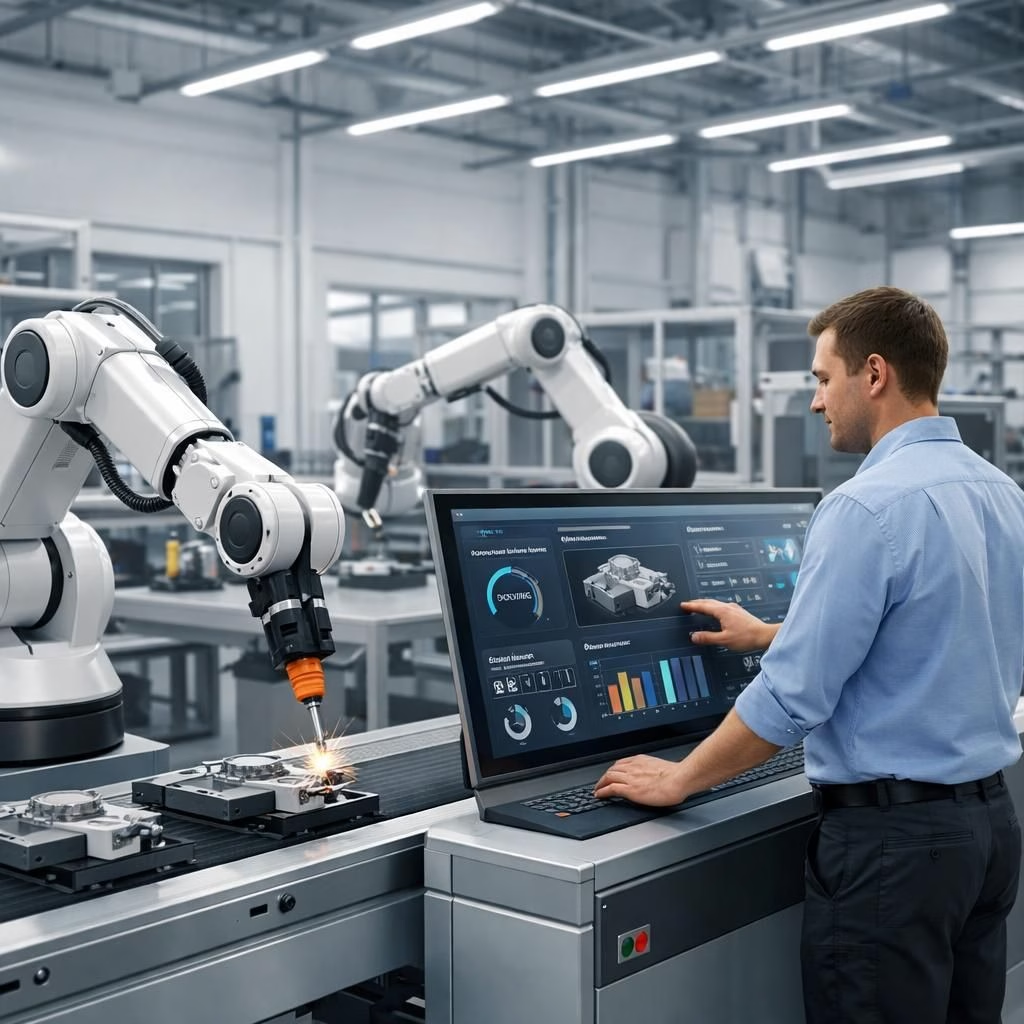
AI and Automation are no longer buzzwords; they’re headlines that show up at breakfast and in boardrooms. Senator Sanders has warned about a new $100B fund that could accelerate AI-driven manufacturing, potentially reshaping factories worldwide. The core truth remains: Automation changes how work gets done, but it doesn’t inherently ruin it—it demands careful planning, retraining, and honest conversations about who owns the robots and the data that powers them. The discussion isn’t about a villain in a hoodie; it’s about a future where workers and machines partner, not clash, and where policy nudges progress toward shared prosperity.
AI and Automation in the 2026 Landscape
In the same breath that Sanders warned, JPMorgan Chase CEO Jamie Dimon cautioned that AI could disrupt jobs. He noted that 150,000 of the bank’s employees already use AI weekly. Those numbers aren’t prophecies; they’re trends. Economists estimate up to 20% of the US workforce could face Automation exposure over the next decade, especially in transport, logistics, and manufacturing. That doesn’t spell doom; it signals opportunity for smarter workflows, better safety, and new roles in design, maintenance, and oversight. The debate now centers on leadership’s duty to train workers and protect wages while pursuing growth and efficiency.
Practical Paths for Workers in AI and Automation Era
Sen. Mark Kelly’s AI for America roadmap aims to guide companies toward responsible AI adoption. It emphasizes retraining, safety nets, and governance of data. In practice, firms can pair Automation with apprenticeships, steady wage progression, and transparent upskilling plans. The idea is to have automation complement human skills, not erase them. If a factory adds robots, it should also add classrooms, mentors, and on-the-floor technicians who keep the robots running and the processes safe. The result isn’t a war against the working class but a long-term upgrade plan that makes work more interesting and safer.
Balancing Innovation with People: A Realistic Outlook on AI and Automation
Bezos’s rumored fund, described in investor documents as a ‘manufacturing transformation vehicle,’ would likely target sectors like chipmaking, defense, and aerospace. The aim is to accelerate manufacturing capabilities by integrating AI with physical systems. The plan draws praise for potential improvements in supply chains, reduced downtime, and expanded product capability. Critics warn about power concentration; supporters say coordinated investment can yield benefits across industries when paired with strong governance and worker retraining. The balance rests on governance: clear retraining pathways, predictable transitions for workers, and a public-private approach that aligns shareholder value with social value. In 2026, the smart move is to pair capital with care—capital for robots, care for workers, and clarity for communities that host new plants. Automation should be treated as a shared project, not a threat.
Two practical challenges stand out. First, retraining takes time and credible incentives. Second, we must avoid a race to the bottom in wages as Automation expands. The forward-looking path includes portable credentials, lifelong learning credits, and symbiotic teams where humans and machines share responsibilities. The goal is not to halt progress but to choreograph it so that, in every factory, a human supervisor and a robot partner learn from one another. The story isn’t about replacing people; it’s about elevating the craft and the career ladder for millions of workers while keeping goods affordable and innovation alive.
As policy makers and business leaders debate the shape of this era, remember that technology is a tool, not a tyrant. AI can take over repetitive tasks, but humans excel at strategy, empathy, and complex problem solving. Automation can remove dangerous, dull work, while opening chances for people to do higher-value jobs. The best outcomes come from transparent planning, accountable leadership, and a shared sense of purpose among workers, managers, and investors.
To readers: what are your thoughts on AI and Automation in 2026? How should governments, companies, and workers navigate this transition? Your input matters as we map a future where machines handle the grind while people steer the direction.
Special thanks to the original article for the reporting that sparked this discussion. You can read the original source here: Wall Street Journal article on Bezos’s AI fund. Thank you for the thoughtful material.