

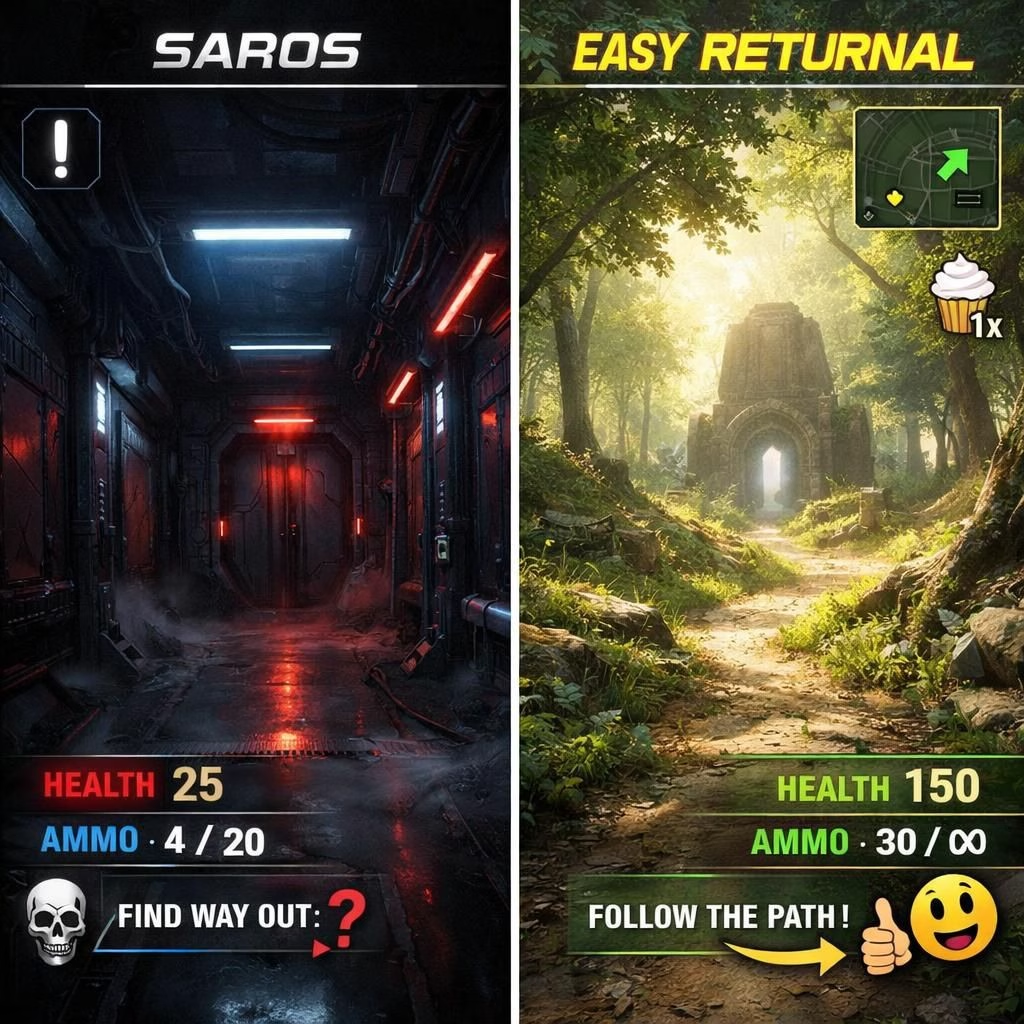
Welcome to 2026, a year when the roguelike pulse remains stubborn, yet the feedback loop stays loud enough to heat the room. Saros, the new project drawing its lineage from Returnal, has been made easier by listening to players. The creative director might call it \”a very challenging game\” in a confident whisper, but the reality on screen shows smarter pacing, friendlier early zones, and clearer cliff notes on what to expect. The aim isn’t softening the core challenge so much as smoothing the edges, so you can learn the dance before the final boss eats your run.
In practice, Saros still tests reflexes and disaster recipes, but with better teaching signals and fewer opaque retries. Players get to test the formula without feeling like they walked into a labyrinth with a map drawn in fog. The bottom line: Saros and Returnal share a stubborn heartbeat, and 2026 is their year to prove that you can be both hardcore and humane at once.
Saros Returnal: Feedback-Driven Balance
When designers listen, the game seems to breathe. Saros gains a more readable enemy cadence, clearer weapon quirks, and mid-run hints that steer you away from obvious doom without spoiling the thrill. Returnal DNA remains intact—the pace stays kinetic, the risk stays high—but the veteran players can now help newcomers discover the rhythm without losing the sting. We see fewer blind alleys: respawns have more generous checkpoints; UI hints surface just before a risky phase; and the progression loop rewards careful experimentation.
In short, Saros respects your time, and Returnal respects your nerve, creating a balance that feels earned rather than imposed.
Saros Returnal: The Edge Comes with a Friendlier Front Door
The phrase easier path does not equal easy mode. The team changes the early zones to teach mechanics in approachable chunks: safe zones, readable enemy patterns, and a clearer map that doesn’t require a cryptographer to decipher. For players returning from Returnal, the upgrades thread back into familiar systems, so the bulk of your muscle memory remains valid. For newcomers, the onboarding lands with a light, friendly touch so you can practice skill checks before the real test begins.
The result is a smoother ramp that respects the core challenge while removing the dreaded walls that spike frustration. Returnal and Saros still demand discipline, timing, and smart risk taking, but the burden feels more intentional and less punitive.
Saros Returnal: What This Means for Players in 2026
From a marketing line to a living design philosophy, this balancing act shapes how players experience a game that sits at the crossroads of nostalgia and novelty. The reduction in grind, the improved clarity of power-ups, and the accessible framing of danger all speak to a community that wants challenge without burnout. When you engage with Saros, you still feel the same cosmic weight of Returnal‘s ambitions, but with a friendlier safety net and a more forgiving early loop.
The practical upshot is longer play sessions, more deliberate exploration, and a higher chance that your best run isn’t your last run. In other words, the harder game keeps its edge while inviting more players to take the plunge. Saros continues to grow into its identity, and Returnal continues to function as a bar that keeps pulling you back to the ring.
Share your experiences with Saros and Returnal in the comments below. We want to hear how the balance feels on your console or PC. If you found a perfect early run or a brutal late chapter, tell us about it. Your insights help other players decide whether to chase the next run or savor the moment of a clean victory.
Original coverage and reporting: Eurogamer. Thanks to the original team for their thoughtful reporting and for capturing the nuanced balance between accessibility and challenge.
External reading
FAQ
- Is Saros easier than Returnal?
Saros lowers friction in the early loop while preserving the core roguelike challenge; it isn’t a true easy mode, but it helps new players learn the rhythm without removing risk.
- Will progress be safe enough to explore?
Yes. More checkpoints, clearer hints, and a friendlier onboarding reduce unnecessary punishment while preserving tension.
- Is this accessible to players new to the series?
Absolutely. The onboarding and early zones are designed to teach mechanics in small, understandable chunks while keeping the atmosphere and tension that define Returnal.
- Will the game still demand discipline and timing?
Yes. The edge remains, but it’s sharper and more intentional, rewarding learning and patience.
Conclusion
In short, Saros reimagines the thrill of Returnal with a gentler onboarding, clearer signals, and a more forgiving start. Players can enjoy longer sessions, more deliberate exploration, and the satisfaction of a hard-won victory without abandoning the signature challenge.
References
Original coverage and reporting: Eurogamer.