

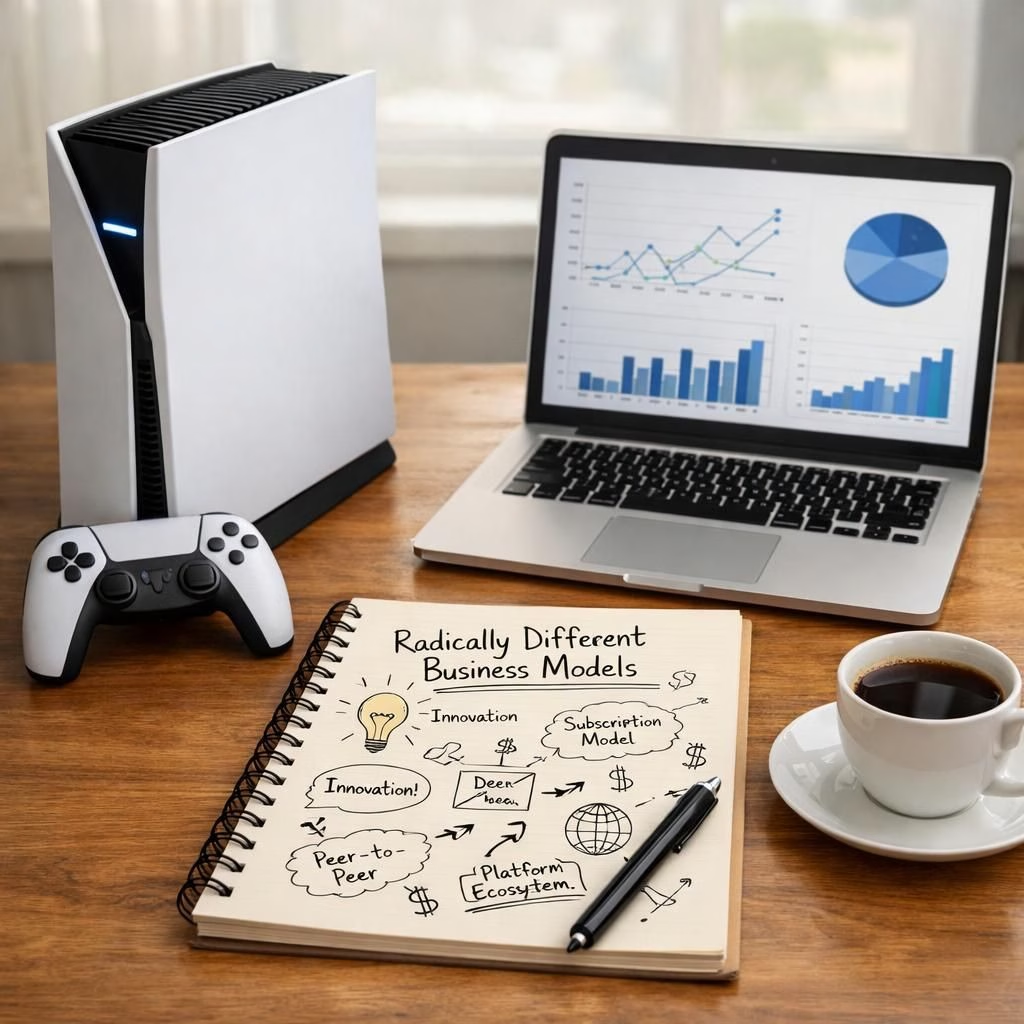
In 2026, Xbox is exploring radically different business-models, a move that promises affordable next-gen gaming without asking players to mortgage a small console farm. The chatter from The Verge, IGN, Kotaku, VGChartz, and Windows Central frames it as a bold rethinking of hardware, services, and how we value a game. If you enjoy tech optimism mixed with a pinch of skepticism, you’re not misreading the room—just sampling the future with a purposeful grin. With Xbox at the helm, the idea of a console as a platform rather than a brick-and-mortar product gains new propulsion, and business-models become a lens through which we view the entire ecosystem.
Xbox and the bold future of business-models in gaming
Radically different business-models surface as a guiding philosophy rather than a buzzword. The goal is to lower upfront cost, spread risk across services, and let players decide how they want to pay for joy. Think hardware price bands aligned with subscription tiers, optional add-ons that don’t feel like gatekeeping, and a pipeline of games that rewards loyalty without locking you into a single path. The Xbox leadership appears to be testing ideas such as modular hardware, frequent refresh cycles, and a mix of rentals, subscriptions, and ownership—an approach that invites both curiosity and critique from the wider community. In this story, the word Xbox becomes a signal, not just a label, and business-models become a practical compass for navigating cost pressures and player expectations.
Xbox-driven cost-smart strategy: how affordable next-gen could work
Costs, supply, and value are the trio on stage. If Xbox can keep the price of entry low while offering compelling performance, the company might unlock a broader audience. The audience might enjoy a tiered console with optional cloud features, streaming-enabled games, and a library that scales with usage. A critical part of the thinking involves balancing supplier costs against consumer expectations, a dance that is as old as consoles but with a twist: more options, less one-size-fits-all. Here, the business-models framework is not just clever jargon; it is a practical map for negotiating cost pressures. The Xbox approach signals that the game industry can innovate without sacrificing the joy of playing with friends on a shared platform and a future that invites experimentation rather than ultimatums to pay or wait.
Beyond the headline promises, the real test lies in execution. Can Xbox deliver lower upfront costs while maintaining or expanding performance, game quality, and online ecosystems? The answer likely rides on two wheels: clever partnerships and modular design. Partnerships with chipmakers, cloud providers, and game developers could yield pricing flexibility that protects the user while keeping margins meaningful for publishers. Modular hardware could allow players to upgrade key components without replacing the entire box, opening a pathway for business-models that emphasize long-term value over short-term sales spikes. In this framework, Xbox becomes a platform steward—curating a set of options that lets people choose how they invest in their gaming life. The goals are ambitious, but the energy around business-models as a strategy is a refreshing reminder that the console market does not have to default to a single price tag and a single path to ownership.
Implications for players and developers
For players, the promise is simple: more ways to access great games with less friction. For developers, the landscape shifts toward modular revenue streams and recurring revenue that rewards quality and reliability. The challenge will be to maintain a vibrant catalog across price bands, keep latency and performance in check, and ensure that business-models don’t fragment the community into exclusive clubs. The ongoing experiment will require transparent communication about business-models and a robust commitment to fairness, so that the Xbox brand stays trusted rather than tech-buzzing into the abyss of “just another plan.”
As these ideas mature, expect a steady drumbeat of questions from the audience: How will cloud gaming factor into the business-models? Can the company sustain content investments if hardware margins compress? Will consumers reward risk-taking with loyalty, or punish it with indifference? The conversations themselves are a sign that the industry is no longer content to treat consoles as a single product with a single price. Instead, Xbox appears determined to treat gaming as a living service where business-models evolve with the needs and behaviors of players. This is not a reboot so much as a reimagining of what a console company can be when curiosity outpaces fear.
For enthusiasts who like to map the terrain, it’s worth watching how these ideas unfold across mid-generation updates, subscription shifts, and partnerships that might push console gaming closer to a platform economy than a hardware sale. The optimism is tempered by realism: innovation will require discipline, clear metrics, and a willingness to iterate in public, not behind closed doors. If the industry can maintain trust while expanding the menu of options, 2026 could become a pivot year—one where Xbox demonstrates that business-models can be both practical and playful, with a dash of audacity and a lot of learned experience behind it.
Finally, to anyone who loves a good thought experiment about gaming economics: your voice matters. Share your thoughts in the comments below about what Xbox should prioritize as it experiments with new business-models—costs, access, or content density? The conversation could shape how the industry moves from theory to everyday practice.
Original coverage and inspiration: The Verge and related coverage on the topic. Thank you to the original reporters and outlets for sparking this discussion and for assembling the initial mosaic of ideas that inspired this rewrite.
Image attribution: Special thanks to the sources that first highlighted these bold directions. If you found this page helpful, consider exploring the linked original articles for more context and nuance.