

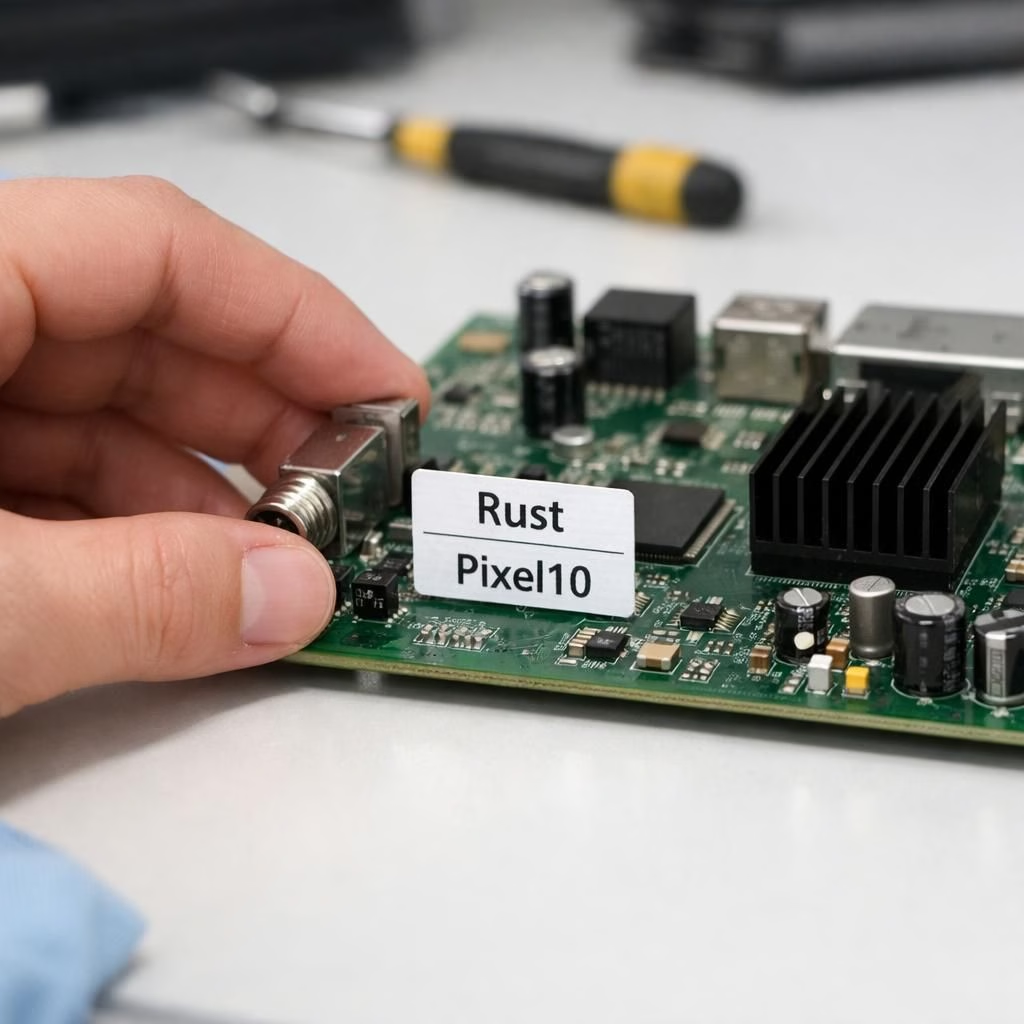
In 2026, the Rust and Pixel10 partnership on a modem chip reads like a practical, hopeful TED Talk in a hardware lab: safe, readable, and surprisingly approachable. The alliance pairs Rust memory-safety vibes with Pixel10 legacy intellect, turning brittle firmware into something that behaves like a well-mannered adult at a family dinner. The result isn’t a miracle cure, but it clearly shows that safety can be a feature, not a rumor whispered in a corner of the codebase. When a modem talks about safety, you expect jargon and alarm bells; what you get with Rust and Pixel10 is a calm, deliberate approach that reduces risk without wrecking performance. The idea is simple, and the execution is precise: enforce safer patterns, keep old code from misbehaving, and let engineers sleep a bit easier. This is the kind of collaboration that makes hardware labs feel less like a Monday and more like a Friday afternoon lab party.
Rust and Pixel10: Safety in Hardware Tales
In the Pixel10 modem saga, Rust acts like a diligent guardian of memory, ensuring that buffers do not crash their cool and that pointers behave themselves. The combination reduces the likelihood of chaos when legacy code meets modern constraints. Engineers can refactor incrementally, test thoroughly, and keep performance mostly intact. The Rust tooling, with its borrow checker and strict rules, guides developers toward patterns that avoid common mistakes. Pixel10 remains the star of the show, carrying decades of design decisions, yet now its decisions are tempered by Rust safety-first mindset. The end user gains reliability without a tedious crash report, and that is something to celebrate in a world where downgrades feel more common than upgrades. The collaboration demonstrates that old hardware can learn new tricks without a dramatic reboot, which is exactly the kind of optimism we need in 2026.
The effort is not about a dramatic rewrite but a careful evolution, where Pixel10 design decisions are revisited through Rust’s safety lens, allowing engineers to preserve compatibility while raising the safety floor.
Rust fixes for Pixel10: what developers actually do
Developers map the journey from legacy quirks to modern safety without turning the modem into a museum piece. They adopt Rust crates that reduce unsafe code exposure, rewrite tight loops with safer abstractions, and document the decisions so future teams will not chase shadows. Pixel10 team benefits from clearer contracts: they own memory, lifetimes stay explicit, and bugs shrink from invasion to inconvenience. The process respects the past while embracing the future. For users, this means steadier connections, fewer mysterious resets, and a sense that technology still has a responsible adult in the room. The Rust-Pixel10 combo shows how two long-lived ecosystems can collaborate, not clash, when the goal is predictable behavior and better test coverage in the land of legacy hardware.
From a safety perspective, the gains are modest but meaningful. Rust offers safety without sacrificing speed, and Pixel10 serves as a reminder that legacy devices can still contribute value when guided by modern principles. The combination shines in debugging sessions, where borrow checking reveals fragile patterns before they reach the field. It also offers a friendly path for new developers who might fear older codebases. By focusing on clear interfaces and robust testing, the pair makes maintenance cheaper and faster. If you build devices that rely on a modem that once felt capricious, you know why this approach matters. The project also invites other platforms to explore similar pairings: safety-first languages paired with veteran hardware can deliver reliable, long-lived experiences. Rust and Pixel10 become shorthand for a new design vibe that respects history while embracing safety.
For hardware teams, the practical takeaway is simple: start with small, verifiable wins. A few modules rewritten in Rust can cut risk enough to justify broader adoption. The aim is not to rewrite everything at once but to show what is possible when memory safety meets hardware pragmatism. Pixel10 becomes a case study in how to preserve compatibility while raising the safety floor. The lesson is clear and winsome: safety and performance can travel together, not in parallel tracks that never meet. As engineers in 2026 watch to the horizon, they can see more devices reaping the benefits without losing the character of older designs. Rust and Pixel10 show the path forward for teams who want to improve reliability without triggering a reset in the field. This is the kind of story that makes code feel alive again.
Want more? Here are quick, practical prompts you can try today: audit Pixel10-style code blocks, replace risky patterns with safe abstractions, and set up incremental checks that guard memory. Share a note about your favorite Rust-pattern for Pixel10-like tasks, or tell us about your own experiences with legacy hardware meeting new safety rules. If you are curious about how such a partnership translates into real-world hardware improvements, keep following the topic and keep experimenting. The more hands-on you are, the faster the safety mindset becomes second nature in your own projects. The key is to stay curious about how Rust can complement Pixel10 rather than compete with it.
Original article: Ars Technica — a hearty thank you for the original reporting and thoughtful analysis that sparked this cheerful rewrite.
Have thoughts on how Rust and Pixel10 might shape future devices? Share your thoughts in the comments and join the conversation.
Practical steps for Rust and Pixel10 integration
- Audit unsafe blocks in Pixel10-style code blocks
- Rewrite tight loops with safer abstractions
- Document decisions so future teams will not chase shadows
- Set up incremental tests to verify memory safety
FAQ: Rust + Pixel10 hardware
- What is Pixel10? Pixel10 is a legacy modem architecture used in older devices that hardware teams continue to support. Pixel10 provides decades of design decisions that Rust can help manage safely.
- How does Rust improve safety on hardware? It introduces borrow checking, eliminates many classes of memory bugs, and helps ensure that Pixel10 code paths stay predictable.
- Will this affect performance? In practice, Rust can improve safety with minimal impact on throughput; the aim is to preserve Pixel10 performance of the modem while reducing crashes.
- How can I start? Begin with small modules and measure results; focus on clear interfaces and incremental changes to Pixel10 code.
References
Original source linkback: https://arstechnica.com/gadgets/2026/04/google-shoehorned-rust-into-pixel-10-modem-to-make-legacy-code-safer/