

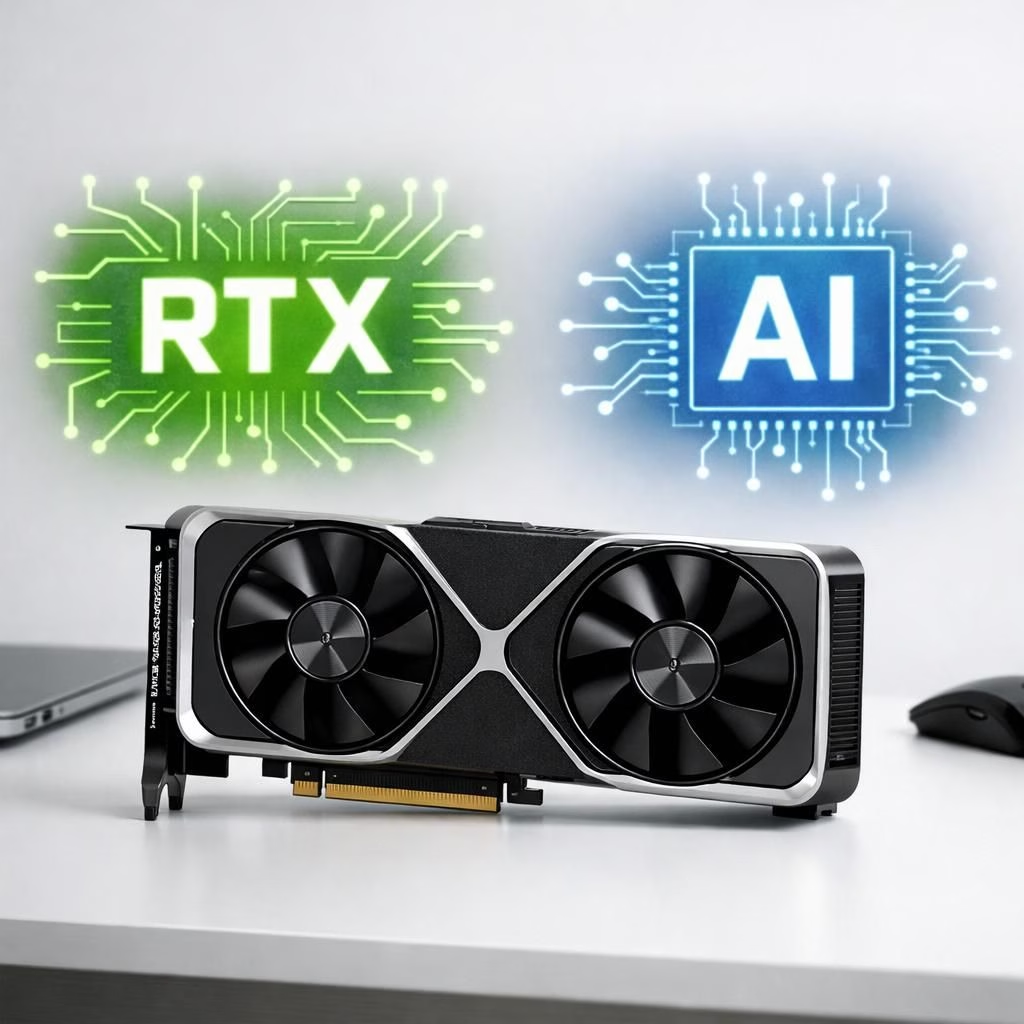
Welcome to a brisk tour of how RTX and AI are reshaping 2026 gaming. With RTX-powered lighting and AI-driven upscaling, players can enjoy cinematic realism without sacrificing speed. The roadmap reads more like a friendly memo than a sales pitch, blending hardware progress with smart software to raise fidelity while keeping power use sensible. Builders and players alike will notice RTX and AI working in concert to deliver richer scenes and smoother gameplay. If you crave a future where RTX and AI cooperate, you are already here.
RTX Path Tracing Breakthroughs in 2026 Gaming
The standout feature is real‑time path tracing fueled by RTX cores and clever scheduling. These upgrades unlock reflections, shadows, and indirect lighting with fewer stalls. In plain terms, you can enjoy scenes that look more like photographs than pre‑computed slides, and you won’t pay a crazy power tax for it. The goal is to deliver cinematic lighting without sacrificing playable frame rates. Developers gain a predictable toolkit, so they can push scenes closer to reality while keeping the engine responsive. This is not magic; it is a disciplined blend of RT hardware, software optimizations, and a AI assistance that precomputes plausible lighting paths on the move. For players, that means smoother transitions between bright exteriors and dim interiors, and less jarring light pops as you move around a scene.
- Real‑time global illumination feels more accessible, even on mid‑range builds.
- Reflections and shadows align more closely with physical reality, reducing uncanny effects.
- Frametime predictability improves, so you can plan your playstyle around consistent visuals.
- Power efficiency improves as smarter scheduling minimizes wasted cycles.
In practice, the RTX path tracing push is about giving creators tools that feel deliberate rather than decorative. You see more natural light, better color accuracy, and fewer distracting inconsistencies as you explore big worlds. For enthusiasts who like to tweak visuals, the RTX path tracing options present clear tradeoffs between fidelity and frame time, which makes performance planning more honest and enjoyable. The result is a gaming experience that honors the artist’s intent while letting players focus on the moment‑to‑moment thrill of action and exploration. And yes, RTX remains a badge of that premium realism without turning your PC into a space heater.
AI Rendering and DLSS Innovations
AI continues to reshape how rendering happens under the hood. DLSS, or Deep Learning Super Sampling, remains the calculator that guesses what the scene should look like at higher samples, but with smarter models and more frame‑friendly workarounds. The current arc points toward DLSS 4‑series features, including multi‑frame generation that conjures extra frames by blending information across time. The practical effect is clean, crisp visuals even when the scene grows complex—without necessarily taxing the GPU as heavily as native renders would. The AI component learns from your game’s typical scenes, leading to fewer artifacts, better motion handling, and a calmer power envelope. In this combination, AI acts as both a painter and a guardrail, preserving detail where it matters and smoothing noise where it would otherwise shout for attention.
- Multi‑frame generation improves perceived smoothness during fast camera or object motion.
- DLSS 4 is designed to scale efficiently with future GPU generations, not just today’s hardware.
- Artists and developers gain more control over fidelity budgets, enabling richer worlds without destroying FPS.
- End‑user experiences include crisper UI elements and more consistent textures as scenes evolve.
From a gamer’s perspective, the AI rendering approach translates to fewer compromises during boss fights, explorations, or tight sprint sections where every frame matters. You can expect scenes to hold up better when resolution targets shift on the fly, and you may notice less shimmering in distant geometry thanks to smarter sampling choices. The AI angle also helps engines adapt to diverse hardware footprints, so your laptop can feel closer to a desktop in quality when settings allow. The net effect is a friendlier ascent into higher visual quality without a dramatic surge in power draw or heat, which matters for compact setups and living room rigs alike.
RTX and AI in Everyday Gaming Habits
Beyond the raw tech specs, the practical story is about how these advances fit into daily gaming rituals. Dynamic MFG (multi‑display frame generation) and related modes push monitor refresh rates toward the max with more flexible multipliers, arriving in staged waves as software stacks refine compatibility. The result is smoother scrolling, snappier cursor‑to‑screen feel, and a sense that the game is responding to your input with fewer hi‑frequency hiccups. In offices and living rooms where power and space matter, the promise of stronger visuals without spending a fortune on hardware becomes increasingly compelling. For content creators, the combination of RTX-accelerated lighting and AI-driven upscaling can shorten iteration cycles, letting teams test ideas and ship polish faster. That’s not just optimism; it’s a practical pattern emerging from the synergy of RTX and AI working together in a well‑engineered pipeline.
- Monitors with higher refresh rates benefit more from optimized frame generation, boosting perceived fluidity.
- Smart rendering helps laptops hold up better under load by distributing work efficiently.
- Developers gain predictable budgets for lighting and effects, speeding up feature completion.
- End users experience more stable visuals with fewer distracting artifacts as scenes evolve.
In short, RTX and AI are not just buzzwords; they are the levers that push the entire PC ecosystem toward more believable worlds and steadier performance. The combination pays off for players, creators, and the hardware enthusiasts who like to tinker. It also hints at a future where high‑fidelity visuals do not require a lab‑grade machine to enjoy, which is good news for entry pricing and mainstream adoption. As a result, 2026 could feel less like a leap and more like a well‑telegraphed march toward consistently better games across platforms and budgets.
Original article: NVIDIA Says Its Future Gaming GPUs Will Bring A 1,000,000x Leap In Path Tracing Performance By Using RTX / AI Advances. Thank you to Wccftech for the source material.
Practical steps for getting the most from RTX and AI in your setup
- Update to the latest RTX drivers to unlock path tracing improvements and DLSS 4.x features.
- Enable DLSS 4.x with Multi‑Frame Generation where your hardware supports it to boost perceived frames without a heavy GPU burden.
- Balance fidelity and FPS by testing in representative scenes; use in‑game presets tailored to your monitor and power budget.
- Keep your system cool and consider a sensible power plan to sustain RTX and AI workloads without thermal throttling.
Frequently Asked Questions
- What is DLSS 4 with Multi‑Frame Generation?
- DLSS 4 uses AI-assisted upscaling and temporal data to create additional frames, improving smoothness without fully rendering each frame.
- Do I need a new GPU to benefit from these advances?
- Most benefits start with current RTX GPUs, but higher gains come from newer generations that have more RT cores and optimized AI accelerators.
- Will this make my laptop run hotter?
- Efficiency gains from smarter scheduling and AI‑driven upscaling can help keep power draw and heat in check, especially when paired with proper cooling.
Conclusion
The trajectory of RTX and AI in 2026 points to more believable worlds and steadier performance without forcing players to upgrade every few years. The practical takeaway is clear: invest in capable RTX hardware, keep drivers current, and embrace the DLSS 4.x family to unlock smoother visuals with a sensible power footprint. Whether you’re a builder, a streamer, or a casual gamer, the synergy of RTX and AI is shaping a friendlier, more immersive computing era.