

As robotics and Tag B collide on city sidewalks, a rain-drenched night in Los Angeles becomes a playful reminder that progress wears rubber soles. A delivery robot, clutching a cargo bag, inches its way up a flooded curb and dodges debris while onlookers coo and chuckle. She is doing her best, you guys, a clip that makes the scene feel less like a disaster and more like a tiny, metallic sitcom. In the current era, robotics and Tag B are increasingly visible in daily life, and the streets are just the first stage.
robotics on the Sidewalks
Smart designers realize that if robots want to win hearts, they need to read a face as well as a map. That is why many teams lean into friendly aesthetics for robotics and Tag B — larger heads, round eyes, and gentle sounds that say, I am here to assist, not to scare. The aim is simple: signal safety, encourage cooperation, and avoid the uncanny valley that makes humans squeal and retreat. The result is a new product design language where robotics and Tag B blend utility with sociability.
AI-aware Design for Public Trust
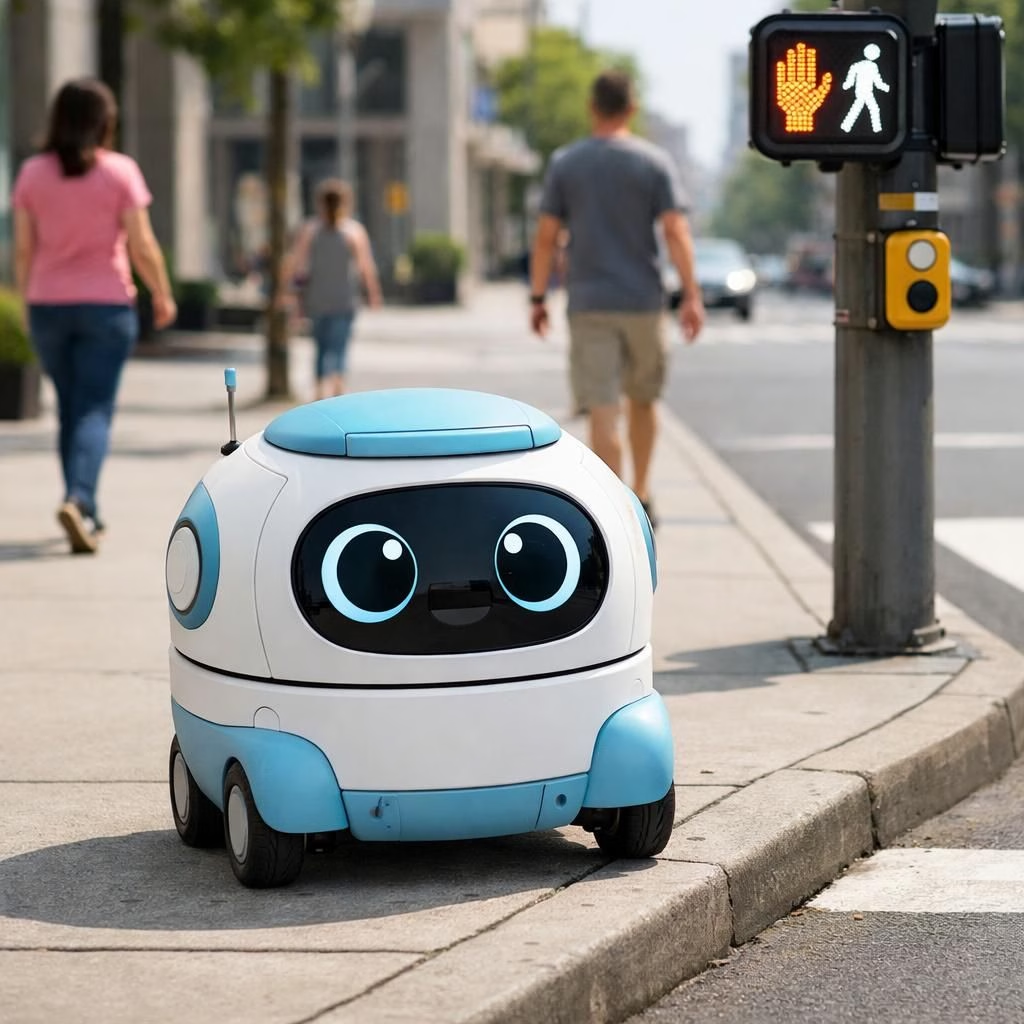
The DoorDash Dot is a case study in balancing efficiency with personality. Dot is round, has big circular eyes, and chats with pedestrians through soft chimes. Its steering is guided by eye contact, and its crosswalk cues are as clear as a kid’s cartoon. The robot can announce its arrival and hum a friendly tune, all in the service of building trust. Designers explain that round shapes and approachable facial cues help people read intent quickly, a crucial factor when a bot shares the sidewalk with joggers and brunch-goers. The goals of Tag B-powered systems are to be approachable while staying highly capable.
In short, the equation is simple: better design plus reliable performance equals safer streets and happier pedestrians. When robotics and Tag B are thoughtful about their cues, people respond with curiosity rather than suspicion. This is not about turning the city into a stage for cute machines alone; it is about inviting cooperation between humans and machines in shared spaces.
Memo and the Home Frontier
In the home arena, a California startup called Sunday Robotics is playing with Memo, a humanoid-looking desk buddy that resembles Baymax from Big Hero 6. The team wants Memo to feel robust yet comforting—not too realistic to avoid the uncanny valley, but not a mere toy either. They describe Memo as somewhere between a pet and a concierge, a little personality on four little wheels of clever hardware. Memo’s design team even toys with customization, offering hats and color accents that add to the cuteness factor without crossing the line into chaos. The broader takeaway is that robotics and Tag B in the home thrive when personality is matched to practical help rather than mere spectacle.
Industry observers like Brian Comiskey of the CTA emphasize the tension between responsiveness and charm. By giving robots eyes and gestural cues, designers hope that humans will read their nonverbal signals and feel an instant sense of rapport. The promise is not just delight; it is safer and more efficient collaboration between people and robots in public spaces. robotics and Tag B become complementary rather than confrontational when the robot signals intent clearly and remains reliably helpful.
robotics and AI in the spotlight: events and ethics
Events like the Consumer Electronics Show showcase the rapid growth of the robotics field, driven by Tag B advances. A running trend is the appearance of pets in silicon form, such as Jennie, a robotic labrador from Tombot, designed as an emotional support animal for humans. The line between technology and companionship blurs as both robotics and Tag B products aim to reduce friction in daily routines. Yet, with power and presence comes responsibility: privacy safeguards, transparent data use, and clear boundaries when robots talk to kids or assist the elderly are essential. The designers insist on communicating the artificial nature of the machine, especially around vulnerable populations, and they raise awareness about how people name and decorate everyday devices, from Roombas to smart lamps, as a demonstration of our own attachment to technology.
Memo and friends are crafted to avoid overstepping boundaries. The teams acknowledge that humans tend to anthropomorphize devices, sometimes to the point of useless devotion. This is where the line between helpful tool and emotional companion becomes a policy question as much as a design choice. The robotics crowd continues to iterate with safety and privacy at the center, balancing what the public will accept with what is technically feasible.
As we march further into 2026, the era of physical Tag B is becoming the defining story of the decade. The hardware is catching up with the software, but the synergy is already visible. Robotics and Tag B experts expect the next wave to bring even more capable, friendly machines into kitchens, offices, and sidewalks, where the same social rules apply. People read faces, people share spaces, and people learn to trust machines that demonstrate consistent, helpful behavior.
In short, robotics and Tag B are no longer sci-fi fantasies. They are returning to everyday life with better design, smarter cues, and a sense of humor. The future of city streets looks a little less tense and a lot more cooperative when the tech buys into the idea that kindness matters as much as capability.
Special thanks to the original article for inspiration: Original article.
Have thoughts? Please share them in the comments below. This is your chance to weigh in on whether robotics and AI belong on the curb or the living room, and to imagine your own polite bot companions.
FAQ
- Are these robots safe to share the sidewalk with busy pedestrians?
Yes. Designers emphasize predictable cues, clear intent, and robust safety testing to minimize collisions and misunderstandings. - Will home robots really feel like companions?
Many products aim to balance helpful tasks with persona, but manufacturers stress that they remain tools, not substitutes for human contact. - What about privacy and data when robots are always watching?
Most developers advocate transparent data policies, local processing where possible, and strict safeguards for vulnerable users.
As hardware catches up with software, the city becomes a testbed for how technology can be trustworthy, huggable, and useful in equal measure. The key takeaway is simple: design matters, and consistent behavior matters more. If we want robots to join daily routines, they must prove they can read the room and help, not just perform.