

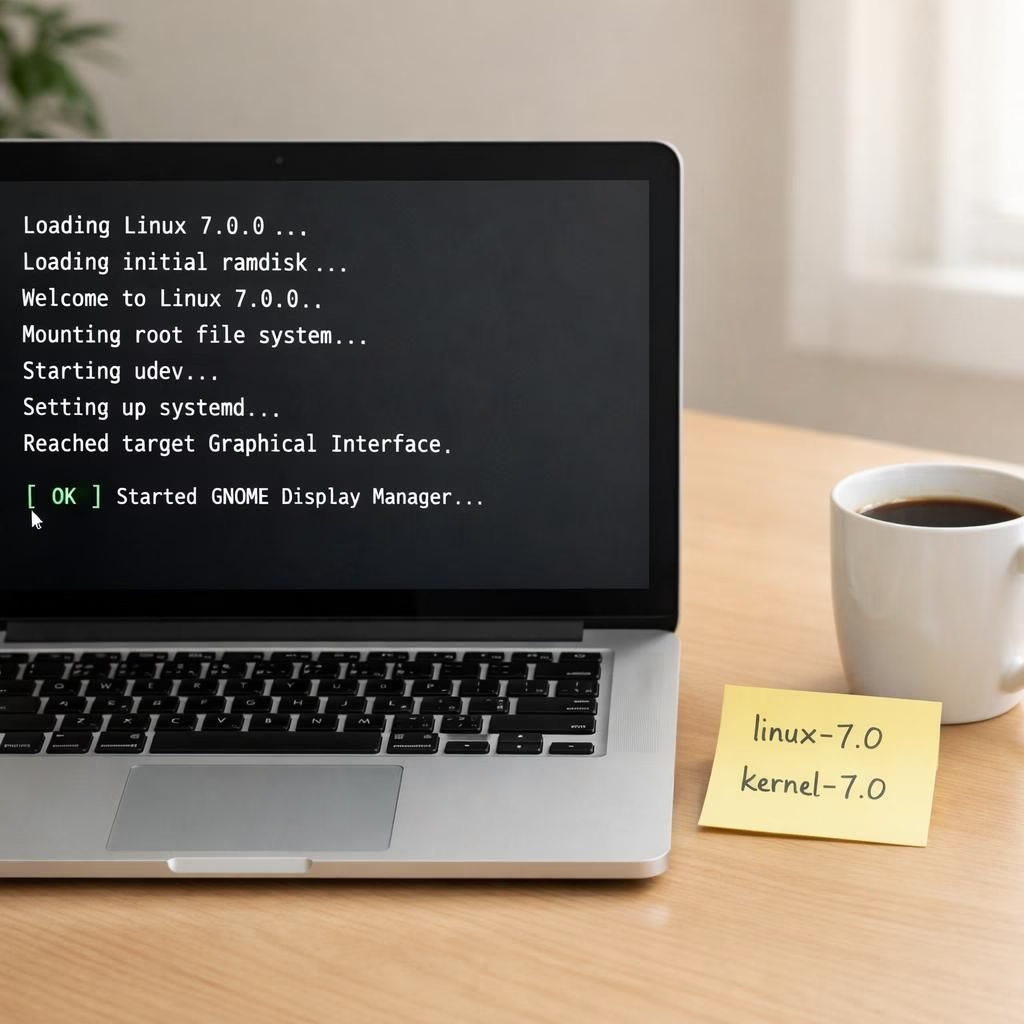
In linux-7.0 and kernel-7.0 era, 2026 arrives with a sprightly 7.0-rc1 snapshot that refuses to sit still. The release candidate blends polish with practical improvements, delivering quicker boots and fewer bottlenecks. If you value a mature, reliable kernel that ships features without drama, you’ll feel seen. This look at the linux-7.0 landscape highlights work from the people who keep the code moving and the tooling humming.
linux-7.0 kernel-7.0: USB Driver, UCSI Thunderbolt Alt Mode, and Friends
First, the USB driver updates land with purposeful swagger. The linux-7.0 patchset strengthens compatibility with Google Tensor SoCs via USB, and the kernel-7.0 UCSI Thunderbolt Alt Mode support now behaves more predictably under stress. This isn’t about glamour shots; it’s about day-to-day reliability when you plug in a docking station or a mysterious new peripheral at 2 a.m. The linux-7.0 line treats hot-plugging like a backstage pass—everything shows up cleanly, and you barely notice the backstage bustle. For developers focused on driver hygiene, these tweaks are small, practical wins that compound into a smoother experience. The kernel-7.0 collaboration favors tidy, dependable scaffolding over fireworks.
linux-7.0 kernel-7.0: Apple Type-C PHY, Snapdragon X2, and Rockchip HDMI 2.1 FRL
Next up, the 7.0-rc1 slate adds Apple Type-C PHY support, along with Snapdragon X2 and Rockchip HDMI 2.1 FRL additions. For linux-7.0 users, the result is broader hardware compatibility without forcing eccentric workaround trails. The kernel-7.0 Type-C PHY handshake is nudged toward predictability, which matters when you’re juggling multiple displays, USB docks, and stubborn peripherals. The Snapdragon X2 integration promises steadier throttling and more reliable performance on mobile-oriented systems, a welcome adjustment for embedded or laptop-class workloads. And the HDMI 2.1 FRL work with Rockchip chips aims to unlock higher bandwidth video paths, translating into smoother 4K or even 8K testing for creators and developers who dabble in GPU-heavy tasks. The tone is practical: more supported hardware, fewer edge cases, and a touch more grace under pressure for creative setups.
linux-7.0 kernel-7.0: AMD Zen 6 Performance Events & Metrics
AMD Zen 6 performance events and metrics arrive in the kernel-7.0 space as clearer visibility into how workloads map to silicon. Linux 7.0-rc1 merges enhanced Zen 6 counters, trace points, and event definitions to help teams optimize scheduling, memory access, and cache behavior. The goal is actionable guidance: knowing where cycles are wasted lets you fix them, yielding a more responsive system in real-world tasks. The linux-7.0 and kernel-7.0 teams emphasize transparency, avoiding jargon-heavy charts while offering a practical lens into performance.
Beyond the headline features, the 7.0-rc1 cycle tightens under-the-hood areas. The memory allocator gets micro-adjustments to reduce fragmentation under mixed workloads, and the scheduler gains small levers to improve responsiveness in multi-tasking. Contributors highlight better error handling in corner cases, so a misbehaving peripheral or BIOS quirk won’t derail a day of work. The overall aim is a kernel that feels confident under pressure—faster to boot, quicker to adapt, and more forgiving when hardware misbehaves. The linux-7.0 and kernel-7.0 teams pursue pragmatic, user-visible improvements that real users can appreciate without a kernel-nerd glossary.
For practical validation, keep this checklist handy across hardware and workloads. Boot tests on several platforms, USB device plug/unplug cycles, Thunderbolt docking scenarios, Type-C port chaining, and HDMI paths with FRL-enabled displays are solid starting points. Use a representative mix of laptops and servers to spot regression without exhausting hardware. If you’re documenting results, capture boots, dmesg logs, and power transitions for later comparison. More importantly, confirm that new code paths remain stable under real-world use with linux-7.0 and kernel-7.0 entries in your test matrix.
To broaden context, consider a quick read on Linutronix’s latest chapter in open-source innovation. Linutronix coverage provides background on how vendors approach kernel development and system integration.
If you’re exploring a broader switch to Linux, you might also find this desktop-focused piece helpful: Linux on the desktop: fun, freedom, and fuzzy logic.
Original article and further reading: Phoronix and 9to5Linux. A big thank you to the authors for the groundwork that inspired this rewrite.
We’d love to hear your thoughts on linux-7.0 and kernel-7.0. Share your experiences, questions, and insights in the comments below so the community can learn together. And if you found this recap helpful, please pass it along to friends who love tinkering with Linux hardware.
Linkback attribution: Special thanks to the original material from Phoronix (phoronix.com) and 9to5Linux (9to5linux.com) for providing the foundational coverage that informed this post. Your work is appreciated!
References
- Phoronix: Linux 7.0-rc1 Released
- 9to5Linux recap
- Kernel.org
- Original source linkback: https://www.phoronix.com/news/Linux-7.0-rc1-Released