

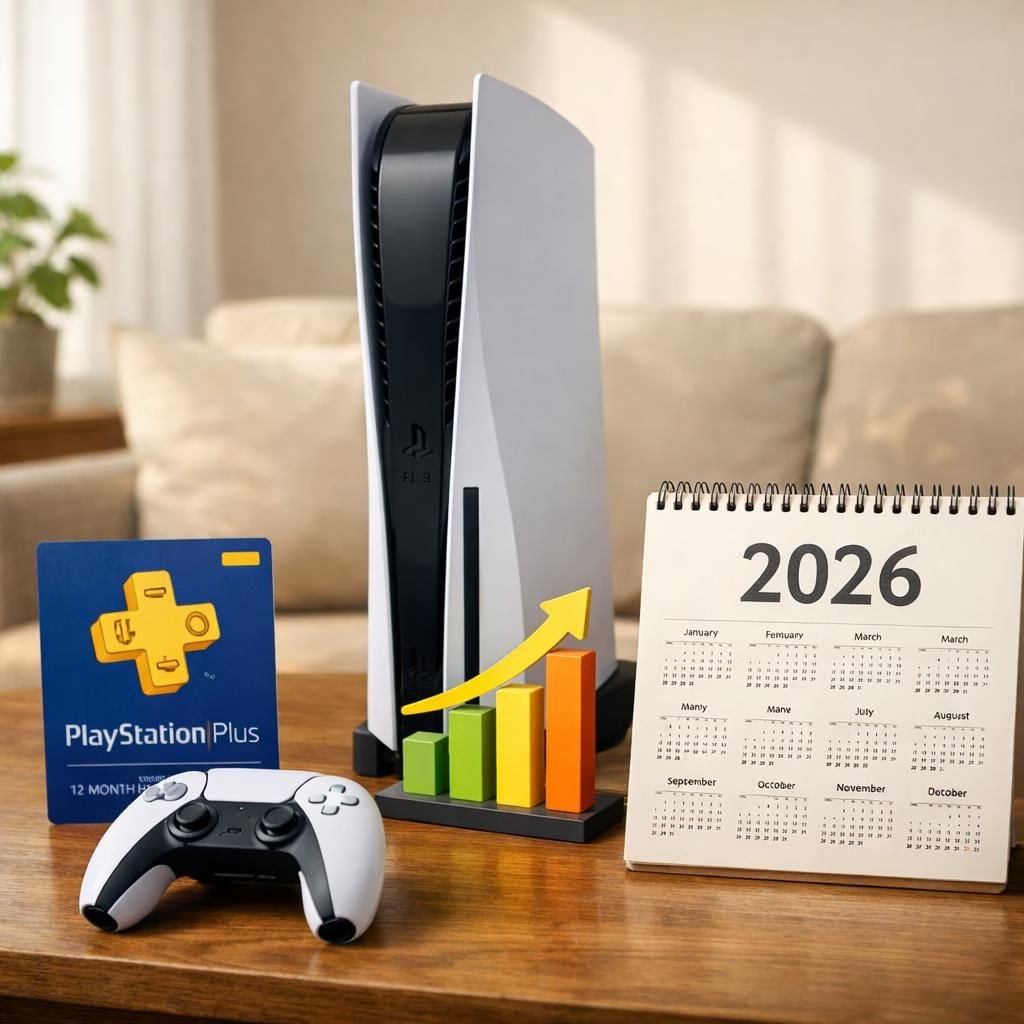
PS Plus price increase headlines have dominated discussions across gaming outlets and mainstream media. This isn’t a rumor but a real shift in how Sony structures its subscription catalog. For many players, the PS Plus price increase signals that the value proposition of digital gaming isn’t static. The market conditions cited for 2026 are shaping what you pay for access and how the tiers fit your playstyle.
PS Plus price increase explained: how the Extra tier changes
Right away, the PS Plus price increase brings the Extra tier into sharper focus. It has long promised a middle ground: more games than the base offering with a manageable price tag. In 2026, this tier addresses players who want a broader catalog without stepping up to Premium. The updated structure recalibrates value by offering a steadier cadence of titles, making the Extra tier attractive to those who want a robust library without added streaming or retro commitments.
For many, the Extra tier remains a practical bridge between the essentials and the full breadth of the catalog. It can be especially appealing if you bounce between console generations or value day-one access alongside a curated lineup of evergreen titles. The PS Plus price increase also nudges developers to prioritize reliable rotation and clear value in the middle tier, helping you decide if this is the right fit for your gaming calendar.
PS Plus price increase reality check: how the Premium tier shifts and why it matters
The Premium tier remains the focal point of the PS Plus price increase story. Sony has long pitched Premium as the most expansive value, with cloud streaming, a broad catalog, and cross-device access. In 2026, the PS Plus price increase sharpens that focus: many players will compare the new price against the breadth of perks and the likelihood of frequent catalog updates. Critics warn some players may feel priced out, while supporters argue that Premium can be a better match for those who want a steady stream of games and flexible play across devices.
For many, the question is whether the refresh justifies the premium or if Extra delivers sufficient value. Cloud saves, online multiplayer, and retro collections remain core features, and the PS Plus price increase helps fund ongoing infrastructure and future titles. The overall result is less about a crisis and more about a deliberate recalibration that asks players to measure benefits against cost. In time, the market will judge whether Premium’s breadth remains worth the investment as catalogs evolve.
Practical tips for navigating PS Plus price increase in 2026
To navigate the PS Plus price increase, start with an audit of your usage. If you spend most time with a handful of titles, the Extra tier may still offer the best value even after the change. If you want a broad catalog and occasional retro access, Premium could justify the cost through flexibility. Use the new pricing as a chance to disable auto-renew for a few weeks and reassess every quarter. Consider trials or promotions to sample the updated library before committing again.
- Map a simple monthly budget for PS Plus and align renewals with your game-release calendar.
- Track how often you use cloud saves, online multiplayer, and access to classic titles to ensure you’re paying for what you actually use.
- Take advantage of any trial periods to sample the catalog before paying again.
The PS Plus price increase should prompt a practical approach to budgeting, not panic. If you can craft a plan that matches your spending with your play, the change becomes a deliberate choice rather than a reflexive reaction.
Why these changes happen and what you should watch in 2026
Sony cites ongoing market conditions as a core driver behind the PS Plus price increase. The reality is that subscription ecosystems require ongoing investment, and the company aims to balance investment with consumer value. The PS Plus price increase funds infrastructure, improves service reliability, and supports a wider array of titles in the catalog. For players, this means a more resilient service and a clearer separation between tiers, which can translate into more predictable experiences. The price increase is a signal that Sony is prioritizing a sustainable model that encourages developers to contribute to the PS Plus ecosystem. The overall effect on the market will hinge on how well the catalog aligns with player expectations and how fairly the price increase is communicated and implemented. Gamers should expect continued tweaks to the tier structure as Sony responds to feedback and market shifts. In the long run, the PS Plus price increase could foster a healthier subscription market, rewarding players who stay engaged with the service and participate in the evolving catalog alongside the hardware roadmap of PlayStation.
In practice, this means you should monitor the evolving catalog, compare it to the old pricing, and decide whether the PS Plus price increase justifies the perks you actually use. The conversation continues as publishers and players weigh the benefits of cloud saves, streaming, and cross-generation access against the ongoing cost of membership. The PS Plus price increase remains a focal point for people who want to balance budget with enjoyment, and it invites a practical, numbers-driven approach to the games you love.
If you want to share your thoughts, please drop a comment below. PS Plus price increase is a hot topic, and your perspective helps others decide whether to stay, switch tiers, or pause renewals. We invite you to weigh in with your experiences of the Extra and Premium tiers, your planned adjustments, and your personal value assessment of the PS Plus price increase in 2026.
Original article inspiration and coverage: Push Square — Thank you for the original material that sparked this discussion.