

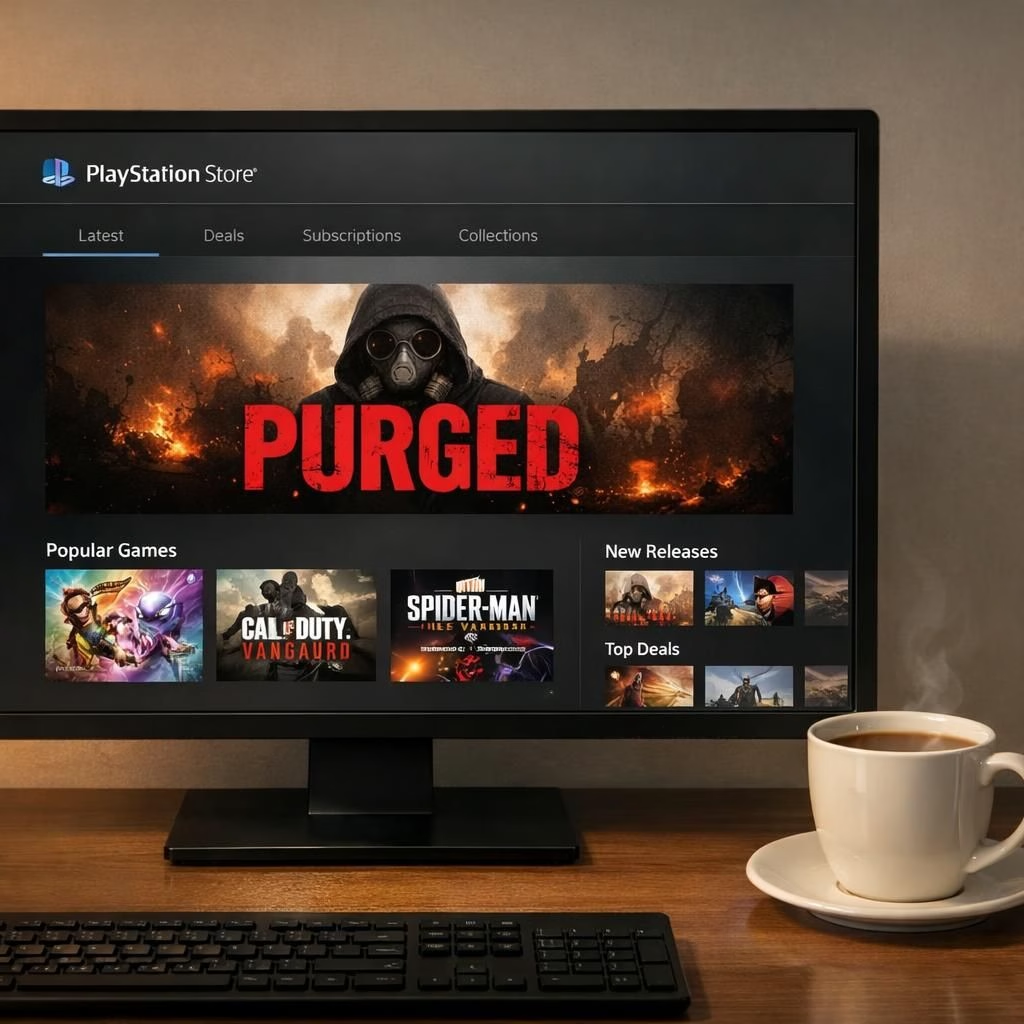
PlayStation users woke up to a surprising wave in 2026 as a broad Delisting swept through the PS Store, trimming roughly a thousand items. The move was framed as stripping away shovelware and clutter, with many outlets noting numbers that exceed 700 low‑effort titles. For players and developers, this shift signals more than a cleanup—it marks a pivot toward a more curated PlayStation marketplace.
Across outlets, the numbers differ slightly, but the trend remains: quality over clutter on PlayStation. IXBT.games highlighted the scale of the Delisting purge, while TheGamer drew attention to the fate of shovelware and low‑effort titles. GamesRadar+ framed the broader implications for developers who built tiny empires on easy‑to‑fill PS Store pages. Push Square captured a key tension: as Sony cleans house, publishers must decide where their games belong, and how to reach audiences that still crave new experiences. The big takeaway is simple: the PS Store is not a static map, and players should expect ongoing refinements as 2026 unfolds.
PlayStation Delisting: Why this purge matters for players and devs
What makes this Delisting event meaningful goes beyond the numbers. It signals a move toward sharper curation, faster discoverability, and a willingness to prune past baggage. The PlayStation Delisting process reduces noise in the storefront, enabling fans to find higher‑quality titles with less scrolling. For developers, the change is a wake‑up call to invest in polish, proof of concept, and longer term support. In a world where digital shelves can overflow within hours, a cleaner catalog helps players decide what to try next rather than what to ignore. The result is a more intentional PlayStation experience for many users and a more accountable environment for makers who ship products with a clear minimal viable audience in mind.
From an industry perspective, this Delisting also tests how platform owners balance freedom with responsibility. Sony’s strategy appears to reward games that meet a higher standard of presentation, packaging, and compatibility with modern hardware. The hope is that better curation protects consumers from fatigue and reduces the churn that comes with constant catalog reboots. Meanwhile, smaller teams facing exclusion from the PS Store can redirect energy toward other platforms where visibility remains viable, or toward licensing deals that enable broader distribution. In short, this Delisting is less about punishment and more about recalibration for a crowded, competitive marketplace.
Still, the experience is not without friction. Some publishers note the emotional and financial costs of removals, especially when games were part of bundles or long‑running promotions. Others view the move as a necessary purge that eliminates dead weight and helps new projects surface. Either way, the conversation around Delisting in 2026 centers on how a major platform navigates the tension between offering player choice and maintaining a manageable, high‑quality library. If you crave a clean storefront, the Delisting strategy seems to be working; if you rely on some older titles, the transition demands flexibility and patience.
Delisting Fallout: Publishers Pivot to Switch, Xbox, and Steam
For at least a few publishers, the solution has been to diversify. A number of developers pledged to continue releasing on Switch, Xbox, and Steam despite the PS Delisting wave. One publisher summed up the sentiment: “This was just as unexpected for us as it was for you.” Their stance is clear: reach players wherever they still want to buy, download, and enjoy games. The cross‑platform pivot is not a betrayal of PlayStation; it is a recognition that a highly fragmented digital ecosystem requires flexible distribution strategies. If a title has a chance to find an audience on multiple storefronts, the team will pursue that path with renewed vigor.
Industry observers point out that diversification also spreads risk. A de‑emphasis on one platform can be outweighed by a stronger presence on others, particularly Switch and Steam, where the audience‑size and store mechanics can differ markedly from PlayStation. The result is steadier revenue streams and more opportunities to test ideas with diverse communities. Publishers are not abandoning PS5/PS4 entirely; they are simply aligning their portfolios with where their players are most likely to engage, which is a healthy sign of a market maturing beyond single‑platform dependence.
From the players’ perspective, the Delisting fallout creates new expectations. Fans see more cross‑platform releases and better communication about timing, pricing, and features. Some titles—especially those with strong handheld or PC‑centric appeal—may shine on Switch, Xbox, or Steam with improved control schemes, updates, and community support. The takeaway is not doom for PlayStation, but a recalibration that invites better games and smarter pacing across ecosystems. If the market rewards quality, then the Delisting seems to be a catalyst for longer development cycles rather than chasing quick wins.
Looking ahead, the PS Store purge is likely to continue shaping the tempo of digital publishing. Expect ongoing evaluations of catalog composition, followed by revisions to submission requirements and QA standards. For players, this means more reliable experiences and fewer awkward entries cluttering the shelves. For developers, it means clarity about what platforms will reward consistent quality and ongoing engagement. And for the industry at large, it’s a reminder that digital marketplaces thrive on curation, transparency, and a willingness to adapt when the landscape shifts underfoot.
As we navigate the evolving PlayStation Delisting landscape, a few practical takeaways emerge. First, verify the platform(s) where your favorites live and consider cross‑platform ownership where feasible. Second, keep a close eye on announcements about catalog changes and upcoming releases so you don’t miss titles that migrate to other storefronts. Third, embrace the idea that a healthy digital market requires both a strong editorial hand and room for independent experimentation. Taken together, these insights offer a forward‑looking view of how players and developers can thrive in 2026 and beyond.
Finally, a note to the community: your thoughts matter. Share your responses to this Delisting moment, how it has affected your library, and which platforms you trust most for indie gems. Your comments help shape the ongoing conversation about how we balance access, quality, and variety in a crowded storefront ecosystem.
Original reporting and summaries have been adapted from a range of sources to reflect the broader discussion surrounding this topic. Thank you to IXBT.games for the initial reporting. Thanks also to TheGamer, GamesRadar+, and Push Square for their ongoing coverage that helped illuminate the different angles of the PS Store purge. You can explore the original pieces here: IXBT.games, TheGamer, GamesRadar+, and Push Square for the full context and details.
Further reading
For official context from Sony and industry coverage, see Sony PlayStation Blog and GamesIndustry.biz.