

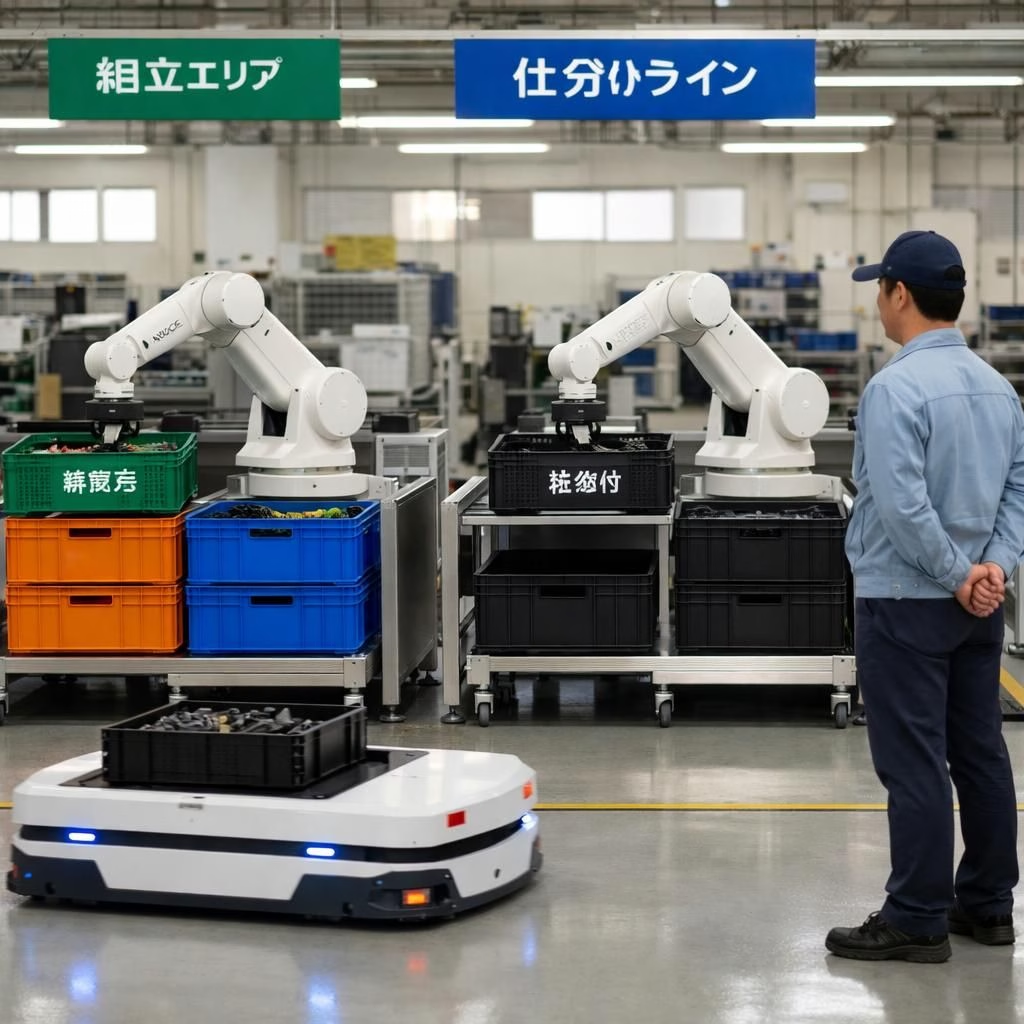
Japan is quietly rewriting the playbook on work and machines. The shift favors physical AI as a practical teammate rather than a science-fiction fantasy. When the labor pool shrinks, [Tag B](https://www.geekyopinions.com/tag/automation) becomes not a threat but a lifeline, stepping into factories, warehouses, and even service counters to keep operations steady. In this shift, physical AI proves to be a dependable, sensor-driven partner that can run 24/7 while signaling the right moments for human help. The result is a steadier, more confident workplace where routine, dangerous, or precision-heavy tasks fall to machines so workers can focus on problem-solving, creativity, and the occasional coffee break. This pragmatic tilt helps explain why Japan’s industrial heartlands are investing boldly in both hardware and software, chasing a future where machines and people share the load rather than compete for it.
Physical AI in Japan: A pragmatic pivot
Across sectors, leaders view physical AI as a steady partner rather than a distant dream. The government signals a long-run strategy to build a robust domestic physical AI sector and to capture a meaningful share of the global market by 2040. Japan already commands about 70 percent of the 2022 industrial robotics market, a hardware foothold policymakers want to leverage with smarter software. Under Prime Minister Sanae Takaichi, roughly $6.3 billion is allocated to accelerate AI development, ease robotics integration, and push deployment across factories, logistics hubs, and service sites. The plan emphasizes resilience: even when the workforce shrinks, the physical AI toolkit keeps essential operations humming and helps teams focus on higher-value work. The focus is not flashy engineering; it is steady, reproducible progress built on safety, training, and clear governance. Physical AI is already shaping safer, more reliable operations, turning data into actionable insights on the factory floor.
automation at scale: hardware strength meets AI software
Japan’s hardware base runs deep: precise sensors, robust control systems, and reliable actuators give robots a sturdy platform. Yet rivals in the United States and China push for more integrated hardware-software systems. The answer is a practical union: automation-friendly platforms that pair hardware with AI to improve autonomy, reduce manual toggling, and speed deployment. Mujin’s software helps robots operate more independently, cutting the need for constant human input while boosting throughput in warehouses. Inspection robots now monitor data centers and industrial sites, improving safety and consistency. The overall shift turns hardware strength into scalable, repeatable operations. Physical AI remains central, but it is now married to software that learns from real-world feedback and improves with use. The end goal is fewer stoppages and faster adaptation to changing demand.
From factories to services: a broader automation sweep
The [Tag B](https://www.geekyopinions.com/tag/automation) sweep extends beyond the factory floor. In logistics, robots sort and move goods; in infrastructure and services, [Tag B] handles monitoring and routine tasks. A growing ecosystem combines enterprise software with hardware, letting robots work with less direct oversight. In data centers and industrial sites, inspection robots reduce manual monitoring and boost safety. The hardware-software mix thrives on data: sensors feed information, AI interprets patterns, and control systems adjust in real time. Japan leans into a collaborative model: Toyota and Honda scale operations, while startups push software and integration. The result is a broader [Tag B] that touches value chains across industries, not just a single factory line.
Looking ahead, policymakers and business leaders push collaboration over upheaval. The government backs a steady transition and clear safety standards; the private sector emphasizes training, governance, and responsible deployment. The international landscape remains competitive, but the emphasis stays practical: hardware strength paired with software platforms, robotics aligned with data science, and new service-based models. The Japan mix of incumbents and nimble startups helps the ecosystem stay resilient. Physical AI helps workers enhance judgment and skills, while [Tag B] handles repetitive tasks, enabling better planning and more human-led problem solving. With continued investment, the country can keep essential services resilient even as demography shifts the labor market.
In short, Japan treats physical AI and [Tag B](https://www.geekyopinions.com/tag/automation) as tools of continuity. The strategy emphasizes dependable, well-integrated systems that adapt to demand shifts and workforce changes. The human element stays crucial: training, safety, and the ability to guide machines with judgment will define success in this transition. If you are curious how this plays out in real life, watch pilot projects across factories, warehouses, and service desks; the results will blend efficiency with empathy, speed with safety, and a touch of humor as robots learn to navigate human quirks.
Original article: Thank you to TechCrunch for the original material on physical AI and automation shaping Japan’s future.
If you have thoughts on how physical AI and automation are shaping work in your region, share them in the comments below.
Further reading
References
- Japan bets on robots to sustain economy amid ageing population
- TechCrunch: physical AI and automation shaping Japan’s future