

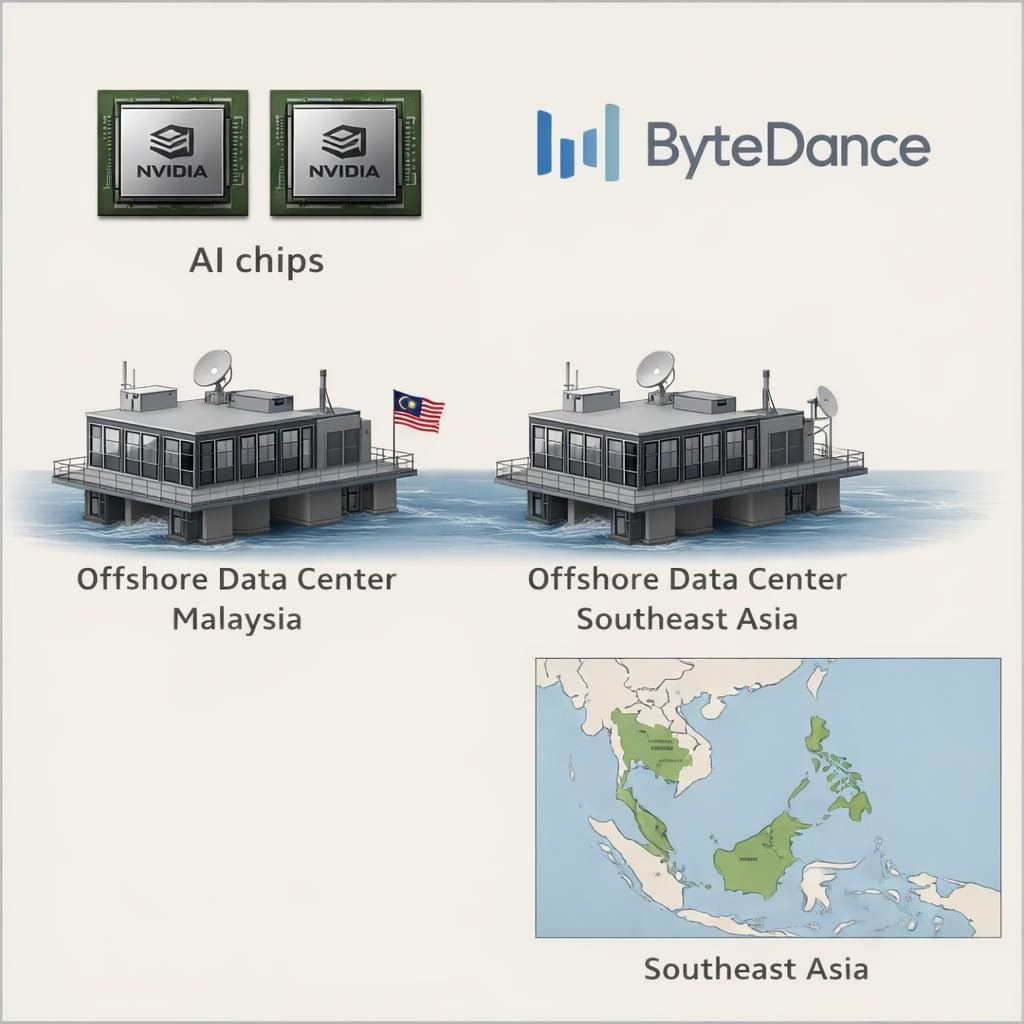
In 2026, Nvidia and ByteDance are at the center of a high-stakes chess game about AI chips and global access. The tale blends silicon smarts with legal gray areas and a dash of optimism about what innovation can achieve. The Wall Street Journal’s report hints at a quiet, sprawling network of partnerships designed to move the hardware without tripping export controls. The company is quietly lining up a vast array of Nvidia AI chips through partners outside China, a move that reads as both audacious and practical.
Nvidia and ByteDance: AI chips at the edge
ByteDance reportedly funds a large-scale array of Nvidia AI chips by routing through a Southeast Asian partner. The plan centers on deploying around 500 Blackwell computing systems in Malaysia, totaling roughly 36,000 B200 chips. If completed, the project could exceed $2.5 billion in hardware costs. Aolani Cloud would own the chips, while ByteDance would lease compute for AI research and product development. The setup keeps ownership outside China, which helps with regulatory nuance rather than a black-and-white violation. Nvidia certifies cloud partners, and Aolani is described as a tier-1 partner with priority access to new hardware.
Nvidia emphasizes compliance, noting that export rules allow clouds to operate outside controlled countries. An Aolani spokesman says they work with a US law firm to ensure strict adherence to export controls. ByteDance insists it adheres to applicable regulations and that the arrangement is carefully structured to stay within the bounds of the law. The project is evolving, with parallel discussions to host more than 7,000 B200 chips at a data center in Indonesia. The sheer scale suggests ByteDance aims to supercharge AI research and accelerate consumer AI features across its apps.
ByteDance’s AI chips strategy with Nvidia partners
Beyond Malaysia, ByteDance has looked to Singapore, Indonesia, and other locales to rent Nvidia AI chips. The model hinges on intermediaries that own the hardware while ByteDance uses the compute under license. This keeps ByteDance in control of product strategy while partners handle ownership and logistics. The company’s AI portfolio includes Dola, a chatbot; Dreamina, a video tool; and Gauth, a homework assistant. A newer model, Seedance, draws attention for turning written prompts into short film scenes. These products show ByteDance’s ambition to scale AI across markets without direct hardware ownership.
Nvidia has repeatedly stressed that its compliance and partner networks are designed to prevent export violations while enabling lawful use of hardware outside restricted zones. The Malaysia project would place ByteDance among the fastest-growing AI players, leveraging a global infrastructure to deliver AI capabilities at speed. The dynamic reveals how large tech firms balance strategic access to hardware with regulatory stewardship, a trend that may shape how AI services evolve in 2026.
To readers curious about the legal landscape, this approach reflects a cautious, creative workaround rather than a breach. Singapore, Australia, and parts of Europe have become home to similar rental models as firms chase compute at scale. ByteDance‘s AI strengths are not only in code but in the ability to orchestrate global partnerships that translate silicon into software magic. The company’s foray into Seedance signals a shift toward video-enabled AI that can narrate stories from text prompts with surprising realism.
In sum, Nvidia’s chips power ByteDance’s global AI ambitions, albeit through a web of agreements, compliance checks, and offshore hosting. The cadence mirrors a tech industry that loves the thrill of ambitious hardware projects but respects the rules that keep trade fair. If you enjoy the blend of policy nuance and silicon bravado, you’ll appreciate how this story tests how far AI chips can travel without leaving the planet’s legal map behind.
Original article attribution: Thanks to The Wall Street Journal for the reporting on Nvidia, ByteDance, and offshore AI chips strategies. Read the original article here: https://www.wsj.com/articles/byte-dance-nvidia-chips-offshore
Have thoughts? Share them in the comments below.
Practical takeaways for readers
- Understand how offshore cloud partners can enable access to cutting-edge hardware without direct ownership.
- Watch for regulatory clarifications that define what is allowable when firms operate from outside controlled zones.
- Note how chip vendors emphasize compliance while supporting innovative deployment models.
How to assess developments like these
- Track where chips are hosted and who owns them to gauge regulatory risk.
- Look for formal statements from the chipmaker about export controls and partner vetting.
- Follow product announcements that indicate new AI capabilities tied to these hardware setups.
FAQ
- What is the core idea behind ByteDance’s chip strategy?
- To access Nvidia’s top-tier AI processors through international partners while keeping ownership outside China, enabling rapid AI research and product development.
- Are these arrangements legal?
- Regulatory experts say they exist in a gray area designed to comply with export controls, provided all rules are followed and oversight remains strict.
- What does this mean for consumers?
- If scalable AI hardware becomes more widely available through licensed channels, consumer features—such as video generation and chat assistants—could improve faster across apps.
References
- Original Wall Street Journal article
- Export Administration Regulations (EAR) overview — U.S. BIS: https://www.bis.doc.gov/index.php/regulations/export-administration-regulations