

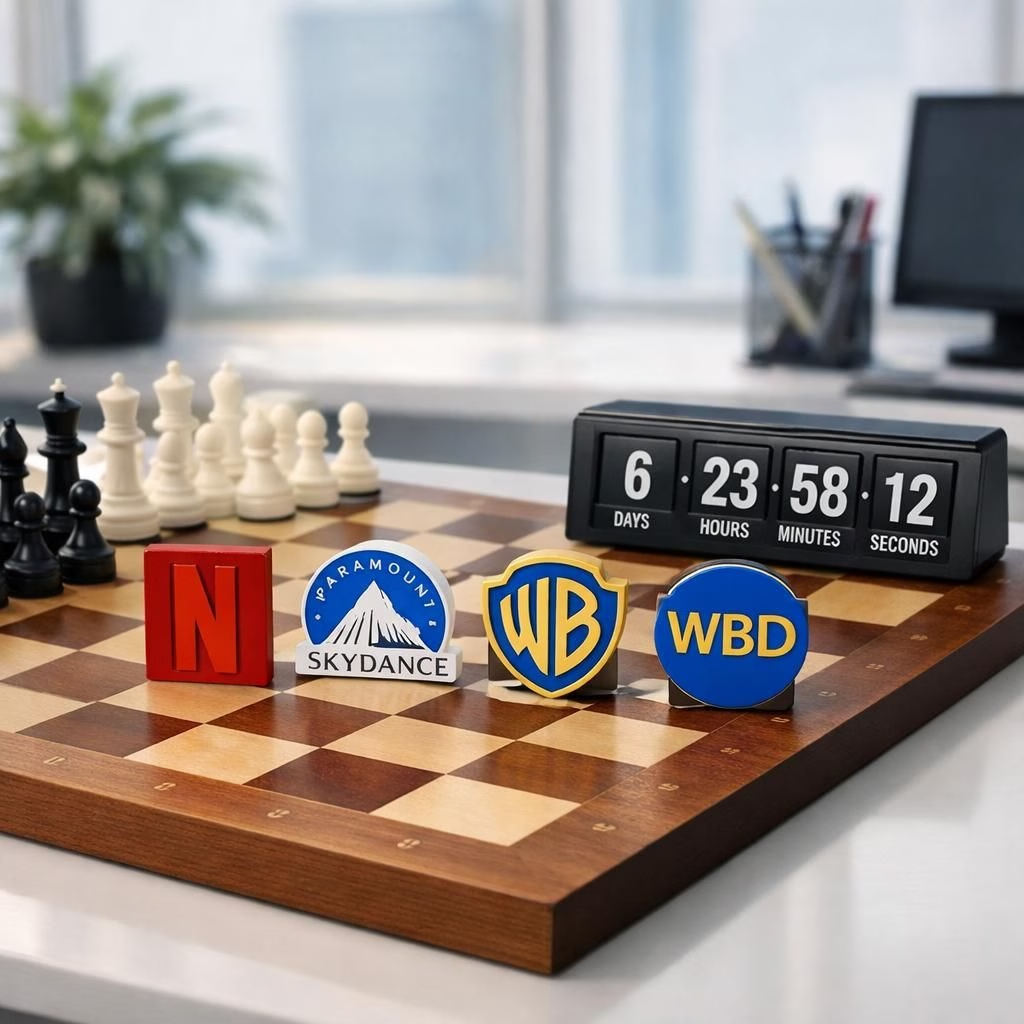
Welcome to the Netflix merger saga—a 2026 reality where Warner Bros. Discovery plays chess with billion-dollar moves and a board that never stops shifting. The Netflix merger remains the prize as WBD defends its plan while Paramount-Skydance circles, teasing a sweeter deal but facing a relentless seven-day clock.
Netflix merger in focus: seven-day clock
Recent reporting shows Warner Bros. Discovery turning away a $30-per-share bid and inviting a “best and final” offer by February 23. WBD asserts the Netflix merger remains superior, and the board has not concluded that Paramount-Skydance could deliver a transaction better than the Netflix deal. In a letter to Paramount, CEO David Zaslav and chair Samuel DiPiazza Jr. emphasize that any new offer must be higher to merit talks. This is a structured cost-benefit exercise with a countdown that investors can feel in their calendars.
Analysts say the clock adds pressure on financing, governance, and the timetable for any potential deal, while the broader market weighs the implications for streaming scale and content strategy. The drama, while front-page, centers on real options and hard numbers rather than theater.
Paramount-Skydance strategy and investor pressure
Paramount-Skydance has floated the idea of raising to $31 per share if talks resume, but WBD remains steadfast that the Netflix merger offers the best value and certainty. Activist pressure from Ancora Holdings has added urgency, while Pentwater Capital Management has discussed board seats and remains a vocal supporter of Paramount’s approach.
Pentwater’s stake adds weight, but the central question stays: can financing be pinned down firmly enough to justify a higher price? The chatter around Ellison’s proposed $40 billion equity guarantee has cooled, reminding everyone that personal wealth and lender credibility do not automatically translate to guaranteed funding. The atmosphere is a blend of risk management with a hint of theater—the kind of drama investors love to debate.
Financial complexity, waivers, and a Netflix entry
To keep talks alive, Netflix granted a limited waiver allowing WBD to engage with the rival bid under controlled terms. Netflix maintains confidence in its own deal, while acknowledging the distraction the talks with the rival bid create for stockholders and the broader industry. The waiver is a careful instrument: it signals openness without surrendering Netflix’s own contractual value. The underlying finance puzzle remains stubborn: who shoulders the $1.5 billion junior lien financing fee if debt financing falters, and how robust is the equity funding pledged by a high-profile sponsor when markets wobble? These questions show that the path to a higher offer is not a straight line; it swings through credit markets, investor sentiment, and the credibility of lenders’ promises. This is where the Netflix merger narrative continues to shape expectations for both sides and for the market at large.
For context on how streaming platforms reform their user experience, see the Netflix app redesign piece.
Market dynamics of the Netflix merger saga: the March vote and beyond
Beyond offers, Warner Bros. Discovery has scheduled a March 20 shareholder vote on the Netflix merger, paired with a plan to spin off Discovery’s cable assets—CNN, TLC, Food Network, and HGTV—into a standalone company. The move aims to simplify the corporate structure and clarify the strategic math for investors. Activist voices and backers continue to push for governance changes, while the broader media landscape remains in flux as streaming, consolidation, and IP monetization evolve. The Netflix merger story remains the central axis around which these negotiations unfold, shaping stock prices and analyst notes across the industry.
Historically, Paramount’s early hostile approach and later revised offers drew attention to financing fragility. The idea of a personal guarantee on tens of billions looked compelling on a whiteboard but faced real-world skepticism from lenders and markets. The governance debate, including concerns from Ancora and Pentwater about board representation, underscores that capital is only part of the equation; credible strategy and execution matter as well. The involvement of Ancora, which holds a stake, suggests investors want a say in the direction of a combined content library and cable portfolio, affecting streaming and advertising plans for the long term. Pentwater’s push to align board composition with strategy keeps negotiations active while complicating fiduciary duties on all sides.
To stay on top of this evolving narrative, keep an eye on the timing of the March vote, the next financing filings, and any new statements from Netflix, WBD, the rival group, Ancora, or Pentwater. The outcome will not just determine who controls a studio and its streaming assets; it will signal how aggressively the industry pursues scale, efficiency, and intellectual property monetization in an era where content is king and platforms are currency. Analyst commentary and market roundup notes will continue to shape expectations in the weeks ahead. See the analyst calls for context.
Thanks to Reuters for the original reporting. Source: Reuters. Share your thoughts in the comments below.
Netflix merger outlook vs Paramount-Skydance risk: what to watch
Analysts broadly view the Netflix merger as offering more certainty in the near term, even if the timing and financing remain complex. The balance of risk vs reward still tilts toward the Netflix path for many observers, but the seven-day clock and ongoing funding questions continue to shape expectations. The market is watching every financing detail, board decision, and regulator signal for clues about value, certainty, and strategic direction in a shifting entertainment ecosystem.
Ancora’s involvement adds governance pressure, while Pentwater’s interest signals that investors want a voice in how a combined company would be steered. The absence or presence of a clean, fully financed path could decide whether the rival deal gains momentum or fades. In short, market dynamics hinge on deal economics, creditor confidence, and the willingness of leadership to align incentives with long-term growth.
Practical takeaways for readers
- Track the seven-day deadline and what a “best and final” offer could imply for value and certainty.
- Watch financing terms, including any guarantees and the role of equity funding in volatile markets.
- Consider governance and board composition as a driver of strategic direction for a combined entity.
FAQ
- What is the current status of the Netflix merger vs Paramount-Skydance?
- Warner Bros. Discovery is pursuing a Netflix-centric deal while a competing Paramount-Skydance bid faces a seven-day deadline to improve. A final decision hinges on financing certainty and governance considerations.
- When is the March 20 vote?
- Shareholders will vote on the Netflix merger on March 20, with a plan to spin off Discovery’s cable networks into a separate company.
- Why is Ancora Holdings involved?
- Ancora is an activist investor pressing for governance changes and a more assertive stance on negotiations, seeking to influence the direction of a potential combined entity.
- What should readers watch next?
- Key metrics include the terms of financing, the timing of any best-and-final offer, and any regulatory signals that could affect streaming strategy and content pipelines.
References
- Times of India: We still support the Netflix deal — seven-day deadline
- Reuters
- Netflix app redesign
- Analyst calls roundup