

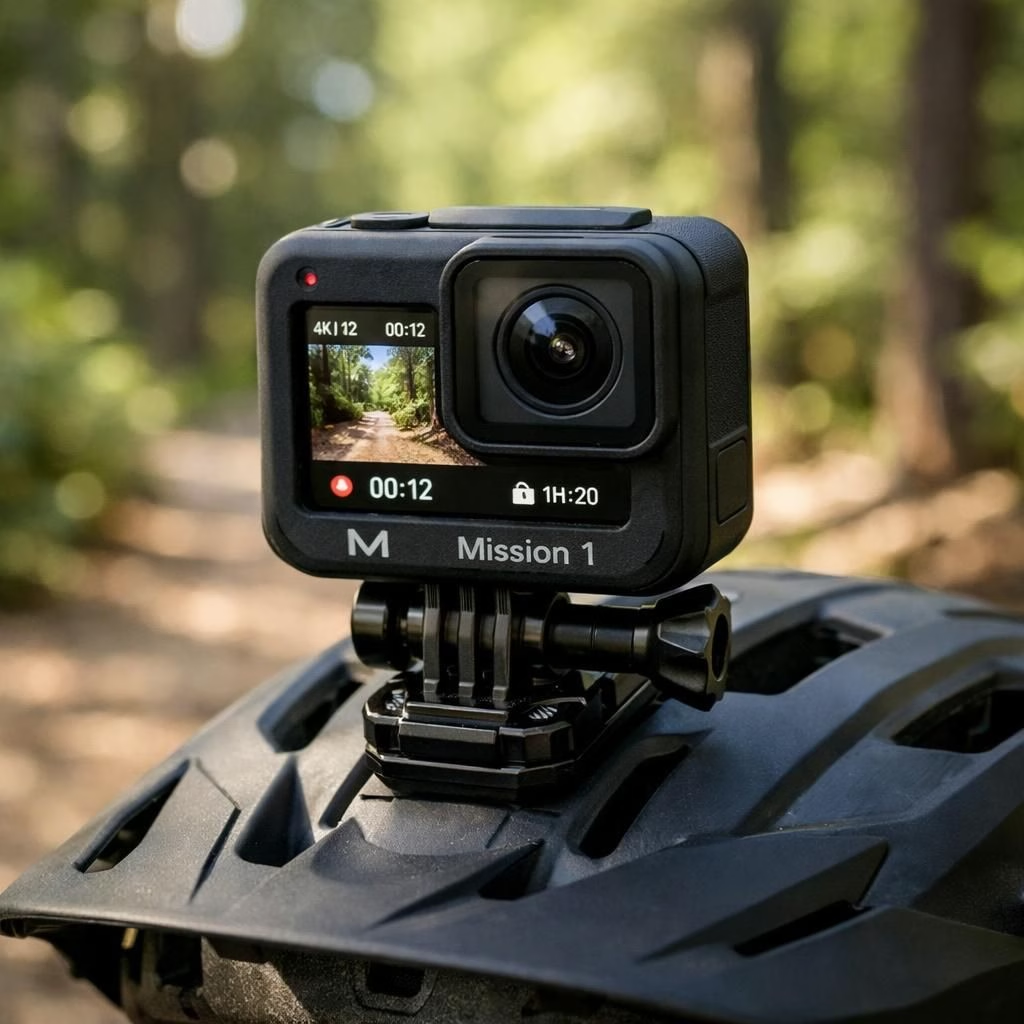
GoPro fans, meet the Mission 1—the latest GoPro hero that promises 8K clarity, 60fps speed, and a generous 1-inch 50MP sensor. Yes, GoPro has done it again, giving Mission 1 a swagger as bold as the subject line of a bike-park video. In 2026, this camera aims to turn action footage into something that looks almost cinematic.
In practice, the Mission 1 lineup brings big steps: a bigger sensor, excellent dynamic range, robust build, and a light appetite for low light. The Mission 1 Pro, in particular, is the big dog in the yard, packing a 1-inch sensor and a Micro Four Thirds mount for external lenses that would make a documentary filmmaker nod in approval.
GoPro Mission 1: 8K 60fps Masterclass
The headline feature is 8K video, with 60 fps possible on the Pro model. The base Mission 1 tops at 8K 30 fps, but that still outpaces many rivals. The 1-inch, 50MP sensor is roughly 13.2 x 8.8 mm, giving you more light-gathering area than the flat-square setups you might be used to. Open gate 8K 30 fps is supported, which means you get a wide, cinematic frame that can be reframed later in post without losing resolution.
GoPro squeezes more handy options into the lens department with a 156-degree field of view on the Pro, a Superview 16 mm ultra-wide that exaggerates drama, and 22–27 mm Linear mode that minimizes distortion. The result is flexible framing for action-packed scenes, from mountain descents to beach races. There are three models in the lineup: Mission 1 Pro with full 8K60 and 4K240, Mission 1 with 8K30 and 4K120, and the Mission 1 ILS model with a Micro Four Thirds mount for external lenses but no built-in lens, aimed at pros who want a modular system.
GoPro Mission 1 Pro: Sensor Size and Pro Options
The Mission 1 Pro weighs about 0.46 pounds, compared with 0.35 pounds for the Hero 13. It is roughly three-quarters of an inch thicker, which is noticeable when mounted on a helmet or cap. The weight difference matters less when you ride, but you will feel it when you carry the camera on a chest strap during a long ride. GoPro designed the body for endurance, not fashion shows, and the trade-off is worth it if you chase top-tier image quality.
Battery life is improved thanks to the new Enduro 2 processor and faster PD 2.0 charging. At 4K 30 fps, you can squeeze over three hours in real use—nearly double the Hero 13. At 8K 60 fps, you’ll still get more than an hour of shooting if you keep airflow reasonable. The Enduro 2 cells are compatible with Hero 13 Enduro batteries too, which is convenient for existing owners.
Thermals are a practical consideration. In tested conditions, at 8K 60 fps and 4K 240 fps the camera runs warm, but GoPro reports about 35 minutes of steady operation without airflow, while the tester saw about 46 minutes of continuous capture. The design remains robust, with the Mission 1 Pro proving itself waterproof to 66 feet without a housing and the lens cover shedding water with a hydrophobic finish. It’s also shock resistant enough to survive a few heroic tumbles without shrugging off the footage.
Storage is a notable caveat: there is no internal memory. The camera uses microSD cards, which means you’ll need to supply cards that keep up with the data rate. If you already own a GoPro ecosystem, you’ll appreciate the microSD compatibility and the ability to reuse older memory cards. For professional users who want a clean, minimal setup, the Micro Four Thirds ILS option unlocks external lens choices, though you’ll be missing built-in optics on that ILS variant.
Image quality continues to impress under daylight, with natural colors and strong dynamic range aided by GP-Log2 10-bit color capture and a high data rate. Low-light performance improves with the larger sensor, though you’ll still see the well-known trade-offs of any action cam in dim conditions. For photos, RAW or JPEG at up to 50MP is supported when light cooperates, or you can shoot 12MP for better sensitivity in shadows.
Audio gets a significant upgrade too: four microphones—two front-facing stereo mics, a rear mic for vlogging, and a bottom mic for wind suppression—plus 32-bit float internal audio. Bluetooth 5.3 enables wireless mics from GoPro or DJI, and wired mics connect via USB-C. In noisy action scenes, the kit handles wind and crowd noise with surprising grace, which matters for POV footage that needs to stay intelligible.
GoPro has lined up a strong accessories ecosystem: the $149 Media Mod with a micro HDMI port, built-in cold shoe, a three-mic array with beamforming, multiple audio ports, and 32-bit float encoding. There’s also a $159 Wireless Mic Complete Kit with transmitters, receivers, a charging case, and wind muffs. Add protective options, ND filters, and a robust grip, and you have a complete production kit that keeps pace with your ambitions, not your budget alone.
Pricing is where the tension lives. The Mission 1 starts at $599, while the Mission 1 Pro comes in at $699. GoPro even offers $100 off new cameras if you subscribe to its $60 per year service. Compare that to the DJI Osmo Action 6 at around $426, and you’ll see the value calculus. If you crave higher image quality for your creative projects and don’t mind spending a little more, the GoPro investment pays off in striking footage, easier post-work, and a brag-worthy cam lineup in your gear closet.
I’m a fan of immersive action video, especially mountain biking, and the Mission 1 line delivers that with panache. The bigger sensor, higher resolutions, and faster frame rates yield footage that stands out. It’s not perfect; there are trade-offs, and the price is steep for some budgets, but the payoff for those who want the best possible action video is clear.
Bottom line: GoPro hasn’t just refreshed a camera; it has redefined what is possible on an action cam in 2026. If your projects demand the finest detail, reliable stabilization, and flexible framing, the Mission 1 lineup is worth serious consideration. If budget is a constraint, you can still admire the tech from afar and wait for price drops or promotions.
Share your thoughts in the comments below about whether the Mission 1 is worth the premium for your needs, or if DJI’s latest still has you convinced otherwise.
Original article: Engadget — GoPro Mission 1 Pro review
Practical takeaways
- Choose Mission 1 Pro for 8K60 and best low-light potential, if your budget allows.
- Expect longer battery life with Enduro 2 and PD 2.0 charging, but plan for external storage if shooting in 8K or 4K 240 fps.
- Consider the Micro Four Thirds ILS variant only if you need external lenses and don’t mind missing a built-in lens.
FAQ
- Does the Mission 1 require a lot of power?
Yes—8K60 and high data rates demand strong batteries, but Enduro 2 improves a lot of runtimes compared with older GoPro models. - Is there internal storage?
No. The camera relies on microSD cards to handle large video files, which is common for high-end action cams. - Is it worth it vs. the DJI Osmo Action 6?
If you value higher resolutions, faster frame rates, and superior color science, the Mission 1 Pro can justify the price for professionals or serious enthusiasts. For casual wearers, the Osmo Action 6 remains compelling on value.
Conclusion
The Mission 1 family doesn’t just advance a single camera; it redefines what an action cam can deliver in 2026. If you demand the finest detail, dynamic range, and framing flexibility, this lineup deserves careful consideration. If budget is tight, you can still appreciate the tech and wait for promos.