

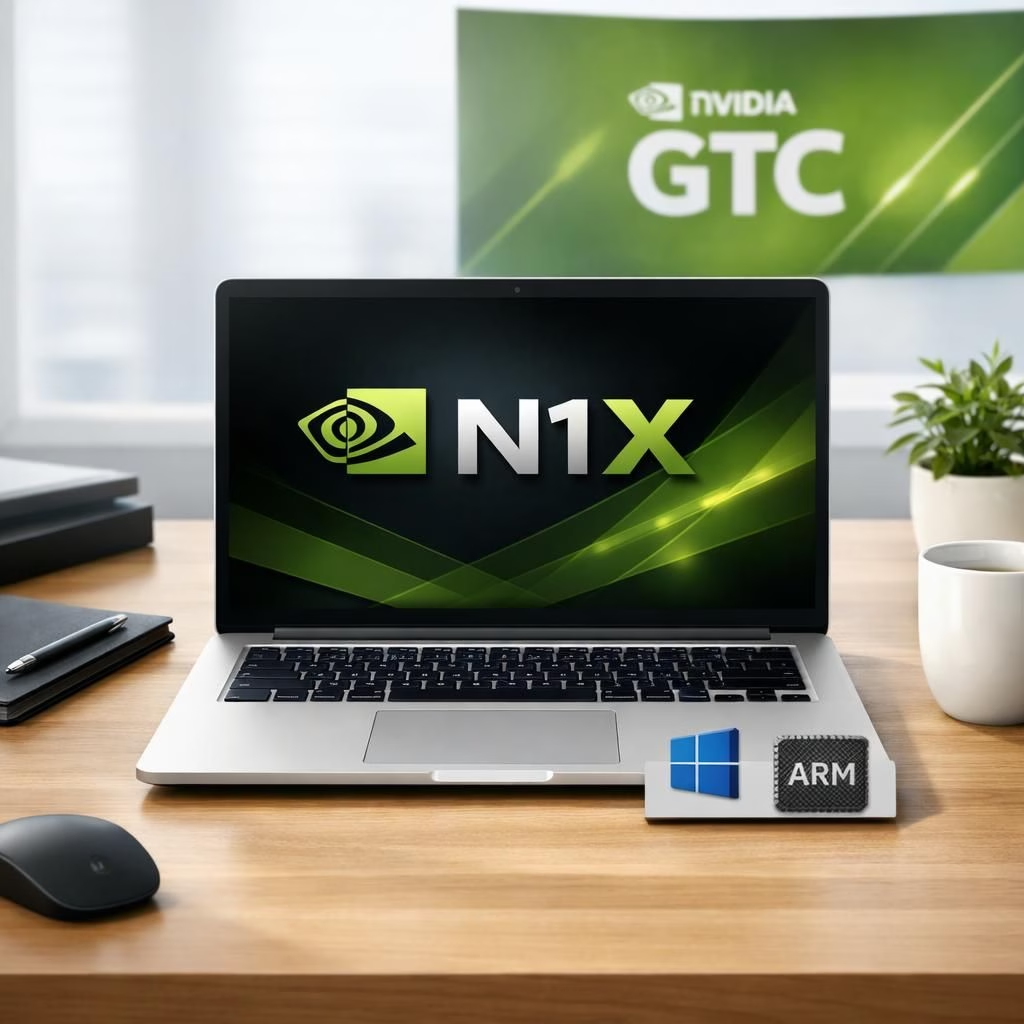
Welcome to a preview where N1X hardware meets Windows PC dreams. In 2026, Nvidia, Microsoft, and Arm promise portable power with AI-friendly silicon—and yes, the fan noise can be a soothing soundtrack. The first Windows PC powered by Nvidia chips could debut next week, according to Axios and corroborated by Reuters. The vibe is part gadget hype and part practical promise: a laptop that blends RTX-like performance with ARM efficiency and Windows compatibility. This is not a marketing dry spell; it is a genuine pivot in how we think about mobile compute. The core truth remains simple and optimistic: Nvidia, Microsoft, and Arm are teasing a new N1X laptop processor line that could reshape portable AI, gaming, and productivity on Windows PC. Expect a careful balance of speed, efficiency, and engineering flair; expect, too, some friendly skepticism from critics who still want real-world benchmarks before they rent a victory dance.
The chatter around N1X and Windows PC is not just a single rumor. The Verge notes that Nvidia, Microsoft, and Arm are all playing along with cryptic hints, while Barron’s and PCMag highlight a coordinated, high-profile tease ahead of the GTC event. The tone is light, but the stakes feel substantial: a class of laptops that might finally fuse desktop-class AI tasks with true-on-the-go mobility. The first paragraph of this tale centers on action, not illusion; the N1X line is positioned as a platform, not a gimmick. As a result, developers, gamers, and enterprise users alike should watch the cadence of announcements with a curious eye and a hopeful grin. In this landscape, a Windows PC that can handle heavy workloads without melting into a laptop-shaped hot plate would be a small victory that many will cheer.
N1X on Windows PC: What the 2026 teaser actually hints at
The year is 2026, and the N1X chip is portrayed as a hybrid champion: Nvidia GPU cores for graphics and AI acceleration paired with Arm-based CPU blocks. Microsoft’s Windows ecosystem would need to adapt to new memory hierarchies, driver stacks, and unified power budgets. The supply chain and manufacturing chatter suggest a design that prioritizes efficiency in sustained workloads while still delivering brisk bursts for gaming and creative tasks. The practical takeaway: this isn’t a single-purpose gadget; it’s a platform shift. Expect a family of laptops rather than a single device, and expect incremental improvements across battery life, heat dissipation, and on-device AI features. The first wave of machines may lean into premium price points, with mid-range options gradually following.
In practice, the N1X on Windows PC concept would rely on tight software-hardware collaboration. Nvidia’s drivers, Arm’s energy-efficient cores, and Microsoft’s OS optimizations would need to sing in harmony. We should anticipate specialized gaming modes, AI-in-the-cloud fallbacks, and perhaps new Windows features designed to exploit N1X’s parallel compute capabilities. The synergy could extend to content creation, 3D design, and ML-assisted workflows. Early testers who get their hands on prototypes could report impressive framerates, snappy scene renders, and a level of energy management that makes long flights feel like a productivity retreat rather than a power drain. In short, the N1X on Windows PC vision aims to turn portability into a credible workstation option.
Why the N1X Windows PC combo could reshape laptops and dev work
The potential impact of this pairing is easy to overstate and wise to examine. On the hardware side, Nvidia’s N1X promises more efficient GPUs and faster AI inference. On the software side, Windows becomes a canvas that can leverage ARM efficiency without sacrificing desktop-grade compatibility. For developers, this could mean simpler cross-platform tooling and more predictable performance across apps that blend graphics, simulation, and data analysis. For gamers and content creators, the dream is smoother frame rates, improved ray tracing, and on-device AI features that speed up editing tasks. For IT teams, the story hints at lighter, more secure, and more energy-conscious devices. If the announcements prove real, the Windows PC ecosystem could shift from a collection of niche devices to a more unified family that confidently handles both heavy workloads and casual browsing.
Let’s keep expectations balanced, though. Real-world numbers will matter more than buzz. Early hands-on impressions may praise responsiveness but flag thermal limits in thinner chassis. The interplay between N1X cores, Windows driver updates, and Arm-based efficiency will define the actual user experience. Still, the strategic alignment among Nvidia, Microsoft, and Arm signals a shared bet: that portable computing can be both powerful and practical, even as we juggle work, play, and the occasional coffee spill. If the first wave delivers, Windows PC enthusiasts will gain a compelling reason to weigh a new laptop category rather than simply upgrading components inside an aging chassis.
From a market perspective, the pivot could accelerate collaborations between hardware makers and software developers. It may also push competitors to respond with sharper, more power-efficient designs. The result could be a healthier and more dynamic laptop market, where strong hardware is matched by smarter software. The community’s reaction will likely swing between cautious optimism and the thrill of a potential breakthrough. Either way, expect coverage from Axios, Reuters, The Verge, Barron’s, and PCMag to keep pace, translating whispers into practical expectations and testable specs.
As we edge closer to actual devices, the narrative stays focused on tangible benefits: better performance-per-watt on Windows PC laptops, smoother creative workflows, and a pipeline for developers to experiment with new AI-powered features. The Windows PC narrative is not just about raw speed; it is about enabling new kinds of work and play on the move. The Windows PC platform could emerge as a more versatile home for AI-assisted design, immersive content, and portable gaming. The pathway looks long but promising, and the pace of teasers suggests a launch window that won’t hide behind corporate chatter for long.
For readers who track the tech press, this is a story to watch. The interplay between Nvidia’s silicon ambition, Arm’s efficiency proposition, and Windows’ flexible ecosystem creates a rare cross-section of hardware, software, and user experience. If the first wave of N1X-equipped Windows PCs delivers on even a portion of the promise, we may be looking at a meaningful step toward laptops that do not force a trade-off between power and portability. The coming months will reveal how deeply these pieces align and how quickly developers and OEMs translate the vision into widely available devices.
Ultimately, the excitement rests on real-world results. Until the first devices land, we’ll celebrate the idea of a cohesive triad: Nvidia’s acceleration, Arm’s efficiency, and Windows’ ecosystem. The future of portable computing could well be defined by how well this triad collaborates to create laptops that are fast, quiet, and reliable, even when pushed hard. The nomination for “tech clipboard staple” could soon go to the N1X Windows PC family, if the numbers line up and the user experience feels premium from day one.
In the end, this is a story about ambition meeting practicality. If the initial devices arrive on schedule, with robust performance in gaming, creative tasks, and AI workloads, we’ll owe a nod to the teams coordinating across Nvidia, Microsoft, and Arm. The first preview cannot capture every nuance, but it can set expectations for what comes next: more capable laptops that let you work, stream, create, and code without compromise.
Tell us what you think: are you excited about a future where Windows PC laptops powered by N1X blend AI, graphics, and endurance? Share your thoughts in the comments below.
Original article inspiration and attribution: Thanks to Axios for the original scoop on the first Windows PC devices powered by Nvidia chips. Source materials from Reuters, The Verge, Barron’s, and PCMag were used to shape this overview and interpretation. If you’d like to read the initial reports, you can visit the original article page here: Axios – Scoop: First Windows PCs powered by Nvidia chips to debut next week. Thank you all for engaging with this material and helping bring clarity to the excitement around N1X, Windows PC, and the path forward for hybrid silicon and OS design.