

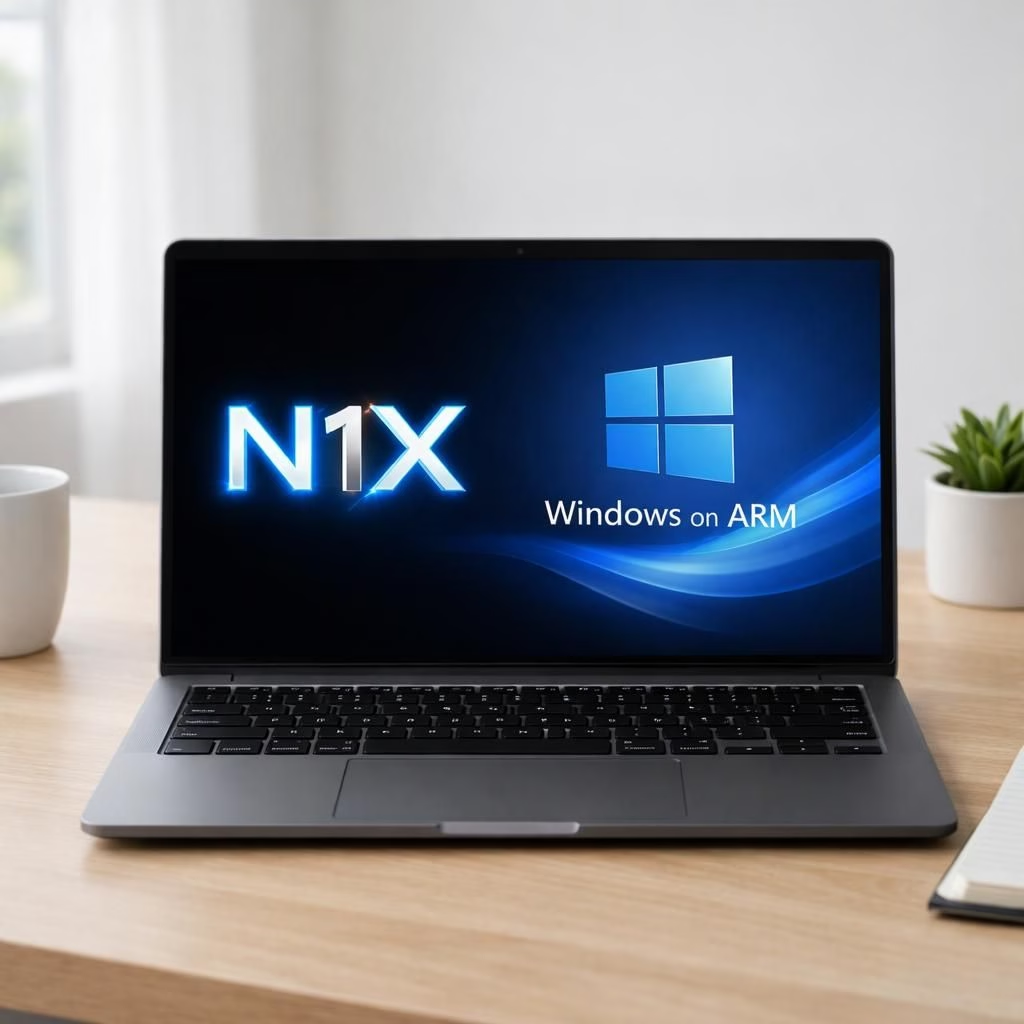
In 2026, N1X laptops surface in chatter alongside Windows on Arm as Nvidia, Microsoft, and Arm tease a fresh era. They trade cryptic posts, glossy memes, and a handful of buzzwords, all while quietly testing the idea that hardware, software, and a little humor can dance in step again. The online chatter feels like a friendly scavenger hunt where engineers, marketers, and enthusiasts pretend they aren’t enjoying the mystery too much.
N1X and Windows on Arm: A new era in 2026
Right away, the memes advertise a blend: premium silicon, a familiar Windows on Arm vibe, and the shared promise of better battery life, cooler runs, and a smoother app ecosystem. The trio—N1X, Windows on Arm, and the folks who cover them—keeps the pace brisk with ambiguous tweets, hints about toolchains, and developer notes. It’s not a formal press release, and that’s part of the charm: speculation arrives with a wink, not a warranty card.
The real charm lies in how the rumors frame a practical question: can a future laptop family truly bridge performance with efficiency on Windows on Arm? The answer remains uncertain, but the discussion itself is useful. People are asking about compatibility with existing apps, native performance for modern tasks, and the ease with which Windows on Arm can handle creative workloads, gaming, and productivity in one smooth experience. It’s less about one chip and more about a renewed appetite for hardware-software harmony.
Why N1X could redefine Windows on Arm laptops
When you strip away the theater, what really matters is whether the hardware can deliver a measurable leap in real-world use. If N1X chips offer stronger single-thread performance, improved power efficiency, and a friendlier thermal envelope, Windows on Arm could become a more credible daily driver for a wider audience. The conversations around this topic focus on practical aspects: boot times, driver availability, the maturity of ARM-native apps, and how well updates support a new generation of laptops. In short, the potential is not only about speed, but about an ecosystem that feels effortless to adopt for students, professionals, and casual users alike.
What the teaser campaign tells developers about N1X and Windows on Arm
From a developer’s lens, the teasers are more significant than they look at first glance. They signal a shift in how platforms communicate product direction. The language is approachable, the visuals are friendly, and the cadence is steady. This suggests a move toward clearer collaboration between silicon vendors and software makers. If the N1X story gains traction, developers might see improved toolchains, better documentation, and more consistent performance expectations across Windows on Arm devices. The practical upshot is a tighter feedback loop: better guidance for optimizing apps, more reliable emulation paths, and a growing sense that ARM-based laptops aren’t just a boutique option but a mainstream one.
There’s also a larger public-facing narrative about how this affects the broader market. A successful N1X push could nudge other hardware teams to rethink their platform strategies. It’s a gentle reminder that the PC is not a fixed creature; it evolves with how people work, learn, and create. The idea of a new era rests on small improvements stitched together into a credible, real-world upgrade path rather than a flashy but fragile gimmick.
Practical implications for performance and compatibility with Windows on Arm
On the practical side, Windows on Arm gains attention for how it handles specialized workloads. Users who depend on virtualization, productivity suites, or media editing want predictable performance and dependable drivers. If N1X delivers stronger GPU acceleration for creative apps, smarter battery management for all-day use, and smoother wake-from-sleep behavior, the appeal grows—especially when paired with a familiar Windows on Arm experience.
The discussion often returns to compatibility: will critical legacy apps translate cleanly, and will developers invest in ARM-native optimizations without sacrificing elsewhere? These questions aren’t merely theoretical; they shape how welcoming Windows on Arm devices feel to a broad audience.
Beyond performance, security remains a priority. A modern laptop platform thrives when security features scale with performance. If the N1X family emphasizes hardware-based protections, secure boot improvements, and robust firmware update paths, it reduces risk and increases trust. The tech community often enjoys a healthy mix of skepticism and optimism here, but the balance tilts toward practicality when real-world benchmarks and user experiences align with the promises teased in early posts.
How this could influence users, developers, and the market
For users, the potential fusion of N1X power with Windows on Arm hints at lighter devices that last longer between charges, while still handling demanding tasks. For developers, a clearer roadmap and stronger tooling promise a smoother migration path. For the market, a successful push could incentivize more competition, deeper partnerships, and a broader selection of devices that don’t force a compromise between mobility and performance. In other words, this isn’t just about one chip; it’s about a more confident, flexible approach to laptops that can serve a variety of needs in 2026 and beyond.
As with any teaser-driven narrative, there’s plenty of room for humor, skepticism, and healthy speculation. The best outcome is a clear timeline, concrete performance data, and a set of devices that feel Ready for Real Life rather than Ready for a press conference. The tech world loves a good origin story, but it loves a useful product even more—so here’s hoping the N1X and Windows on Arm duo continues to move from rumor to results in the months ahead.
Thank you to the original reporting and coverage that sparked these conversations. Special thanks to The Verge for early reporting and to Barron’s, Tom’s Hardware, Windows Central, and TechPowerUp for ongoing context and thoughtful analysis. Readers can explore the linked sources for additional perspectives and timelines.
Original article attributions and further reading:
– The Verge
– Barron’s
– Tom’s Hardware
– Windows Central
– TechPowerUp
We appreciate the original material that helped shape this overview. If you’ve got thoughts, experiences, or questions about N1X and Windows on Arm, please share them in the comments below.