

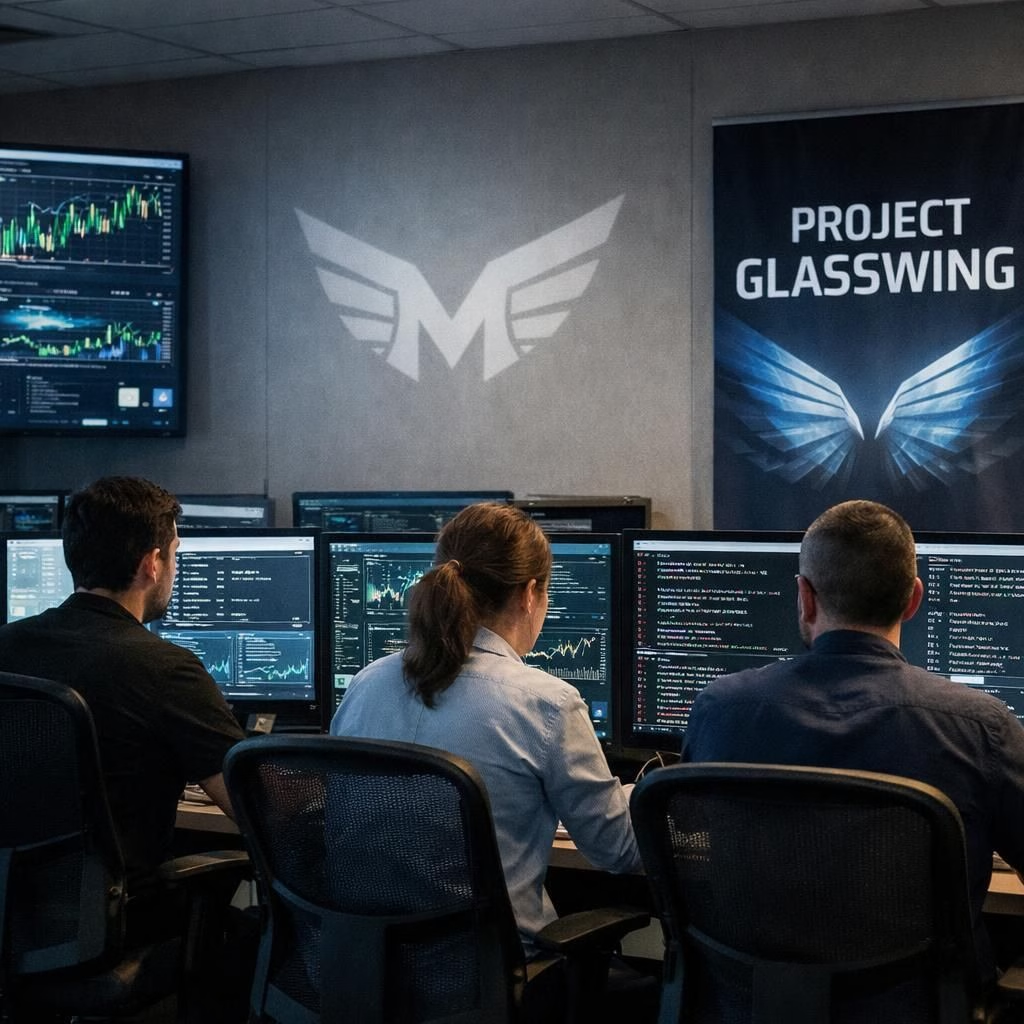
In 2026, Mythos moved from alarm to cautious practicality as policymakers and banks chart a safer path for AI in Cybersecurity. Bloomberg’s reporting shows top US officials nudging Wall Street to test Mythos internally to harden defenses, turning a once-feared model into a potential shield rather than a flashy gadget. JPMorgan Chase has already begun hands-on testing, with Goldman Sachs, Citigroup, Bank of America, and Morgan Stanley weighing their own pilots. It’s a positive shift: the Cybersecurity governance framework the sector built in response to early AI fears is now guiding practical safeguards.
Mythos-Driven Cybersecurity Outlook for 2026
The shift isn’t hype; it’s a pragmatic course correction. Regulators describe Cybersecurity as a tool for resilience, not a rogue AI. Banks test Mythos against their own networks, measuring detection rates, incident response timelines, and the impact on risk governance. The aim is to strengthen Cybersecurity by learning from real data while keeping safety controls intact. The move reflects a broader industry habit of turning ambitious AI into enforceable defenses rather than reckless experimentation.
In Washington, Treasury Secretary Scott Bessent and Federal Reserve Chair Jerome Powell urged executives to run Mythos against their own systems. The goal is resilience, not panic—to harden defenses before vulnerabilities become headlines. National Economic Council Director Kevin Hassett framed the moment as a practical precaution: safety and preparedness are strategic assets for a financial system that now runs more AI than ever.
Cybersecurity Readiness: Mythos and Glasswing Align
Anthropic has rolled Mythos into a controlled release under Project Glasswing with a select list of partners—Google, Microsoft, JPMorgan Chase, and CrowdStrike—to prove the model’s defensive potential in safe environments. The team stresses that a free-for-all release could ripple through economies and public safety in damaging ways, which is why continued governance remains a top priority. Mythos in Glasswing is presented as a defensive instrument, not a weapon, and the experimental framework is designed to learn safely and transparently.
Banks are calibrating alerts, feeding synthetic data, and tightening data controls while staying mindful of privacy and regulatory constraints. The goal is to deliver faster detection and smarter response—without becoming overreliant on any single AI that could misbehave. This measured approach also sets a blueprint for other AI systems designed to fortify Cybersecurity rather than replace human oversight.
Canada’s CFRG recently hosted a situational-awareness session with regulators and the six largest banks to discuss Mythos‑related Cybersecurity risks. The Globe and Mail reported a collaborative posture: raise awareness, coordinate, and prepare. The sense was less alarm and more readiness, underscoring that cross-border dialogue helps harmonize risk standards and incident‑response playbooks. This Canada‑wide thread mirrors the US momentum and reinforces the idea that a resilient Cybersecurity posture requires sustained cooperation across institutions and regulators.
What connects these efforts is a shared belief in incremental progress. Mythos is being treated as a partner rather than a showcase; Glasswing is used as a laboratory for defensive testing under strict controls; CFRG discussions emphasize practical risk knowledge and governance. The overall arc points toward a security ecosystem that benefits from AI-enabled insights while preserving safeguards that keep financial markets calm and predictable.
- Governance: Establish clear policy boundaries for Mythos use and ensure human oversight remains central. Cybersecurity
- Testing: Use controlled environments to measure effectiveness, false positives, and incident-response improvements. Cybersecurity
- Privacy and data hygiene: Maintain strict data handling rules to protect customer information.
- Cross-border collaboration: Share best practices and coordinate responses with regulators and peers. Cybersecurity
- Resilience metrics: Track detection speed, containment success, and system-wide risk reductions. Cybersecurity
In this frame, Mythos becomes a catalyst for better Cybersecurity practices across the sector. It’s not about seducing executives with a technical magic trick; it’s about building a durable, safety‑first culture around AI in security operations. The narrative favors steady progress, cautious experimentation, and transparent governance, with a clear-eyed view of public trust and market stability.
Looking ahead to 2026, the likely path includes more pilots, refined governance, and ongoing dialogue among banks, tech firms, and regulators. The trend is toward responsible innovation: AI can help surface vulnerabilities faster, but people still decide how to act on those alerts. If this balance holds, Mythos can lift Cybersecurity to a higher plane while keeping the system safe, fair, and reliable for customers and institutions alike.
Thank you to Bloomberg for the original reporting that sparked these considerations. We’re grateful for the thorough material that helped shape this piece and for the ongoing coverage that keeps the industry honest and informed.
Original reporting from Bloomberg: Bloomberg article. Thank you for the source material that inspired this piece.
Want to share your thoughts? Please drop a note in the comments below and join the discussion on Mythos and Cybersecurity, as we shape a safer financial system together.
Original Bloomberg article attribution: Special thanks to Bloomberg for the original reporting and for materials that helped craft this updated perspective. Bloomberg.
References
Bloomberg article: Bloomberg.
Times of India linkback (original source): Times of India.