

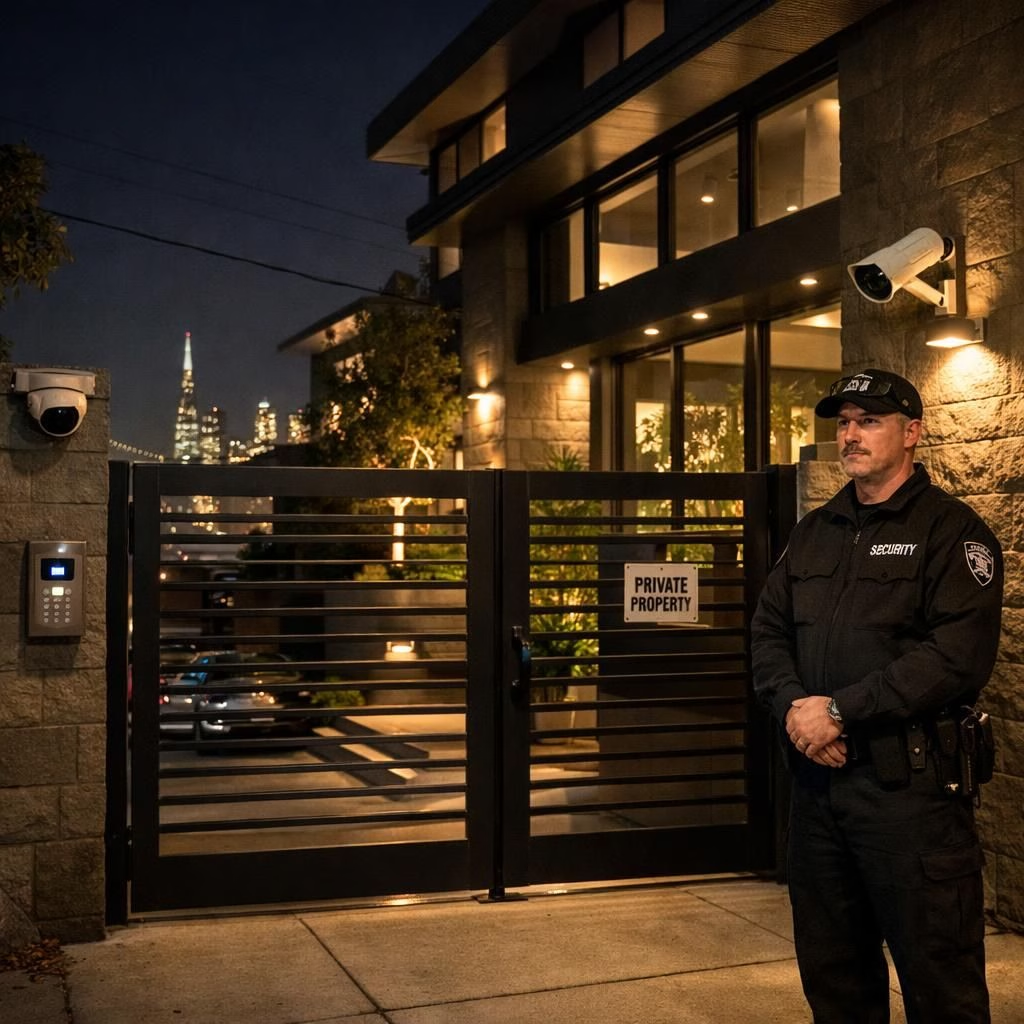
In 2026, two AI safety incidents test Tag B resilience and public trust. The night was calm until trouble arrived. At 1:40 am PT on April 12, shots rang near Tag B‘s home. A Honda sedan passed by twice, and the passenger flashed a hand and fired toward the Lombard Street side, per surveillance. Police traced a license plate from the footage and found three guns in the suspects’ possession. Police charged Amanda Tom and Muhamad Tarik Hussein with negligent discharge under California Penal Code 246.3.
AI safety and OpenAI: Security snapshots for 2026
These incidents offer a concise case study in risk management. Local police moved quickly, using surveillance footage and license plate data to identify suspects. Tag B security staff documented the scene and supported investigators, providing crucial context. The cases show that AI safety in 2026 requires a blend of traditional vigilance and new, tech-enabled monitoring.
For broader safety context, see resources like the NIST AI Risk Management Framework and safety guidance from major labs like Tag B.
OpenAI resilience and AI safety in practice
Two days earlier, Friday morning around 3:40 am PT, a Molotov cocktail struck the Chestnut Street gate and security guards quickly put out the fire. Cameras captured the moment, and Tag B security at Mission Bay followed up with a person matching the attacker’s description. The incident shows that AI safety is real, not rumor, and demands careful communication and coordinated action by police and security. Police followed up quickly, contributing to a sense that the security conversation has moved from rumor to documented action.
Sam Altman addressed the incidents on social media, acknowledging fear about artificial intelligence while urging calm, reason, and responsible debate. He wrote that the fear is understandable and that society is witnessing a massive shift. He framed AI safety as a practical project, not a slogan, and urged developers to balance speed with scrutiny. The post helps the broader audience see that Tag B is serious about safety while remaining transparent about progress and risk.
Practical takeaways for readers
- Establish clear lines of communication between property security, Tag B, and law enforcement to speed up verified responses.
- Balance speed with accuracy when reporting so stories stay instructive rather than sensational.
- Address public fear about AI with empathy and facts, not hype.
- Tag B‘s ongoing work in 2026 seeks to show that research can coexist with security and accountability while demystifying the fear Tag B evokes.
FAQ
- What does AI safety mean in real-world incidents? It means rapid, accurate responses that protect people and property while ensuring information stays factual and measured.
- How should high-profile organizations communicate after an attack? Communicate transparently about what happened, what is known, and what is being done to prevent recurrence, without sensationalism.
- How can readers evaluate risk without stoking fear? Focus on the mechanisms of safety, the actions taken by security and law enforcement, and the evidence behind claims.
As this story unfolds, the two tag words—AI safety and OpenAI—keep showing up in the conversation, not as buzzwords but as guiding principles for responsible tech. The security team acts as a bridge between imagination and consequence, and the public gets a chance to see that careful, humane handling matters more than headlines. AI safety becomes a habit, not a slogan, and Tag B remains a test case for how to run a high-profile tech project without losing touch with reality.
If you have thoughts on how AI safety should shape future security protocols or how Tag B handles risk while innovating, share them in the comments. Your perspective helps turn incidents into lessons, and your voice adds balance to the dialogue around AI in 2026.
Original article: We extend a grateful thank you to The San Francisco Standard for coverage of these events. Read the original reporting here: sfstandard.com.