

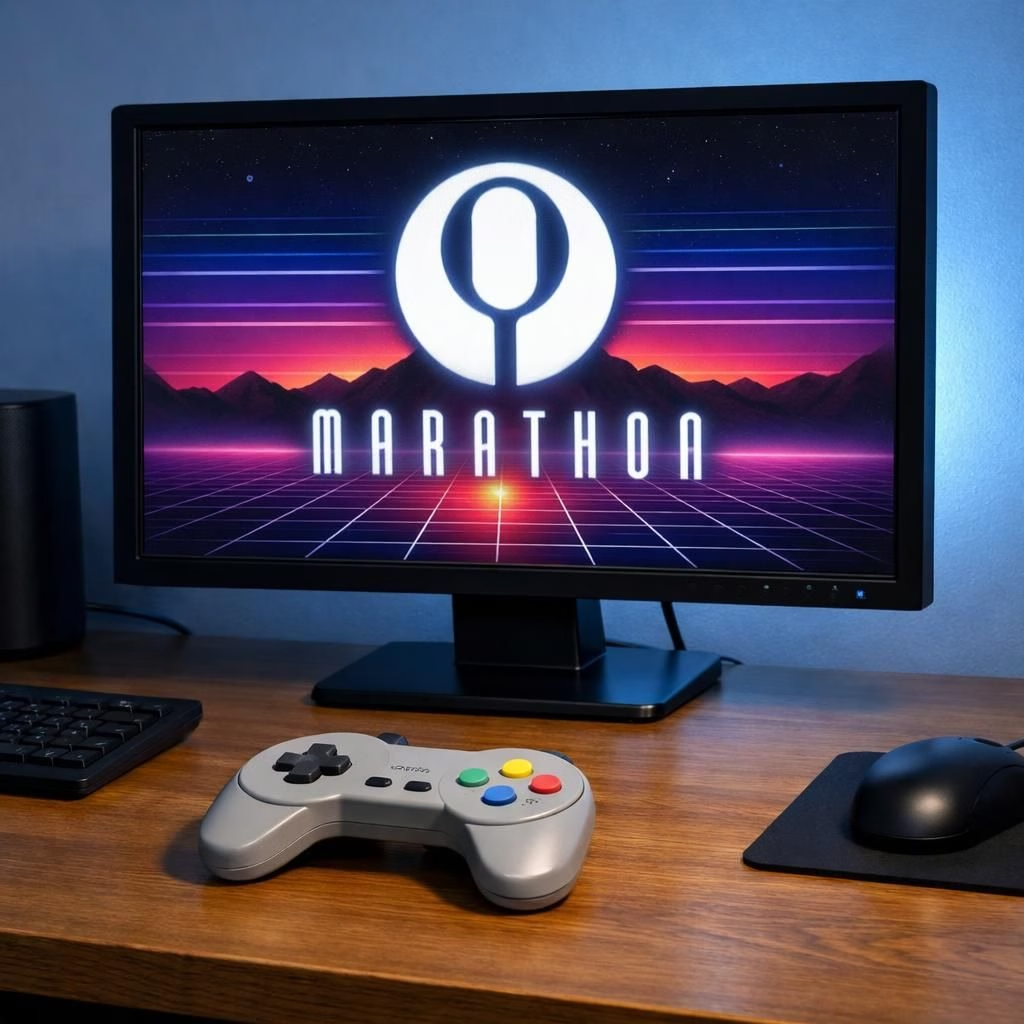
Marathon is not just another notch in 2026’s Video Games arsenal. It is a case study in subverting expectations while delivering a catchy beat. The rhythm of its corridors invites you to listen as you move.
Like any bold release, Marathon earned headlines for its soundtrack and its stubborn design quirks. The score sweeps in with a retro-future vibe, and the team clearly aimed to subvert the usual arc of a shooter by pairing tense moments with a surprisingly warm, almost human, tempo. The result feels like a late-nerd-night jam session: intense, oddly comforting, and impossible to ignore while you’re sprinting through neon-lit halls. In this context, Marathon becomes less about a flawless finish and more about a lived, replayable experience that sticks with you long after the credits roll. That is where the Video Games conversation gets interesting: a title can stumble and still teach, can fail gloriously and still reward curiosity.
Marathon in Video Games: Soundtrack and Subversion
The soundtrack is a living witness to a design choice that says: we trust players to stay engaged even when the path isn’t perfectly polished. In Marathon, music isn’t merely ambient; it acts as a compass and a pace-setter. When the action slows, the melodies breathe. When the tension spikes, the bass drops, and you feel the game’s heartbeat more clearly. This is not a typical approach in all Video Games, but it works here because the soundtrack becomes a narrative voice, guiding you through the maze while you decide how to react to each twist. The soundtrack earns praise because it respects player intelligence and rhythm—an approach that other titles in 2026 could emulate with less vanity and more intentional harmony. Marathon shows that a well-crafted score can elevate exploration, turning a routine run into a memory that sticks in the mind long after the session ends.
Of course, no work is flawless, and Marathon’s ambitious fusion sometimes highlights its rough edges. The extraction loop can feel punishing, and progress occasionally comes with a learning curve that demands patience. Yet this friction is not a failure; it is the engine that keeps you coming back. In a landscape saturated with safe retries and button-mash glory, Marathon dares to reward strategic thinking and careful timing. The result is a memorable ride that resonates with players who crave atmosphere as much as challenge. When you hear the soundtrack cue a difficult moment, you know the game is inviting you to rethink your approach rather than simply sprint forward. That is a rare and valuable trait in Video Games culture, where many titles swing between relentless action and sterile polish. Marathon bridges that gap with a confident, quirky smile.
Video Games Mechanics in Marathon: A Balancing Act
On the gameplay side, Marathon leans into the extraction-game feel while weaving in puzzle-like decisions that demand attention to detail. You’ll learn to map routes, weigh risk versus reward, and decide when to pull back or press forward. The pacing supports moments of quiet exploration followed by bursts of intense, almost cinematic action. This balance matters because it invites players to invest time in the world rather than just counting a score. In this sense, Marathon is teaching a broader lesson for Video Games design: that tension, pace, and environment can carry a game as much as gunplay and gadgets. The result is a title that remains compelling long after the initial adrenaline rush fades, a quality that many contemporaries strive to achieve but few manage with such sly charm.
Dialogue, lore, and environmental storytelling all contribute to the experience, even as the surface mechanics keep you glued to the screen. The way the game funnels you through its spaces feels deliberate—each corridor invites a new hypothesis, a fresh plan, a small moment of triumph when you finally outsmart a tricky section. This is not about showing off fancy mechanics for their own sake; it is about making every decision feel consequential. When you succeed, the sense of accomplishment lands with a satisfying thunk, and you’re left with a memory of a clever design rather than a highlight reel of flashy tricks. In the broader context of Video Games development in 2026, Marathon demonstrates that a well-judged blend of atmosphere and mechanics can outlast a wave of louder, less thoughtful releases.
Accessibility and clarity also matter here. Marathon aims to welcome players without diluting its ambitions. The learning curve is real but fair, and the design invites experimentation without punishing curiosity. The result is a title that can be enjoyed by newcomers and veterans alike, a trend that the industry should study as it contemplates future releases. The game’s approach to pacing—alternating between tight sequences and exploratory intervals—offers a blueprint for other projects that seek to balance challenge with discovery. If we measure a game’s success by how often it compels a thoughtful replay, Marathon earns a strong standing in today’s Video Games discourse.
In sum, Marathon demonstrates that a bold soundtrack and a patient, well-structured core loop can coexist with imperfect execution and still deliver a memorable experience. The game leans into risk, celebrates curiosity, and invites players to learn along the way. It reminds us that the best Video Games titles don’t just entertain—they invite conversation, reflection, and a little playful critique. And in 2026, that is no small achievement for any title hoping to stand out in a crowded market.
Original material from the broader coverage of Marathon, including perspectives on its soundtrack and release trajectory, has informed this look at the game’s ambitions and its quirks. By engaging with these ideas, we celebrate creative risk while acknowledging the bumps that come with trying something genuinely new.
Have thoughts about Marathon and its place in 2026 Video Games culture? Share your reactions in the comments below. Let’s test ideas, compare notes, and see how this experience resonates with fellow players.
Original article: Forbes — Thank you for the thoughtful coverage that inspired this rethink and celebration of Marathon.
FAQ
- Q: Is Marathon approachable for new players?
A: The entry is patient. You’ll learn the rhythm by observing, listening, and planning. A calm pace often leads to better outcomes than brute force. - Q: What makes the soundtrack stand out?
A: It serves as a narrative compass, guiding mood and pace as you explore the maze-like environment. - Q: How should I approach the extraction loop?
A: Treat it as a flow of small decisions. Map routes, time your moves, and pause to reassess after tough sections. - Q: Will Marathon appeal to fans of atmosphere over action?
A: Yes. Its mood, pacing, and environmental cues reward curiosity as much as skill.
Conclusion: Marathon proves that a bold, well-woven soundtrack and a patient core loop can shine even when some rough edges remain. It invites discussion, rewards thoughtful play, and stands out in a crowded market by leaning into mood as much as mechanics.