

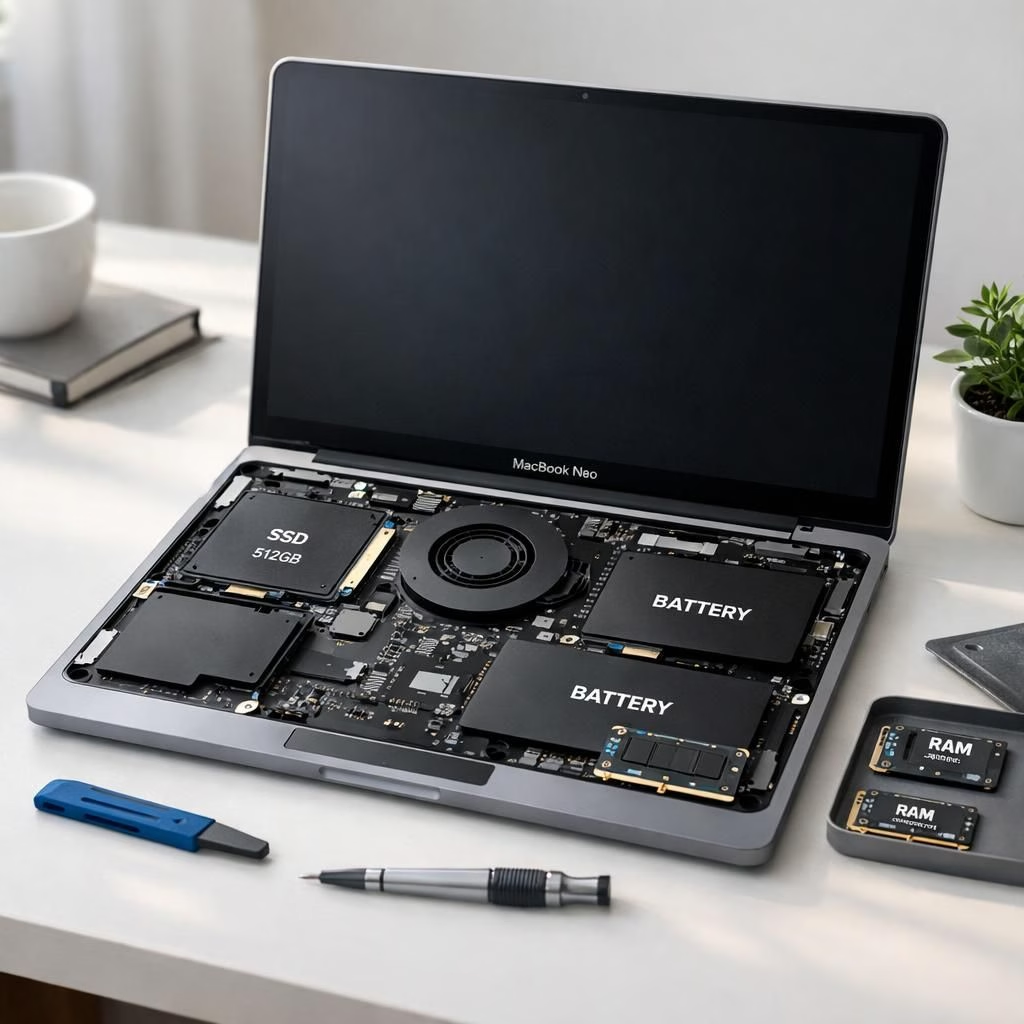
In 2026, the MacBook Neo era arrives with a friendly wink to speed lovers and to the pragmatists who care about Repairability.
MacBook Neo: The cheerful encore in 2026
The Neo carries Apple’s signature polish, but with a lighter footprint and a more upbeat serviceability vibe. Apple trimmed the chassis while giving users more room to swap what matters most: a battery when it wears out, a keyboard if it squeaks, and memory if you need more headroom. The result feels fast in real life, with sensible thermals and a responsive fan profile that keep the laptop calm under load. Yes, the MacBook Neo still runs macOS with all the app ecosystem we expect, but it does so with a little extra swagger that comes from thoughtful heat management and measured performance tuning.
For the daily worker, student, or creator, this is a practical upgrade that doesn’t shout for attention. The Neo’s chassis is sturdy but accessible, and the display remains bright and accurate enough for long editing sessions. In short: you’re getting pace, endurance, and a design that doesn’t pretend to be a mystery. It’s a package that earns tell-don’t-show off praise rather than shouting about it from the rooftops.
Repairability with MacBook Neo: The real feature
iFixit called the Neo the most repairable MacBook in 14 years, and that claim isn’t just a badge. It translates into tangible access: standardized screws, clearer component labeling, and a modular approach that doesn’t require a locksmith’s toolkit to replace a battery or keyboard. The keyboard assembly is more approachable, the battery is user-friendly to swap, and the logic board detaches with a predictable set of steps. For students, freelancers, or anyone who wants to stretch their equipment’s life, Repairability becomes a real, measurable advantage. The Verge and PCMag have echoed similar sentiment about maintenance-friendly design, turning Repairability from a niche buzzword into a practical criterion for buying decisions.
From a user’s perspective, Repairability means fewer surprise trips to the repair shop and fewer headaches when coffee meets keyboard or trackpad. The Neo’s design philosophy shows that high performance does not have to come at the cost of future-proofing. You can upgrade memory where possible, swap a battery when needed, and still enjoy the same sleek aesthetics. The overall package continues to support a sustainable approach to ownership, with less waste and more confidence that your device can keep pace with your work for years to come.
In practical use, the Neo pairs strong processing with dependable battery life and a chassis that respects your time. For creative work, coding, or remote teamwork, you’ll notice smoother thermal management and swift input handling. The keyboard is accessible enough to service without a degree in hardware engineering, and the display remains crisp during long reading or editing sessions. All of these elements come together to remind you that an advanced machine can also be a responsibly designed one. The Neo makes Repairability feel like a thoughtful feature rather than a compliance checkbox, and that shift matters when you plan a multi-year purchase.
Of course, there are trade-offs. The Neo may carry a premium for its modular approach, and some users will still favor the lightest possible device or the very latest chip. Yet the overall value proposition remains compelling: performance with longevity, serviceability with simplicity, and a design that respects both speed and stewardship. This is the kind of product that changes the narrative from “replace now” to “upgrade when you want, not when you must.”
For readers curious about the broader market, the Neo sits alongside Apple’s tradition of balancing aesthetics with practical ownership. It isn’t a radical rewrite so much as a deliberate nudge toward smarter ownership, where Repairability takes a front seat without compromising the everyday experience. It’s the sort of design that invites you to renew your setup, not abandon it in a drawer after a single season of use. And yes, this is all happening in 2026, a year that already feels like the present but with a wink toward the future.
What do you think? Is the MacBook Neo a practical upgrade for your setup, or do you value other features more? Share your thoughts in the comments and tell us how you would approach Repairability in your daily workflow.
Original material inspiration: M5 MacBook Air review: Still the best MacBook for almost everybody. A heartfelt thank you to Ars Technica for the original material and thoughtful coverage that inspired this rewrite.
Frequently asked questions about the MacBook Neo
- Is the MacBook Neo a good choice for students? Yes. It balances portability, decent battery life, and a repairable design that can save money over years of schooling and projects.
- How repairable is the Neo in everyday use? The design emphasizes user-friendly swaps for the battery, keyboard, and memory where applicable, reducing trips to a repair shop.
- Does upgrading memory affect warranty? In many cases, memory upgrades on modern laptops are user‑accessible, but confirm with Apple’s official policy for your model.
Practical steps to assess Repairability in a laptop
- Check official service notes and user-accessible components, such as the battery and memory slots.
- Inspect screw types and modularity to understand how easy it is to access internals.
- Consider long-term costs: battery life, part availability, and how frequently you expect to upgrade.
Conclusion: A forward-looking, practical MacBook
The MacBook Neo represents a thoughtful balance between speed and serviceability. It’s not about chasing the absolute lightest machine or the newest chip at any cost; it’s about a design that keeps pace with your work, while making repairs and upgrades straightforward. If you value performance with longevity, this approach is refreshing and worth considering for a multi-year setup.