

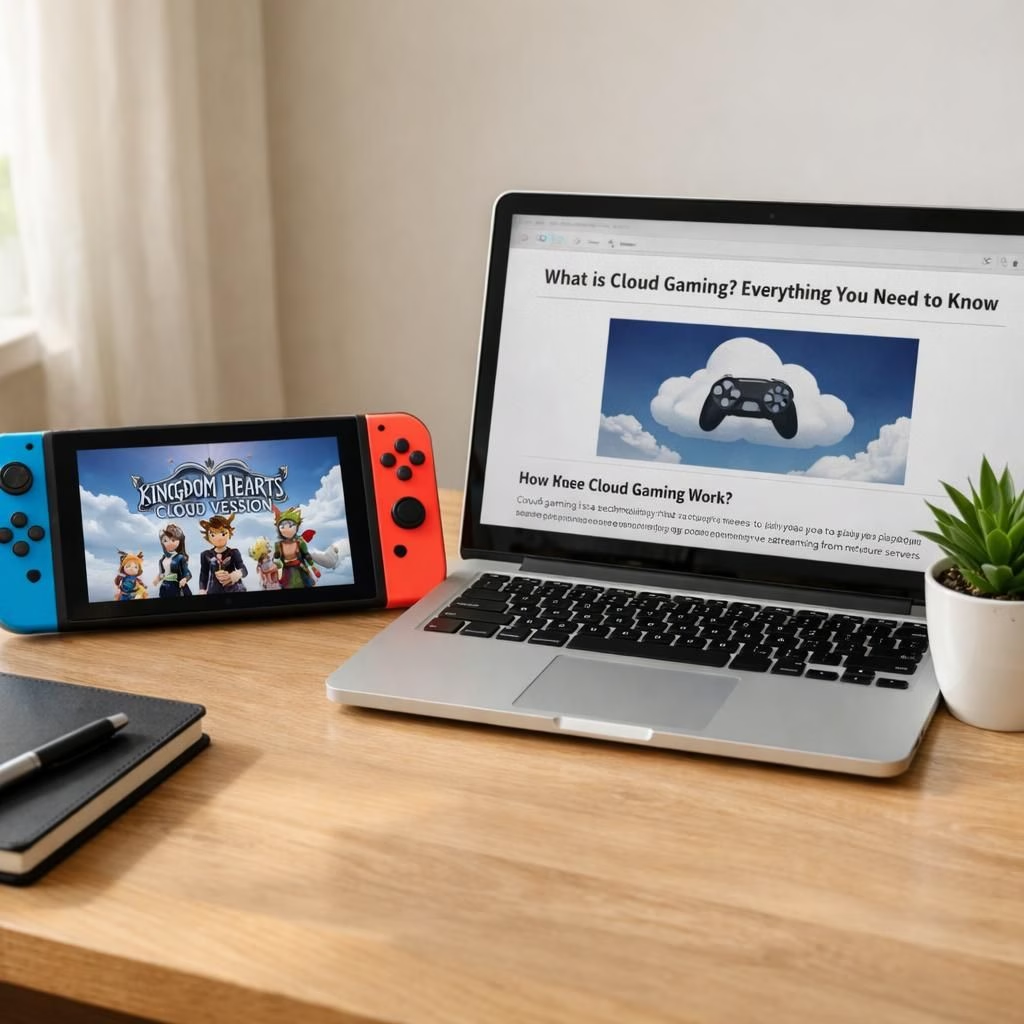
Here in 2026, the world continues to balance nostalgia with bandwidth, and today we take a cheerful, slightly wry look at the Kingdom Hearts Cloud Version and Nintendo Switch Cloud Version demos that quietly disappeared from the eShop. If you were hoping to relive the Keyblade-raising spectacle through a cloud streaming demo, you’re not alone. The sudden removal isn’t the apocalypse for fans, but it offers a tiny window into how publishers manage digital try-before-you-buy experiences on handheld platforms. The Kingdom Hearts Cloud Version and Nintendo Switch Cloud Version each track different constraints: one leans on the storytelling of the Cloud, the other on on-console performance with a dash of portable convenience. Our takeaway is that cloud demos are not a cosmic omen; they reveal a lot about bandwidth, licenses, regional quirks, and what it takes to keep a service alive in a world of updates and revenues. So buckle up for a light, data-friendly tour of what this removal reveals about cloud gaming, licensing logistics, and how fans can stay curious without overfilling their devices.
Kingdom Hearts Cloud Version and Nintendo Switch Cloud Version: What Demos Removal Teaches
First, the removal is a reminder that demos are a moment in time, not a permanent feature. Demos exist to spark interest, test streaming feasibility, and signal that a larger product might be worth pursuing. When a cloud option’s demos vanish, it isn’t failure; it’s a recalibration. Licensing windows, server costs, and regional agreements can shift quickly, and publishers must decide where to invest the cloud budget. For Switch players, the absence may reflect the cost of maintaining cloud instances alongside local performance. For fans of the Kingdom Hearts Cloud Version, it’s a nudge to consider whether cloud sampling provides enough value to sustain ongoing streaming support. The broader lesson: cloud gaming remains a hybrid of software, hardware constraints, and business strategy, with a dash of chance. And yes, there is irony in a streaming demo that cannot be streamed forever, but the real takeaway is resilience: developers refine play experiences even when some demos disappear.
On the technical front, these removals highlight how cloud demos operate as both product previews and capacity tests. A tiny demo window can reveal latency budgets, data center routing, and the way regional licensing interacts with global expectations. When a sample spins down, it often points to a temporary bottleneck rather than a definitive judgment about the game’s quality. In practice, cloud demos serve as a canary in the coal mine for streaming readiness, user onboarding flow, and how quickly a publisher can pivot if server costs spike or if a licensing window closes early. The takeaway for players is simple: treat cloud demos as evolving experiments, not fixed guarantees. The industry uses them to learn, adjust, and occasionally reboot the entire cloud strategy to keep players engaged without wrecking the balance sheet.
Kingdom Hearts Cloud Version and Nintendo Switch Cloud Version: Lessons for Fans
Fans can turn removals into opportunities. First, use the moment to track official updates about cloud availability. If a title returns as a cloud option, you’ll know the environment supports latency-friendly play. Second, treat cloud demos as a taste, not a treaty; a good demo is a doorway, not a contract. Third, diversify how you sample future cloud experiences—check for performance notes, regional access, and whether you actually prefer streaming or a native port. The reality is that a cloud version can be a living teaser: it hints at capabilities and design choices while the live service depends on network health, server load, and licensing. So when you see a demo disappear, don’t panic—read it as data from the cloud ecosystem, not a verdict on a beloved franchise. Embrace the takeaway: cloud strategy is evolving, and fans who stay informed remain ready for the next wave of portable nostalgia.
For those who want a practical roadmap, consider small, repeatable steps: bookmark official cloud updates, follow publisher social channels for licensing news, and keep a note of your own network conditions so you can assess how cloud play would feel during peak hours. If you are curious about how these shifts affect long-term plans for retro titles and streaming-first approaches, you’re in good company. The efficiency of cloud demos is not about squeezing more playtime from a single session, but about guiding future investments so that the best ideas can reach players without creating unnecessary friction. In short, the cloud isn’t a magic wand; it’s a compass, and removals are just the compass recalibrating toward a more stable course.
As we navigate 2026, we should recognize that such removals are a normal part of digital ecosystems: they cycle with licensing windows, testing phases, and the ongoing dance between publishers and platform owners. The upshot is that cloud versions continue to influence how we think about portable play and retro nostalgia. If anything, these changes sharpen our appreciation for the teams balancing streaming infrastructure, licensing, and user experience to keep the conversation alive and the gameplay accessible.
Special thanks to the original reporting that kept this topic in the spotlight, with coverage from Nintendo Life, GoNintendo, OpenCritic, Final Weapon, and My Nintendo News. Nintendo Life covered the development, while industry analysis helped contextualize the change for players and publishers alike.
FAQ about Kingdom Hearts Cloud Version on Switch
- Why were Nintendo Switch Cloud Version demos removed? Publishers routinely update licensing windows and server costs, so demos can be pulled even when the full service remains available in some regions.
- Will the Kingdom Hearts Cloud Version ever return as a cloud demo? It could, depending on regional licensing, demand, and the publisher’s cloud strategy. No guarantees, but re-testing isn’t unheard of.
- Should I expect more cloud demos for other titles? It’s possible. Demos serve as a lightweight gateway to cloud features, so publishers may deploy them selectively to gauge interest and latency across regions.
- Is cloud sampling better than waiting for a native port? That depends on your priorities. Demos expose streaming performance and licensing realities, while native ports deliver stable play regardless of network conditions.