

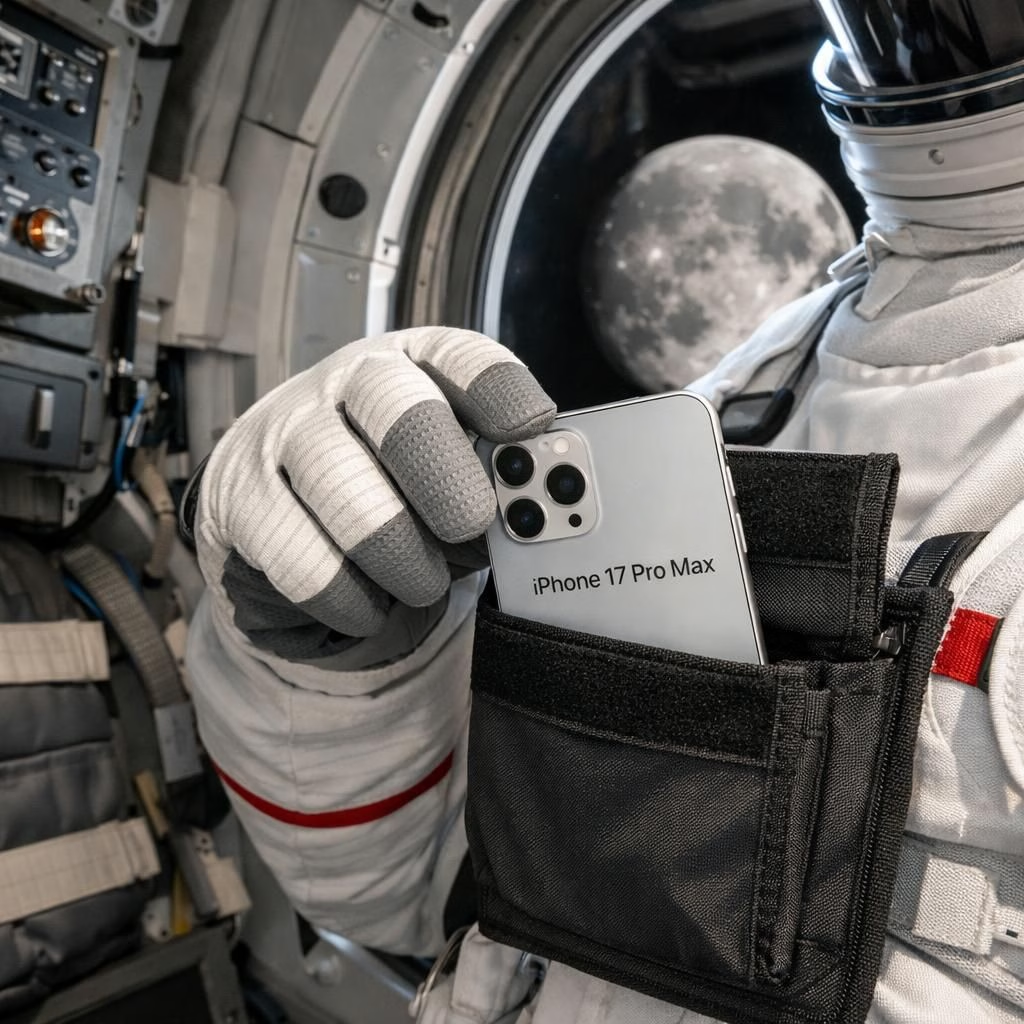
iPhone and Artemis are not just marketing buzzwords; they signal a serious, oddly cheerful reboot of space hardware philosophy. When NASA announced four iPhone 17 Pro Max units would join Artemis II, the newsroom reacted with jokes, but engineers nodded as if a long-lost friend had reappeared in the cargo bay. In this mission, the iPhone is more than a gadget: a controlled experiment in safety, physics, and practical limits inside a sealed spacecraft with the gravity of a math problem.
Artemis Safety and the iPhone: A Careful Integration
The four-phase clearance process is not a luxury; it is a blueprint for keeping crew and craft safe while letting a familiar rectangle capture light for a Moonbound selfie reel. First, hardware meets a safety panel; hazard identification emerges: glass shards, moving parts, or any microgravity gremlins that could float free. Artemis II is the testbed here, with the third and final phases outlining mitigation strategies and validation that the fixes actually work. It sounds bureaucratic, but space has its own rules: a cracked screen can become dangerous debris that could drift into life support or instruments. The iPhone 17 Pro Max is built with Ceramic Shield 2, but NASA worries about more than breakage: heat, battery stability, and storage behavior under microgravity all matter for a device that sits in the cabin and acts as a camera, not a console.
Mounting the phones required the kind of improvisation that would make a MacGyver proud. Velcro inside the capsule proved useful, and one device stayed in a cradle in the observation area for quick access in case of need. In space, even where you stash a gadget becomes an engineering choice, because every gram and every fragment can ripple through the mission plan.
iPhone on Artemis: How It Was Approved Without Hype
Apple was not the lead on this approval; NASA did the heavy lifting, charting risk and verifying that a personal device could coexist with life support, radiation shielding, and microgravity. The phones were secured, tested, and documented with the same rigor NASA uses for a vaccine schedule. Some devices ride in Velcro, others find a home in a pocket; the point is that the iPhone is not a liability, it is a measured tool that serves human teams as they navigate a high-stakes environment. The result is not a glamorous tech demo but a prudent, repeatable process that demonstrates how everyday tech can be responsibly integrated into spaceflight.
Artemis Tech Lineup: Cameras Beyond the iPhone
Even with the familiar iPhone present, the imaging suite leans professional. GoPro cameras and Nikon bodies accompany the crew to document the mission with clinical clarity and artistic patience. The iPhone is the human lens: it captures the mood, the reactions, and the tiny, unglamorous moments that make Artemis feel approachable. The blend of high-end gear and common devices is a deliberate choice—technology should empower astronauts, not overshadow them.
iPhone Realities on Artemis: Battery, Heat, and Microgravity Realities
Durability matters. Apple touts Ceramic Shield 2 as tougher than standard smartphone glass, but NASA worries about heat dissipation, battery stability, and storage in a microgravity environment. The battery must remain stable under radiation and temperature swings, while the device stays reliably attached and away from delicate equipment. Even a small gadget, properly secured, becomes part of the spacecrafts careful choreography. This is where engineering meets everyday life: you design for the worst, then enjoy the moment the best-case scenario materializes.
Beyond the science, the mission tells a human story: that something as common as a pocketable phone can become a bridge between a distant Artemis world and the public’s everyday life. Artemis is the grand stage, the iPhone is the familiar tool, and together they remind us that curiosity travels with us, even when the route is through the Moon’s quiet seas.
In the end, Artemis and the iPhone show a tiny, confident shift in how we approach spaceflight: safety first, practicality always, and a touch of everyday humor to keep the job humane. The result is not just better gear; it is a better relationship between the public, the mission, and the people who make exploration possible.
We invite you to share your thoughts in the comments below.
Original article: Thank you to The New York Times for the reporting that inspired this piece. See the original here: The New York Times.
Quick facts and practical takeaways
- Safety-first design ensures personal devices do not compromise critical life-support systems.
- Mounting strategies range from Velcro attachments to pocket storage for flexibility.
- The iPhone acts as a narrative tool as much as a camera, while professional gear handles scientific imaging.
FAQ
-
Why is the iPhone used on a Moon mission?
It offers a familiar user experience for images and quick communications while NASA validates safe integration in a sealed craft. -
Will the devices have internet or other connectivity in space?
No. Communication is strictly controlled and offline to protect the spacecraft’s environment. -
How does NASA ensure safety?
Through a structured four-phase clearance: safety panel review, hazard identification, mitigation planning, and final validation. -
What happens to the data from these phones?
Data is stored securely, accessed on board when needed, and transferred per mission protocols after landing.
References
- Times of India — How iPhones made it onto NASA’s Artemis II mission
- The New York Times
- NASA Artemis Overview