

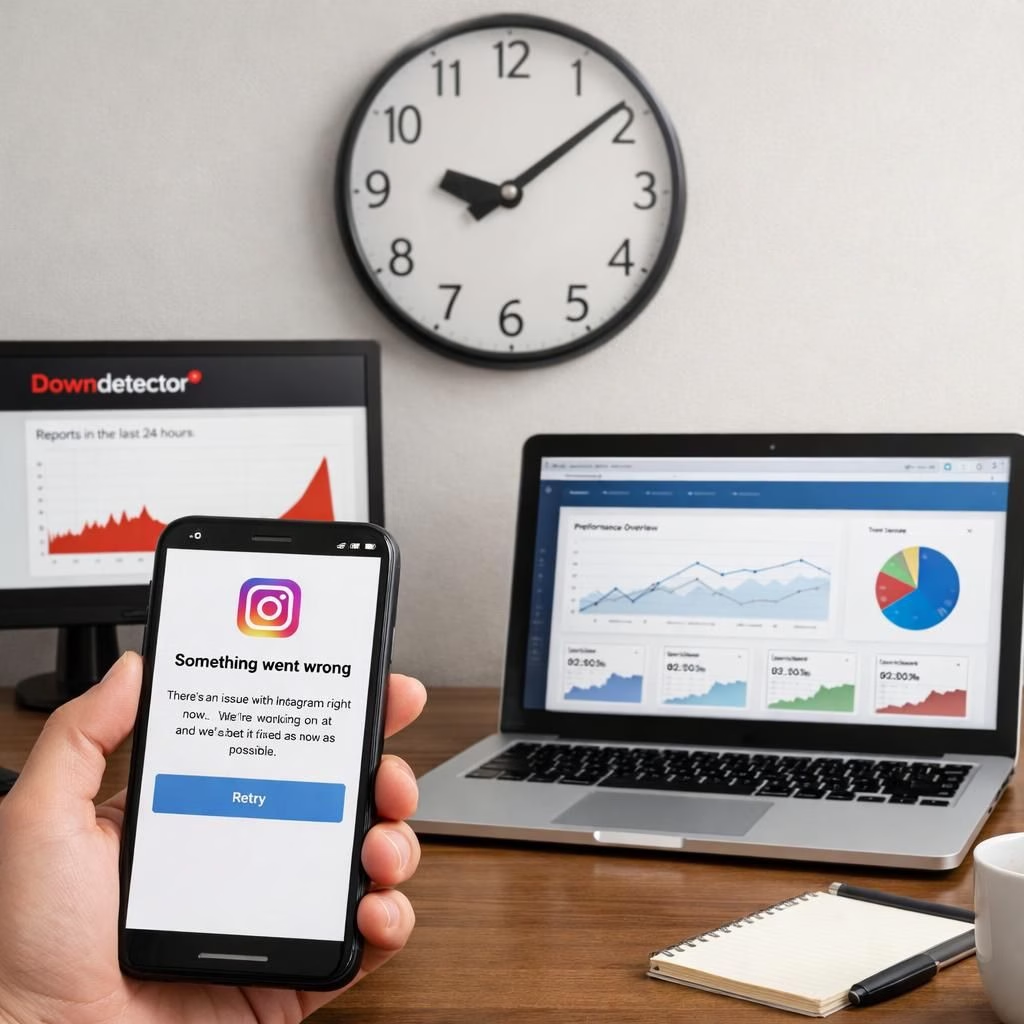
In 2026, the Instagram outage saga spilled across borders, and Downdetector charts lit up with thousands of reports from the United States and beyond. The outage began around 9:00 IST on Wednesday, March 11, and climbed toward a peak near 11:00 IST. More than 10,000 users reported issues, a stat that makes even the most composed influencers check their connectivity and their mood meter.
The disruption primarily hit the Instagram app, with about 84% of the reports centered on mobile and tablet usage. Web access did show limited problems, but the picture was clearer on apps than on web clients. This aligns with user habits where the app remains the primary portal for most daily scrolls, stories, and messages, a reminder that sometimes our thumbs carry more responsibility than our servers. This Instagram outage underscores how quickly a disruption can ripple through a user base that expects instant photos, comments, and messages.
This outage marks the second major disruption in a little over a month. On February 5, 2026, Instagram experienced a similar scale outage, with more than 10,100 incident reports logged before services recovered. In both cases, services were restored after a relatively brief window, but the interruption left people offline, forced teams to pivot, and reminded everyone that social life online can be surprisingly fragile yet resilient. This Instagram outage echoes that earlier episode, reinforcing how dependent millions have become on real-time updates.
Instagram outage: timeline and regions
Looking at the regional footprint, the outage affected the United States and several other countries, signaling a global sensitivity to micro-outages in a platform that serves as a daily communications hub for millions. The timing—9:00 to 11:00 IST—lines up with a mid-morning burst of activity in several time zones, a reminder that many of us juggle multiple clocks while trying to post a photo and a caption at the same time. While some users regained partial access quickly, others waited for network routing to reset and caches to repopulate.
From a systems perspective, the issues appeared to center on core features: messaging and feed delivery. People reported messages not sending, feeds freezing, and stories that failed to refresh. The speed with which the outage spread across devices underscores how interconnected modern social networks are with online messaging ecosystems. The outage also raises questions about resilience: what does a truly robust experience look like when billions of requests flood a few dozen data centers? The takeaway is clear: robust error handling, graceful degradation, and clear user-facing status updates can minimize confusion during a disruption.
Downdetector insights for the Instagram outage
Downdetector’s live-trend graphs became a common reference point for users trying to quantify the disruption. The data shows a sharp spike in reported problems in the first hours, followed by gradual normalization as systems recovered. For everyday users, the key question is practical—can I send a message to coordinate a group project, can I post a new photo, and can I see the updated feed before breakfast? The answer was yes for many, but with a short pause in routine online activity. Downdetector’s feed serves as a quick weather report for digital life—calm data, minimal drama.
From a security and reliability standpoint, outages like this highlight the importance of cross-service redundancy and clear incident communication. Even if official comments from Meta or Instagram were scarce at the moment of reporting, the pattern is familiar: a brief period of uncertainty followed by a gradual restoration window. The takeaway is simple: diversify backups, have a plan for communications outside the platform, and stay calm when a familiar app takes a day off. This Downdetector-backed snapshot reinforces the value of not putting all your content into a single, fragile feed.
Practical tips during a Downdetector-tracked outage
- Check official status pages for real-time updates.
- Refresh caches and try alternate devices or networks if possible.
- Coordinate urgent messages through backups like SMS or email.
- Plan content in advance and publish across multiple channels when possible.
Practical steps like these help reduce the disruption to routines and campaigns. For marketers and creators, this is a reminder to maintain a content backlog and to diversify posting channels so audiences stay informed even if one platform goes offline.
As the clock ticks toward a new day, the community looks forward to restored access and continued improvements in uptime and resilience. The outage serves as a timely reminder that even the most popular social platforms are not infallible, and that thoughtful design and transparent incident handling can soften the impact when the feed goes dark.
Original source and context: this article builds on reporting from a major technology desk. For full context, you can read the original piece here: Original Instagram outage report — Indian Express.
Have thoughts about how outages affect your routine? Share your experiences in the comments below.
References
- Original Instagram outage report — Indian Express
- Downdetector – Instagram outage status
- Meta Platform Status