

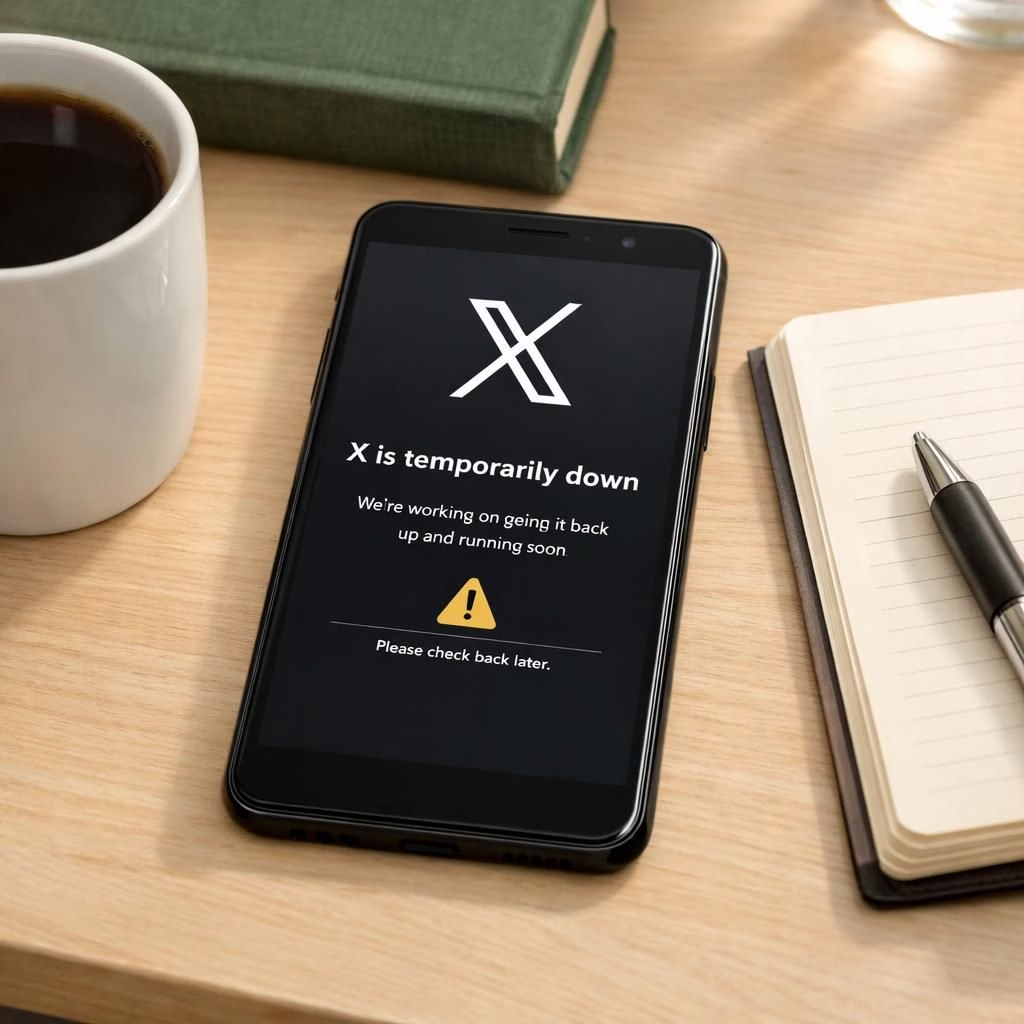
Tuesday, June 16, 2026, will be remembered by some as the day X downtime and Twitter outage briefly reminded us that digital speed often outpaces our patience. Downdetector logged two hiccups in the same 24-hour window, turning a routine scroll into a tiny modern-day cliffhanger. The first wave began at 9:00 a.m. and lasted about an hour, while the afternoon clock struck again at 4:04 p.m. with a peak around 4:16 p.m. When the dust settled, most users found the app back in action within 30 to 40 minutes. Not a disaster, more like a reminder to keep a backup plan for the login screen and to treat downtime as a rare, weirdly well-timed weather event in a sky of constant ping.
Let’s set the scene with the facts and a dash of practical optimism. Downdetector’s data show that the majority of complaints centered on the X app’s accessibility, with about 46% reporting trouble opening the app. A sizable 32% hit trouble loading the feed or timeline, and roughly 12% could not access the web version. In today’s world, those numbers translate into a few dozen to a few hundred thousand affected users depending on your device and location, which is a normal Tuesday if you measure by the pace of the internet’s engine. The pattern here is familiar: a hiccup, a sprint to stability, and a return to normal browsing while our memes hibernate in the meantime.
The quick reality is this: not a disaster, but a reminder that X downtime can be a test of how you navigate a moment of disruption. It also underscores the value of having a backup plan for logging in and reloading content when a major app hiccup happens.
X downtime reality check: what the Tuesday wobble reveals
For the tech crowd, a day like this is a chance to practice patience and a reminder to diversify how we receive information. The short outage reveals how much of daily life now hinges on a single app. The quick recovery is equally telling: tech teams deploy fixes faster than a coffee runs cold.
The rhythm of an outage—brief, contained, and followed by a clean restoration—is almost poetic in a modern, data-driven way. It shows that most problems are not catastrophic; they’re typically complex enough to require careful debugging, a few server restarts, and the occasional reboot of the entire system’s nerve endings. And yes, it’s normal to feel a surge of relief when the feed returns and you can scroll your way back to reality without signing in again or reloading the page multiple times.
From a user experience angle, a short downtime often nudges people to try alternative routes. Some switch to the web version, others open a different app, and a few rediscover the tiny joys of offline content or local messaging. The lesson: in a world glued to real-time updates, resilience is not about flawless uptime; it’s about rapid recovery and graceful fallback. Companies that communicate clearly during outages earn a quiet victory, even when the outage is technically a mild setback. In 2026, a well-handled blip can become a reputational asset if it’s followed by timely, transparent post-outage notes and a proactive plan to prevent recurrence.
Twitter outage realities: who was affected and how
The narrative of a Twitter outage is never just about the numbers. It’s about the people who rely on the platform for work, news, and connection. The 2026 incident saw users across devices—mobile apps and web browsers—facing similar symptoms: difficulty opening the app, problems loading the feed, or being automatically logged out. In practice, this meant some people had to switch to other channels, while others patiently waited and then retried. The experience was, in many ways, a reminder of the social function of these networks: they aren’t just feeds; they’re spaces where real-time communication, humor, and information exchange happen in microbursts. When a Twitter outage hits, the ripple effects touch customer support, media organizations, and casual users alike, nudging everyone to re-evaluate how they consume content and manage expectations about uptime.
Amidst the chatter, some users navigated the disruption with surprising composure. They bookmarked alternative sources, checked other platforms, and joked about how a minor glitch can feel like a pop quiz in a digital age where speed is a currency. The pattern this outage follows is instructive: identify the problem, deploy a fix, validate the resolution, and then explain what happened and what’s being done to prevent a repeat. The result? A more trustworthy experience, even after a stumble. Looking ahead, redundancy matters. Redundant systems, diversified data paths, and proactive monitoring reduce the impact of any single point of failure. For the everyday user, it means faster recovery and more predictable behavior. For the teams behind the scenes, it means practice, planning, and a culture that treats downtime not as a personal failure but as a shared problem to solve. And yes, it’s perfectly reasonable to celebrate a clean restart with a cup of coffee and a plan to save important tasks in offline mode for the next unexpected pause.
Throughout the incident, it’s worth noting that the typical expectation—outages resolve within an hour or so—held true in most cases once the root cause was isolated and fixed. This is the quiet, pragmatic truth of online platforms: they are incredibly reliable most of the time, and when they aren’t, the window to recovery is usually short. In a world where a delayed post can feel like a missed moment, the difference between a minor glitch and a major outage is often measured in minutes and the quality of the post-incident communication.
To the readers who want more than a shrug and a shrug-off: share your experiences with this outage, your strategies for coping, and your favorite ways to stay productive when a beloved feed goes dark. Was your workflow disrupted, or did you adapt with minimal fuss? Did you discover an interesting workaround or learn something new about how you use social media on a daily basis? Your stories can help others prepare for the next time the internet decides to take a tiny coffee break. X downtime and Twitter outage are not endgames; they are reminders of human adaptability in a hyperconnected era.
Original article: Original article – Thank you to the original authors for the material that sparked this discussion and the ongoing exploration of online reliability.
Practical tips for navigating X downtime
- Keep offline drafts or to-do lists ready so you can stay productive even when the feed is slow or missing.
- Bookmark alternative platforms or sources for quick updates and verification.
- Save essential links and enable lightweight modes to reduce reliance on real-time feeds.
- Create a simple offline workflow for critical tasks and background information you rely on daily.
Frequently asked questions
- What caused the outage? Outages typically stem from a mix of backend maintenance tasks, traffic spikes, and configuration issues. In most cases, teams isolate the root cause quickly and deploy fixes to restore service.
- How long did it last? The morning outage persisted about an hour, with a second, shorter hiccup in the afternoon. Most users saw a return to normal within 30–40 minutes after the peak of the disruption.
- Will this happen again? Occasionally. Modern platforms invest in redundancy and monitoring to reduce impact, but brief, localized interruptions remain possible as systems scale and evolve.
- How can I stay productive when the feed is down? Rely on offline tasks, switch to alternative channels for updates, and keep essential work flowing by drafting content or replies in a text editor until the service stabilizes.
Looking ahead, redundancy and clear post-incident communication will continue to define trust during future Twitter outage events. This X downtime pattern may repeat, but with better resilience and preparation that helps you navigate the next pause more smoothly.