

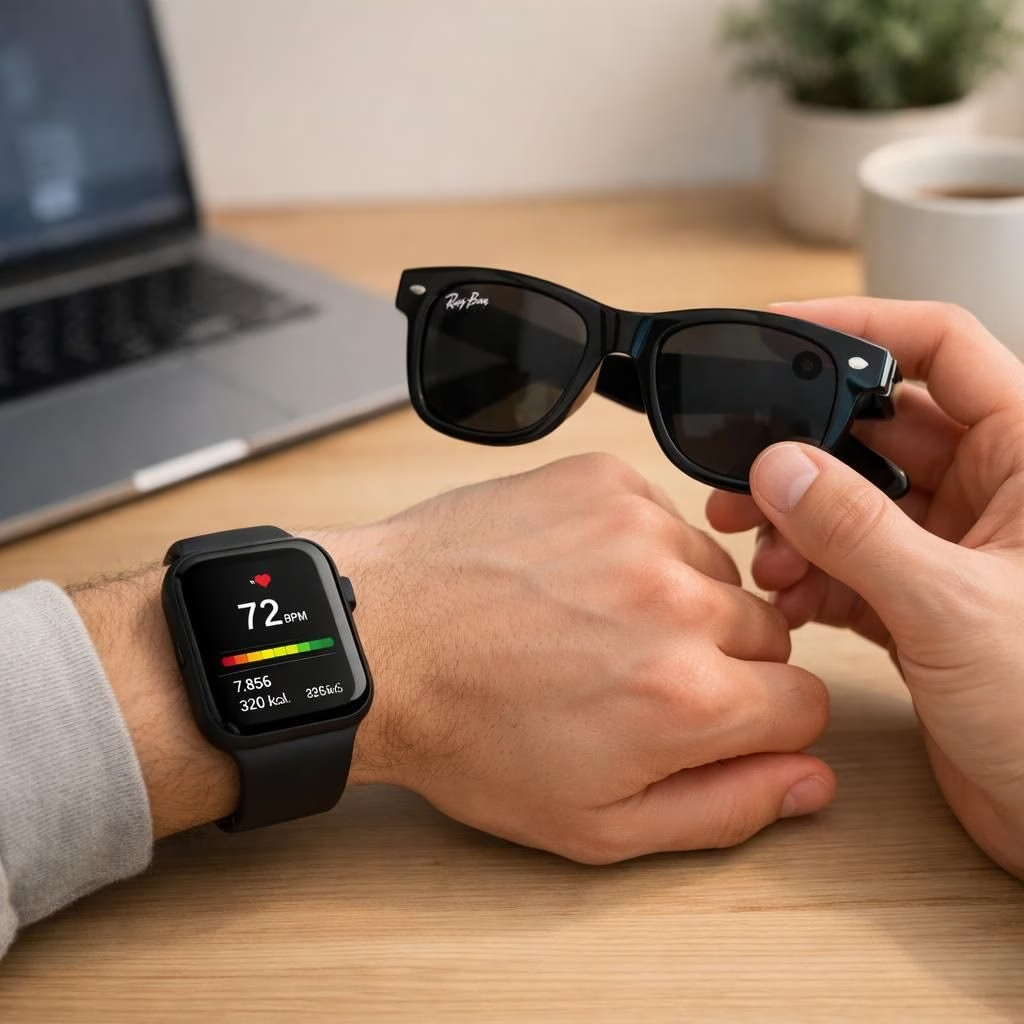
Meta is reportedly plotting Malibu 2, a AI-wearables enabled health-tracking smartwatch, alongside a refreshed Ray-Ban Display glasses line. The Information notes this timing would position Meta ahead of rivals while also juggling a Phoenix MR headset that’s been delayed to 2027. The plan stacks a pair of wearables bets against a crowded field of players like Apple, Google, Garmin, Samsung, and Fitbit chasing health-tracking and AI features. The goal is simple: fuse more sensors, smarter software, and a friendly user experience into a single wrist companion and a glasses-based interface that can double as a light personal assistant.
health-tracking in Meta’s wearables strategy
When Meta talks about health-tracking, the focus goes beyond steps and calories. Malibu 2 is rumored to bundle body sensors, sleep analytics, heart-rate monitoring, and AI-wearables features that coach you in real time. In practice, that means a wrist companion that translates data into actionable insights, nudges healthier routines, and spots patterns suggesting you should take breaks from doomscrolling. On-device processing would help keep data private while staying responsive. Meta’s pitch centers on turning health data into daily habits with a polished app experience and a design that fits both professional settings and gym sessions.
Historically, Meta has flirted with an always-on wearable without delivering a market-ready winner, citing engineering hurdles and cost concerns. Malibu 2 could learn from those experiences by prioritizing a simple, reliable user experience. The wearables field is crowded, so a health-tracking feature set that remains useful without invasive data collection could be Meta’s strongest differentiator. Expect a software ecosystem that plays well with social platforms, offers seamless health dashboards, and provides developer-friendly hooks for third-party fitness apps—balanced by on-device AI that respects user privacy. In short, health-tracking stays the north star for hardware design and software priorities.
AI-wearables and the AR/MR roadmap for 2027
The Phoenix MR headset has become the centerpiece of Meta’s mixed reality ambitions, with a schedule pushed to 2027. That delay signals a pragmatic pivot: Meta wants to push the easier-to-adopt wearables first while keeping the high-end AR/MR devices on a careful timeline. Malibu 2 could act as a stepping stone, delivering AI-wearables capabilities that bridge today’s wrist tech with tomorrow’s glasses-based computing. If the watch provides meaningful AI-driven feedback without draining battery life or overwhelming users, it could make the Phoenix line feel like a natural evolution rather than a distant dream. The broader AR/MR roadmap for 2027 may lean on a steady wearables cadence—soft sensor integration, improved on-device AI, and a smoother hand-off between wrist and glasses interfaces. Rivals are watching closely: Apple’s rumored AI smart glasses, Google’s wearables experiments, and fitness-focused devices from Garmin, Samsung, and Fitbit are sharpening similar strategies.
Ray-Ban Display, Meta’s earlier AR glasses for broad consumer use, showed appetite beyond marketing hype. Demand reportedly outpaced supply at launch, prompting pauses in some international deployments. If Malibu 2 can replicate the Ray-Ban experience—ease of use, minimal friction, and a strong visual interface—and add robust AI-wearables on-device intelligence, Meta could build a cohesive ecosystem that reduces the need to switch ecosystems mid-day. The AI components would aim to deliver context-aware prompts, smart gestures, and subtle notifications that complement the glasses without becoming distracting. The long-term vision is a harmonious trio: health-tracking on the wrist, AI-wearables intelligence on-device, and AR experiences that feel natural rather than gimmicky. Privacy controls and clear value propositions will be crucial to stand out in a crowded market.
How Malibu 2 could reshape user behavior and the wearables market
Malibu 2’s potential impact extends beyond a single product launch. Real benefits emerge when health-tracking translates into motivation and daily habits. If wellness features deliver meaningful insights, clean dashboards, and timely nudges, people may rely on their watch more for everyday routines than for occasional health checks. AI-wearables could reduce cognitive load by handling routine tasks locally: summarize sleep quality, suggest a better bedtime, or propose a light workout based on your calendar and mood. Paired with a refined Ray-Ban Display experience, Meta’s wearables could encourage a cohesive daily routine. The result would be steadier engagement with Meta’s apps, stronger data feedback loops, and a healthier user base that doesn’t feel overwhelmed by technology.
Competition and ecosystem dynamics
In this crowded space, every feature decision matters. Apple reportedly tests AI-powered wearables and smart glasses concepts, while Google, Garmin, Samsung, and Fitbit chase similar goals with varying emphasis on health data, battery life, and developer ecosystems. Meta’s strategy—pairing a health-tracking watch with AI-wearables features and a refreshed Ray-Ban Display line while keeping the Phoenix MR headset on a measured path—places it squarely in a fierce race. The real differentiator will be how smoothly all pieces work together: wrist hardware, on-device AI, AR/VR display, and a developer-friendly platform that invites third-party innovations without compromising privacy. Meta has a chance to deliver a straightforward user experience, regular software updates, and a clear narrative about wellness, productivity, and everyday magic—without a jumble of isolated features.
As the market evolves, consumers will judge by real-world usefulness: easy pairing, intuitive controls, and obvious value. If Malibu 2 delivers these qualities without gimmicks, it could become a trusted daily companion. The Ray-Ban Display line could benefit too, especially if it leverages watch data to deliver smarter visuals and gestures. And if Phoenix ships in 2027 with a polished AR/MR experience, the industry could see a ripple effect that nudges competitors toward more practical, user-centric designs rather than flashy spectacle.
To sum up, the wearables race is heating up, and Meta positions itself as a practical, wellness-minded player that also aims to lead in AI-wearables and AR-forward experiences. Malibu 2 is ambitious but grounded in a simple truth: people wear devices to make life easier, not to complicate it. The eye remains on better health insights, smarter assistance on the wrist, and a smoother bridge to AR with Ray-Ban Display and beyond. The market will decide whether Malibu 2, Ray-Ban Display upgrades, and a delayed Phoenix headset cohere into a valuable ecosystem that users actually adopt.
What do you think about Meta’s direction with health-tracking and AI-wearables? Do you see Malibu 2 as a meaningful upgrade, or is this another round of hype with a long roadmap? Share your thoughts in the comments below.
Original article attribution: A big thank you to The Information for the original reporting and insights that helped shape this discussion. Original article: https://www.theinformation.com/
For further context, readers can refer to The Verge’s reporting on Meta’s smartwatch plans: Meta smartwatch plans 2026 — The Verge.
Practical steps to evaluate Malibu 2 for your daily routine
- Check battery life expectations and charging cadence for a busy day.
- Try the on-device AI features with a few routine tasks (sleep, activity coaching, calendar-based workouts) to gauge responsiveness.
- Assess how well health dashboards integrate with your existing apps and data sources.
- Consider privacy controls: review what data stays on-device versus what is shared with cloud services.
FAQ
- When is Malibu 2 expected to ship?官方 reports point to a launch ahead of 2027, with a focus on everyday wearables first.
- Will Malibu 2 require the Ray-Ban Display for full experience? Meta appears to aim for a cohesive ecosystem where wrist health-tracking, AI-wearables, and AR glasses compliment each other, not rely on one device alone.
- How private will on-device AI be? The plan emphasizes on-device processing to minimize data shared with cloud services, enhancing privacy while keeping features responsive.
- How will competitors respond? Apple, Google, Garmin, Samsung, and Fitbit are pursuing similar AI-wearables strategies, which should accelerate software improvements and cross-device compatibility.
References
- The Verge: Meta smartwatch plans 2026
- Original article attribution: https://www.theinformation.com/