

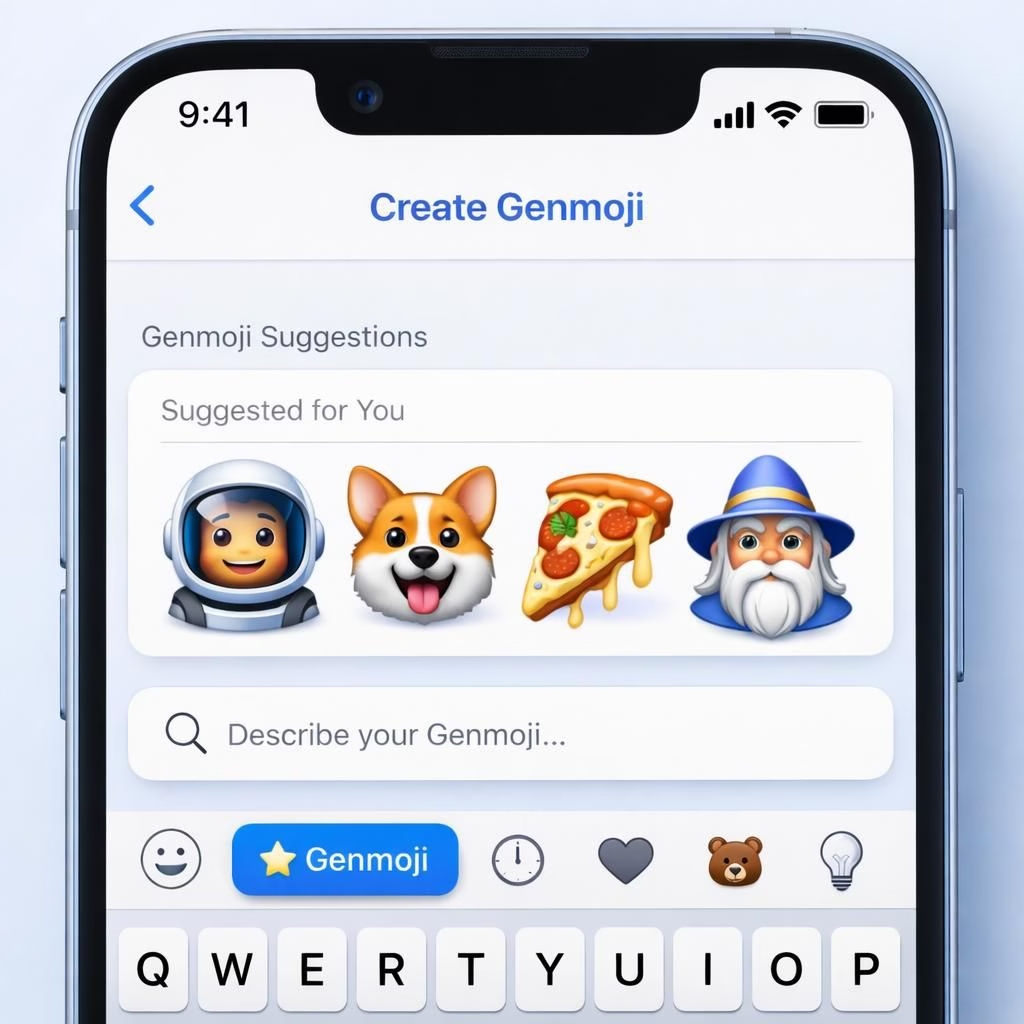
Genmoji and iOS 27 are the talk of the town—Apple’s latest tease goes beyond faster emoji taps. Genmoji in iOS 27 promises automatic suggestions that feel almost psychic, yet stay on-device. In plain English, Genmoji learns your style and nudges you toward the right symbol before you finish the sentence. The result is smoother chats and fewer awkward emoji choices, especially when you’re juggling messages, notes, and quick replies.
Genmoji in iOS 27: What to expect
Apple describes Genmoji as more than a fancy picker. It acts as a tiny contextual helper that watches what you type and suggests next-step symbols. The vision is simple: fewer taps, faster replies, and a more expressive keyboard experience. In iOS 27, Genmoji runs mostly on-device, which means your sensitive phrases stay in your handset rather than climbing to the cloud. This is good for privacy and good for speed, two things every texter secretly values. Expect smarter color-coded suggestions, a broader emoji set, and smarter tone shifts that adapt to your font, size, and background color.
Genmoji in iOS 27 uses lightweight on-device models to study patterns in your messages. It looks for common phrases, emojis that historically accompany you, and even mismatched mood cues. The result is a short list of likely emoji or sticker suggestions that appear at just the right moment. The system aims to reduce keystrokes without interrupting your natural flow. This is not a rigid autocorrect; it’s a flexible, context-aware hint system that learns as you type. Genmoji in iOS 27 also promises better multilingual support, adjusting suggestions when you switch languages or switch between formal and casual registers.
Genmoji in iOS 27: Practical tips and privacy
So how should you approach this upgrade? Start by giving Genmoji permission to learn from your messages. In iOS 27, you’ll typically enable it in Settings under Keyboard and then Genmoji options. The more you use it, the more accurate the suggestions feel. Don’t worry about a sudden avalanche of taps—the experience is designed to be subtle, not disruptive. The goal is a smoother conversation, not a chaotic emoji roulette.
Apple emphasizes on-device processing for Genmoji in iOS 27, which reduces reliance on cloud-based signals. That’s a privacy plus for many users who want to keep their emoji vocabulary within their device’s boundaries. If you’re a power user who shares screens or uses accessibility features, you’ll notice Genmoji adapts to your workflow. It respects your chosen tone, whether you’re drafting a quick check-in or composing a detailed message to a colleague.
From a usability standpoint, Genmoji in iOS 27 is designed to minimize friction. The suggestions appear as a compact strip above the keyboard, so you can accept with a tap or ignore and continue typing. The feature also supports shorter phrases and even emoji-only replies for those moments when a single symbol says more than a sentence. Practically, this means fewer stray emojis and braces of confusion when a conversation moves from casual chats to group planning. Genmoji in iOS 27 is meant to be a helpful partner rather than a bossy editor.
Security remains a priority. Apple’s approach is to keep learning on-device, limit cross-app data sharing, and provide a clear toggle to disable Genmoji at any time. If you’re curious about how sensitive your patterns are, you can review a compact activity log that shows which types of phrases triggered which suggestions. This transparency helps you decide how much Genmoji in iOS 27 should learn from you and how much should stay stubbornly private.
For readers curious about AI memory and privacy, see Gemini memory privacy and the Gmail tips above.
- Fewer taps for common phrases and a faster flow in conversations
- Better tone alignment for casual chats and professional messages
- On-device processing that respects your privacy by design
Writers, students, and developers who need a steady tone will find Genmoji helpful. It can align emoji usage with context, reducing misinterpretation. For example, casual team chats stay light without losing clarity, while formal messages stay on-brand. The upgrade also improves performance on older devices thanks to lean on-device models that don’t bog down the keyboard.
Genmoji basics and workflow
At its core, Genmoji acts as a contextual nudge rather than a rulebook. It learns from your choices and offers options that feel natural rather than prescriptive. If you want to test a new vibe, try a few messages with different tones and observe which suggestions appear.
iOS 27 privacy considerations
Privacy remains central to this feature. The on-device approach minimizes cross-app data sharing and gives you straightforward controls to disable Genmoji. If you prefer a strict no-logs stance, you can regularly review what’s stored locally and wipe history if needed.
In summary, Genmoji in iOS 27 offers a thoughtful blend of convenience, personalization, and privacy. The automatic suggestions feel like a helpful co-pilot that knows your style but never dominates the conversation. If you enjoy a smoother typing experience with the right emoji at the right moment, this upgrade could become a quiet daily essential in your digital toolbox.
As you experiment with Genmoji in iOS 27, you’ll notice tiny patterns: an emoji that signals enthusiasm for a plan, a tiny sticker that conveys agreement, or a tone shift that fits the mood. The goal is a more expressive, efficient, and private typing experience that respects your preferences while adding a touch of playful technology. Genmoji in iOS 27 isn’t a revolution, but it’s a refined improvement worth trying in the next update cycle.
Original article attribution: Special thanks to 9to5Mac for the initial report on Apple’s Genmoji upgrade in iOS 27 with new automatic suggestions. You can read the original coverage here: https://9to5mac.com/2026/01/01/apple-genmoji-ios-27-automatic-suggestions
We’d love to hear your thoughts on Genmoji in iOS 27. Please share your experiences, hopes, and any quirks you’ve noticed in the comments below.
Thank you to the original source for the material and inspiration: 9to5Mac.
References
- 9to5Mac: Report: Apple to upgrade Genmoji in iOS 27 with new automatic suggestions
- Original 9to5Mac coverage
External context: For more on on-device privacy, see Apple Privacy and general AI privacy coverage at The Verge.