

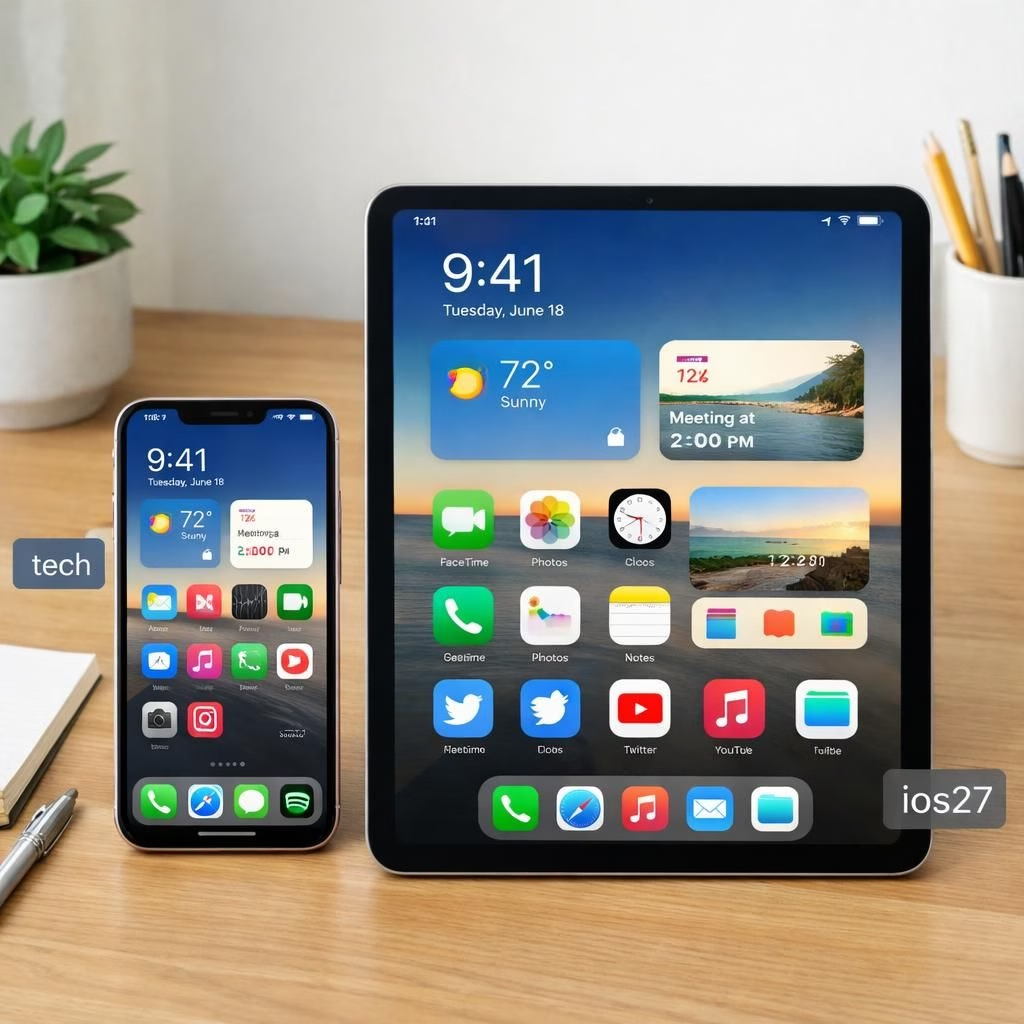
tech and ios27 aren’t adversaries; they’re co-authors of a smarter mobile future. In this lighthearted look at the ios27 rollout, we explore why changes can feel like a dance lesson for your fingers rather than a betrayal by your thumbs. The takeaway is simple: the update nudges you toward more consistent interactions, and it asks for a little patience from even the most muscle-memory loyal user. This isn’t a revolt; it’s calibration—a reminder that software progress is a long game that rewards curiosity as much as compliance.
If you’ve spent years fluent in iPhone gestures, you may discover that your muscle memory is stubborn yet teachable. The good news is that the tech behind ios27 aims to be kinder to your daily workflow, not crueler to your routines.
tech lens: ios27 UX reshuffle
Under the hood, ios27 reorganizes where you expect features to live, not because it hates your old habits, but because it wants to reward discovery and reduce accidental taps. The tech behind the change centers on clearer menus, contextual cues, and faster responses that feel snappy rather than sneaky. It isn’t a sledgehammer; it’s a mason’s chisel, slowly shaping the interface while you still type, swipe, and glance at your screen. Early adopters will notice improved app launch times, smoother animations, and smarter background tasks that do not drain the battery without telling you first.
On the ground, real users report a mixed bag: some apps respond faster; others require a tiny mental reset. The result is a net win for usability, albeit with a learning curve that feels like a short sprint after a long walk. If you previously swiped up to access Control Center and found it now by swiping from a corner, you may grumble for a moment—but you’ll retune quickly if you keep the benefit in sight: fewer accidental taps, more predictable outcomes, and better energy usage on select devices. The changes are not cosmetic; they’re practical, and they aim to improve reliability without sacrificing your habit history.
ios27 reality check for iPhone and iPad users
For iPhone and iPad owners, ios27 targets parity: older devices gain speed, while newer hardware unlocks more sustained performance. The claim is not mere hype; reviewers have noted that previous lags in keyboard responsiveness and app switching feel noticeably smoother. The upshot is that the update invites confidence rather than frustration. If you carry an older model, the initial adoption pangs are real, but they fade as you learn new gestures and new defaults that aim to shorten each task length by a few seconds. Tech progress here is less about fireworks and more about consistency—a slow burn that pays off with calmer, more predictable days.
From a design perspective, the shift is a reminder that technology thrives on frictionless interaction. The goal is to keep your workflow intact while offering new shortcuts, better privacy prompts, and more accurate system feedback. Developers respond to ios27 by optimizing launch paths, refining animations, and tuning haptics so the experience feels cohesive across devices. The result is a platform that respects muscle memory but also nudges it toward a healthier adaptation curve. In other words, the tech doesn’t erase your past—it invites you to rewrite the next chapter with smarter cues and kinder timings.
Practical notes for everyday users: embrace the change, but don’t abandon what works. If you relied on a particular gesture, try the new gesture and compare the outcomes. Most apps offer subtle fallbacks, and system prompts now explain why a choice is made, which reduces guesswork. If your device supports it, enabling new accessibility options can lower the friction further, turning what used to be a frustration into a simple preference.
For power users who juggle HomePod, CarPlay, and a multi-device workflow, ios27 ties the ecosystem a little tighter. You’ll notice more predictable handoffs, more coherent focus modes, and fewer moments where you ask your device to do something and it replies with a shrug. All this comes without erasing your history; your earlier habits still exist, but they get a kinder highway to the finish line. This is not magic; it’s patient, deliberate tech work that pays off in the long run.
tech and ios27: a practical playbook for readers
- Check for app updates that optimize for ios27.
- Give your keyboard a moment to train on the new latency.
- Customize Control Center in small steps.
- Track battery and memory trends over a week.
In practice, the playbook is simple: update apps that optimize for ios27, let your keyboard learn the latency, adjust Control Center gradually, and monitor battery usage over a week. The aim is to smooth your daily rhythm without forcing a full routine rewrite.
In short, the iOS 27 release invites a balanced optimism: the tech will reward the patient, and ios27 provides the stage on which new, more efficient habits can emerge. The changes are not cosmetic; they are practical, and they aim to improve the reliability of everyday tasks without turning you into a beta tester who never sleeps.
Have you tried ios27 on an iPhone or iPad? How did it affect your daily flows? Share your thoughts in the comments and help others navigate this transition with humor and practical tips.
Linkback attribution: Thanks to 9to5Mac for the original reporting on ios27 muscle memory shifts. Original article: 9to5Mac article
References
- Original 9to5Mac article
- The Verge coverage
- Macworld coverage
- External sources: Apple official iOS overview — https://www.apple.com/ios/