

food-supply in everyday life
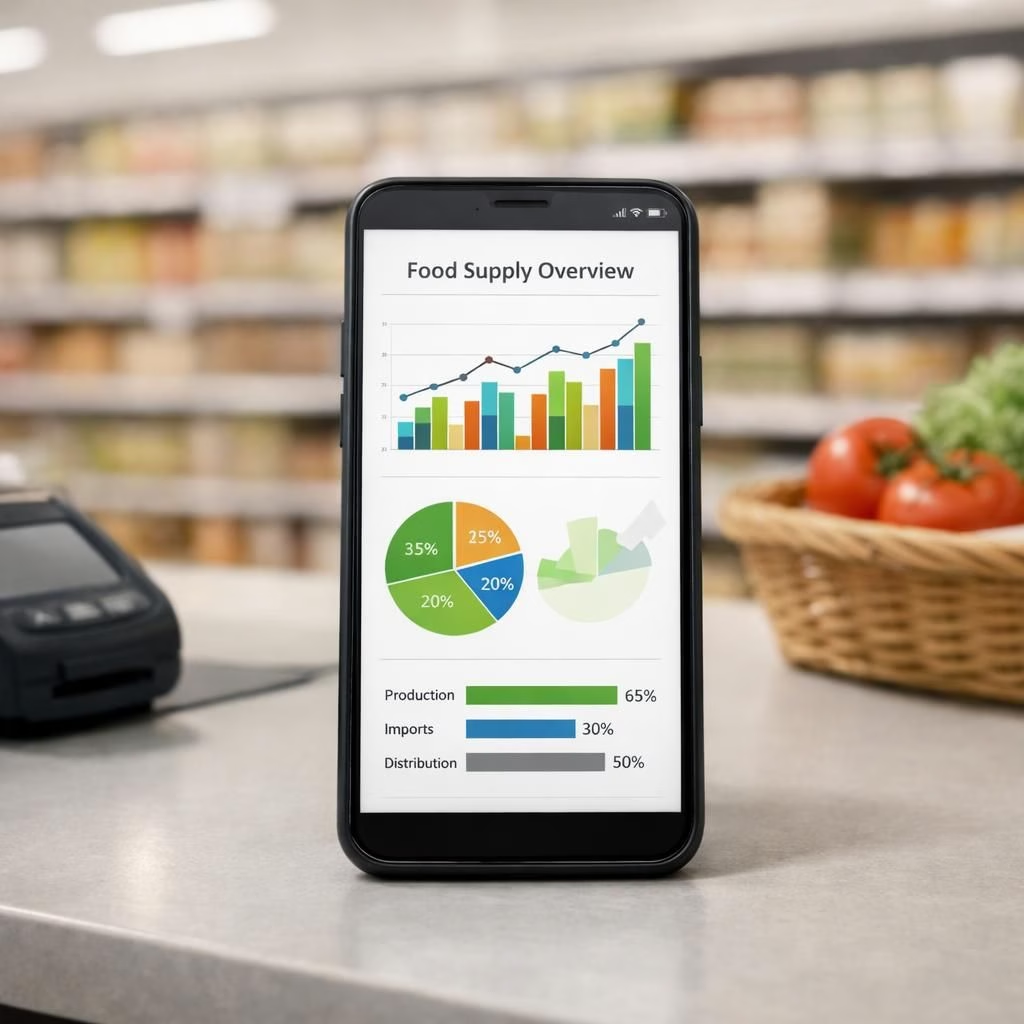
In 2026, the food-supply landscape is quietly rearranged by a single app. The tech-policy crowd nods, murmuring about data governance, efficiency, and the price of labels. This piece looks at how the food-supply app negotiates suppliers and dashboards, while the tech-policy lens keeps watch on transparency and accountability in the ongoing food-supply journey. The entire setup feels like a gentle nudge from a helpful algorithm, not a villain in a lab coat.
Behind the scenes, the food-supply ecosystem hums—a network of farmers, distributors, grocers, and data streams. The app sits at the center as a quiet conductor, tuning supply to demand in real time while sipping a metaphorical coffee named efficiency. The food-supply dynamic benefits from this tuning, but it also raises questions about privacy, choice, and fairness within the food-supply journey.
tech-policy implications
From a policy perspective, the tech-policy question is simple: who owns the data, who makes decisions, and how do we keep the process fair in the food-supply game? Regulators debate standards for provenance, consent, and the long tail of micro-sponsorships that quietly shift prices. The app’s design choices reveal how a tech-policy framework can steer or stall innovation in the food-supply space. We watch the balance between openness and guardrails, and how this balance reshapes consumer experience in the food-supply chain.
On the operational side, transparency means clearer explainability of algorithms and brighter signals for stakeholders in the network. The tech-policy conversation also touches on competitive fairness: if a single app quietly dominates data about what households buy, who ensures that small grocers retain room to compete in the food-supply landscape? The answer, in 2026, involves public-private partnerships, open standards, and a healthy dose of skepticism toward every dashboard at the command center.
All of this translates into real meals and real budgets. The app pushes for smarter ordering, less waste, and easier compliance, which can mean lower prices and steadier shelves. The tension between rapid innovation and responsible governance sits at the heart of the tech-policy and food-supply conversation, and we can cheer for progress while guarding against blind spots.
Practical steps for food-supply stakeholders
- Retailers: Use demand signals to optimize inventory while prioritizing customer privacy and clear disclosures.
- Policymakers: Encourage provenance tracking, explainable algorithms, and open standards to reduce hidden bias.
- Shoppers: Stay informed about data use, exercise opt-outs where offered, and choose providers that publish clear privacy notices.
What tech-policy means for shoppers
In everyday decisions, the tech-policy frame matters. Consumers gain clearer explanations about why certain items appear as discounts or substitutions, and they can better trace how data shapes recommendations.
FAQ
- What exactly does the food-supply app do with my data?
It aggregates anonymized signals to forecast demand, guide ordering, and reduce waste, while keeping personal details private wherever possible.
- How does tech-policy influence these tools?
It sets rules for ownership, consent, transparency, and accountability, often requiring explainable logic behind automated decisions.
- What can shoppers do to stay in control?
Review data preferences, opt out of nonessential data sharing when available, and choose providers that publish clear privacy notices.
Original article: The Washington Post: Column | This app is quietly reformulating America’s food supply. Thank you to The Washington Post for the original coverage.
Have thoughts? Please share your thoughts in the comments below.