

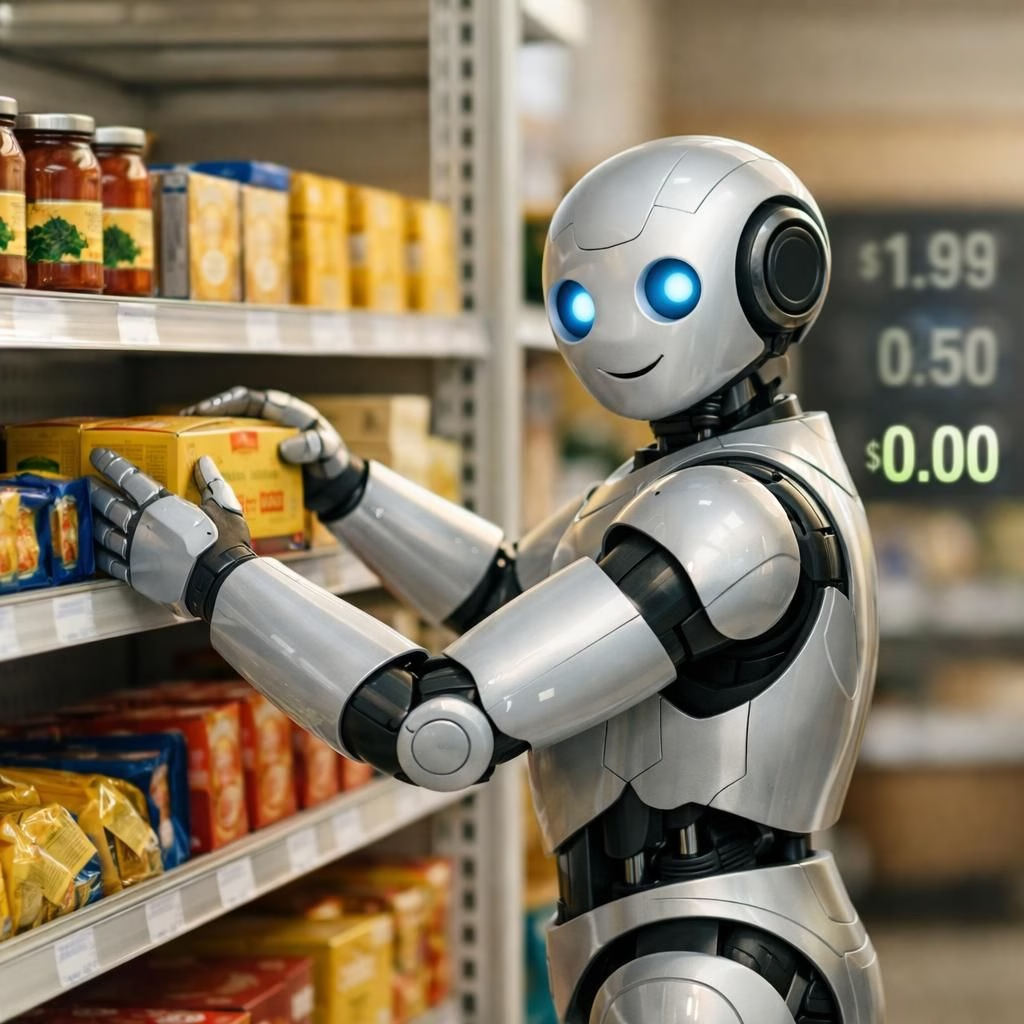
AI and Robotics are the stars of a bold forecast about the future of money and work. Elon Musk, often described as the world’s first trillionaire after SpaceX’s IPO, argues that money will eventually cease to matter. In a conversation with Peter Diamandis (via Fortune), Musk sketches a moonshot scenario where human labor is optional and currency fades as automation accelerates. The tone is provocative, with a mix of humor and hard-edged optimism about what’s coming.
He lays out a simple, stubborn bet: AI and Robotics will produce so much that there will be no shortage of goods and services, while human wages shrink to a whisper. The video clip from X captures Musk noting that robots will be so productive they’ll run out of tasks for people. The emphasis is not fear but a cheerful forecast of abundance. Prices could drift toward zero as factory costs plunge and logistics accelerate, while digital and mechanical capital keeps turning. In short, the future arrives with a shrug and a grin, and money begins to look like a quaint fossil from a past economy.
Musk’s insight sits at a curious crossroads. If machines do the heavy lifting, what happens to the traditional need for money? He bluntly says money will stop being relevant at some point. The idea sounds radical until you picture the alternative: a world where people are free to pursue curiosity, creativity, and care rather than chasing a paycheck. The paradox is that the person who could buy most of today’s goods with a bank of trillions is proposing a system where those piles of wealth lose their grip on everyday life. It’s wealth rethought as a platform for experimentation rather than a trophy case for the few. This is the satire and sincerity that makes the conversation compelling rather than merely sensational.
Diamandis, ever the provocateur, doesn’t miss the irony. He asks whether wealth concentrated in the hands of a few would still fit a moneyless or nearly moneyless world. Musk nods and agrees. The dialogue quickly shifts from wealth to governance, from assets to access. If money loses meaning, who ensures broad access to education, health care, and basic needs? The answer, in their vision, is a robust form of universal high income. This is not a handout but a universal platform that unlocks potential. It is designed to ensure that citizens can benefit from automated abundance without becoming passive bystanders. The messaging is that abundance needs institutions that can share, recycle, and reinvest value in people.
AI and Robotics: A Moonshot Economy and the Economics of Abundance
From the perspective of Economics, the coming shift invites a rethinking of price, value, and work. If AI and Robotics drive down the cost of production, the price of many essentials could fall dramatically or even approach zero in theory. That’s where policy design matters. A careful plan would protect innovation while preventing deprivation as markets recalibrate. A practical layout suggests new metrics beyond dollars, such as access, time saved, and improved quality of life. It’s economics reimagined for a world where machines do most of the heavy lifting. The challenge is to align incentives so that human creativity remains a driver of progress, not a sunset activity.
In parallel, AI and Robotics push education to the center of public discourse. Students will need training that translates to collaboration with machines. Lifelong learning becomes the norm, not a buzzword. Businesses will need to pivot toward roles that require uniquely human strengths: empathy, strategic thinking, and nuanced problem solving. The result is not a robotic monopoly but a new ecosystem where AI and human intelligence complement each other. The economics of this era rests on partnership: machines provide throughput, humans provide direction, and communities participate in decision making.
AI and Robotics: Practical Realities and Responsible Innovation
There are practical hurdles and moral questions to address. AI and Robotics require energy, data, and robust governance. The dream of universal high income helps but does not erase the need for credible policy. Regulations should encourage innovation while protecting workers, consumers, and the environment. Businesses must find sustainable business models that reward long-term value creation. The article’s tone is optimistic, but the path forward is not an unmonitored sprint. It’s a long arc of experimentation, iteration, and inclusion. We should celebrate progress while staying vigilant about privacy, security, and ethical AI use.
Ultimately the story is less about the end of money and more about the redefinition of value. AI and Robotics can raise living standards if we design systems that reward people for creativity, care, and civic engagement. If we embrace universal high income as a bridge rather than a shortcut, we can keep momentum toward a future where abundance is accessible to all. The key is to pair technological capability with thoughtful policy and bold entrepreneurship. The result could be a society where money is still useful, but not as central as it once was.
What do you think about this vision? Do you see AI and Robotics delivering a future of real abundance or a more complicated equilibrium? Share your thoughts in the comments below; your perspective matters and helps shape the conversation.
Linkback attribution: Special thanks to Fortune for the interview recap featuring Elon Musk and Peter Diamandis. Original material can be found here: Fortune article. Thank you for the insightful source material.
References
- Fortune article
- Original source: Times of India
- Brookings: Automation and the Future of Work
- World Economic Forum: The Future of Jobs