

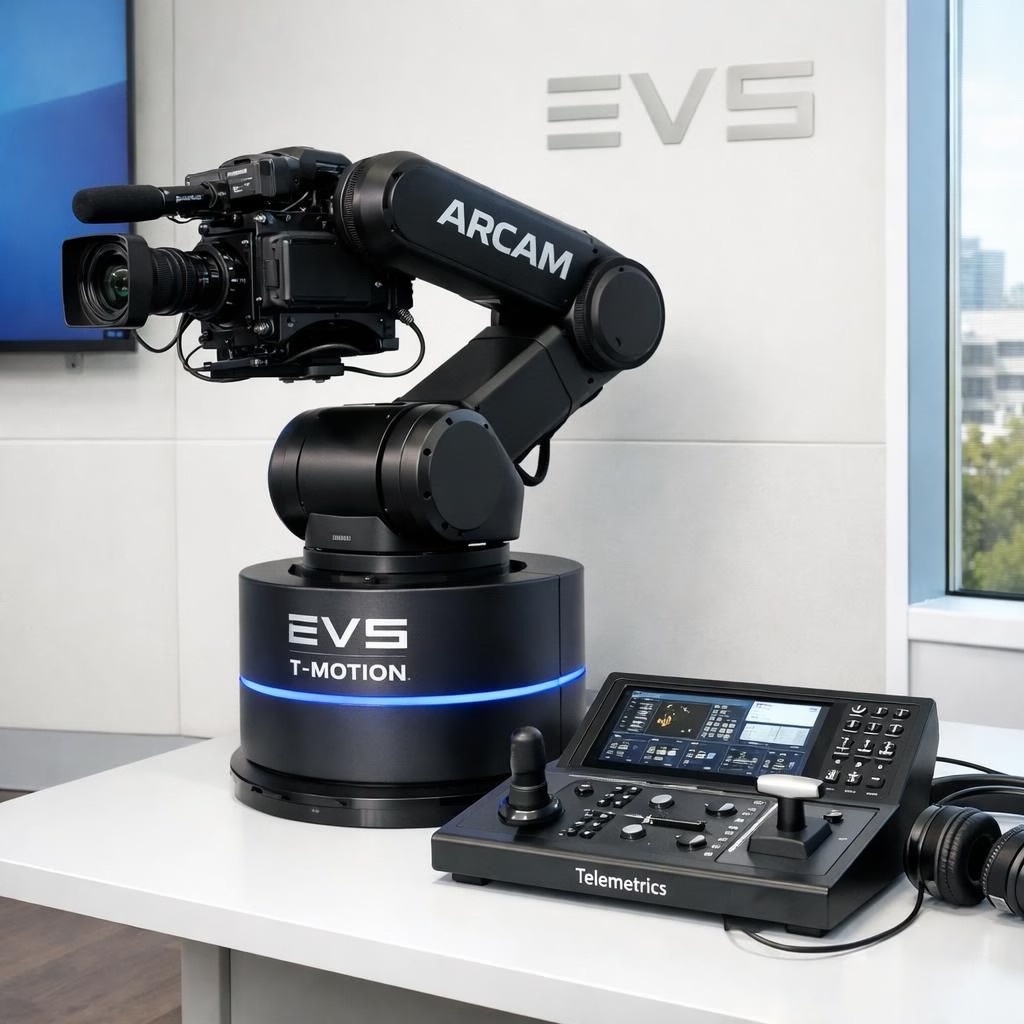
EVS is reshaping live production with its new T-Motion robotics solution. It blends Telemetrics and XD Motion into a single, user-friendly package for NAB 2026. EVS acquired both Telemetrics and XD Motion last summer, signaling a bold new era for automated studio rigs. The emphasis is safety, reliability, and operator confidence, with a design that feels approachable.
EVS and T-Motion at NAB 2026: A New Era
At NAB 2026, EVS will roll out the full T-Motion lineup. The Arcam six-axis camera arm anchors the system, paired with the OmniGlide roving platform. A Telescope robotic jib, TeleGlide track, Televator elevating pedestal, and XFly cablecam complete the package. The goal is a unified orchestration layer that weaves T-Motion into EVS’s live production ecosystem. The result is creative flexibility without sacrificing operational consistency, all built around safety as a core principle.
- Arcam six-axis camera arm
- OmniGlide roving platform
- Telescope robotic jib
- TeleGlide track system
- Televator elevating pedestal
- XFly cablecam system
EVS’s unified orchestration layer will integrate the T-Motion systems with the broader EVS ecosystem. This means operators can manage multiple rigs from a single interface, reducing setup time and drift between shots. Safety remains central: collision avoidance rules and predictable choreography keep talent and crew protected while expanding creative options.
EVS T-Motion: Practical Benefits for Live Production
Beyond hardware, EVS showcases its software turns of phrase. XtraMotion uses GenAI to create super slow-motion, deblurring, and cinematic replays from plain feeds. T-Motion leveraging tools like LSM-VIA Zoom lets operators reframe wide-angle 4K in real time and track action using AI-based object recognition. All of this is accessible from the LSM-VIA operator interface, with AMP protocol for snappy response in fast-moving moments.
For officials and reviewers, Xeebra AI-driven field calibration and remote review pair with XtraMotion deblurring to sharpen analysis of pivotal moments. T-Motion INSIGHT extends these tools to coaches and medical staff, enabling live review and quick clip sharing without running back to the control room.
A stadium-focused thread shows how unified control and scalable infrastructure reduce reliance on multiple standalone systems. The VIA MAP Media Asset Platform ties on-premises, hybrid, and cloud workflows into one fabric. It uses AI-enriched metadata, enhanced logging, and third-party data feeds to accelerate search and monetization of archives.
In news operations, VIA MAP unifies ingest, AI metadata enrichment, asset management, editing, playout, and multi-platform distribution. Deep integration with newsroom systems and flexible cloud deployments support collaboration across broadcast, digital, and social channels.
The MOVE product line adds cost-effective, all-in-one ingest, playback, and transcoding. MOVE I/O supports extensive formats and integrates with EVS asset management and Avid environments. MOVE UP adds file-based ingest, transcoding, automated workflows, and a REST API for third-party control.
For broadcasters migrating to IP, Cerebrum provides a single control layer across SDI and IP. It consolidates broadcast and router control, IP orchestration, and SDN, with pre-built UI packages aligned to common workflows. Neuron introduces live preview in Bridge and Convert, letting engineers monitor processed video in real time.
The Strada routing system gains three new SDI-router replacement packages, enabling replacement of aging routers while preserving IP readiness. EVS also debuts Flexible Control Room with Tactiq, a modular interface that supports role-agnostic operations and hybrid environments. Finally, the balanced computing model helps teams choose CPU, GPU, FPGA, edge, or cloud resources per workload, while the EVS eShop supports scalable upgrades.
All of this is on display at Booth N1841 in the North Hall of the LVCC, where EVS specialists explain how software-defined deployment and flexible commercial models adapt to different studios and venues.
In short, EVS continues to push the envelope with T-Motion while keeping the day-to-day workflow friendly. The result is a practical upgrade path for existing users and an inviting invitation to newcomers who want smarter, safer, and more expressive live production.
We welcome your thoughts—please share them in the comments.
Original article: TV Tech. Thank you to Tom Butts for the original material.
FAQ
- What is T-Motion?
A robotics solution from EVS that combines Telemetrics and XD Motion into a unified live-production toolkit for studios and venues.
- How does the unified orchestration layer help productions?
It lets operators control multiple rigs from one interface, reducing setup time and shot drift while maintaining safety.
- What hardware is included in the T-Motion ecosystem?
The lineup covers Arcam arm, OmniGlide, Telescope jib, TeleGlide track, Televator pedestal, and XFly cablecam, all managed through a single orchestration layer.
- Where can I learn more about NAB 2026 and EVS?
Visit the NAB Show site and EVS’s official pages for live updates, demos, and scheduling at Booth N1841.
Takeaway
EVS’ T-Motion aims to simplify complex live productions while delivering safety, reliability, and creative flexibility. For teams evaluating upgrades, NAB 2026 will be a practical, hands-on showcase of what a modern robotics workflow can feel like.