

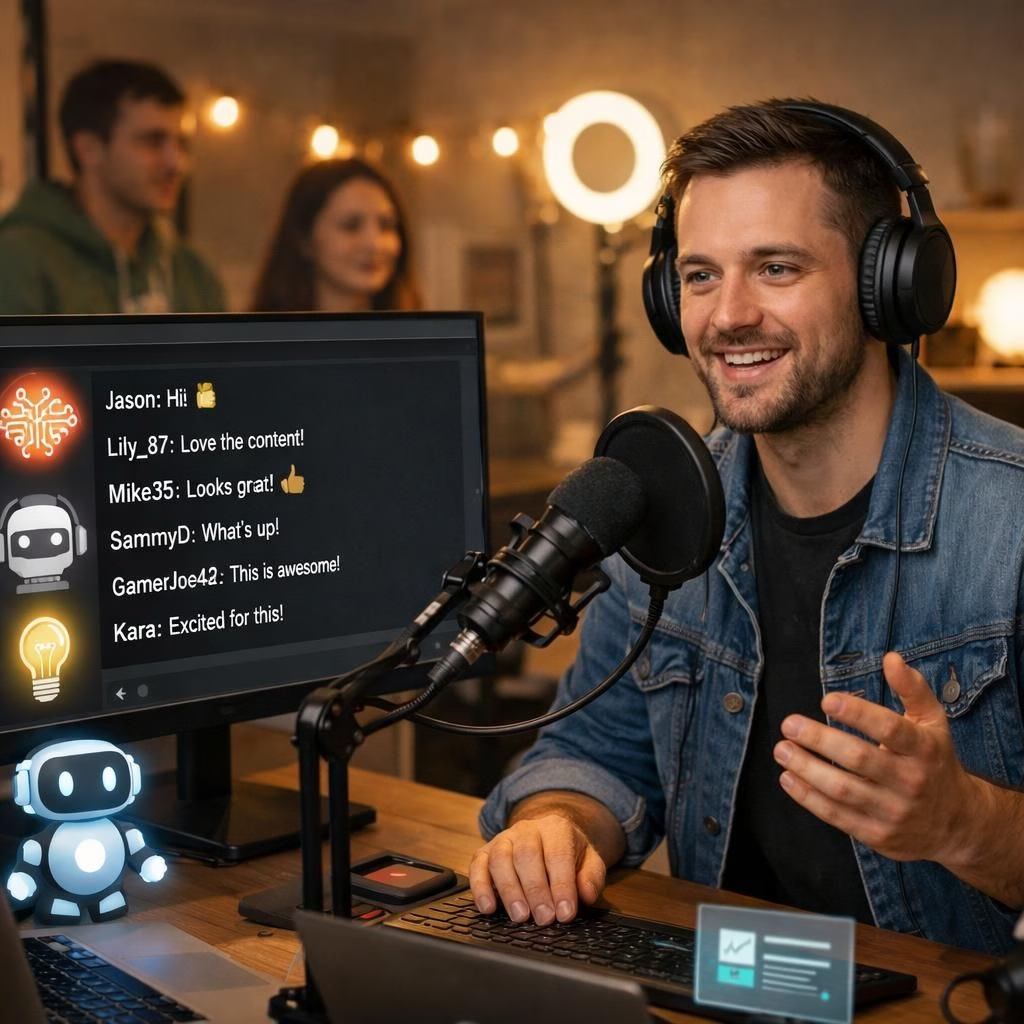
In Aspen at the Fortune Brainstorm Tech conference, Twitch CEO Dan Clancy framed Live Streaming and Tag B as a practical compass for the online age in 2026. He argued that AI aims to push humans out of the center while live formats keep real people in the loop. You connect with people, you understand them, and you see who they are in real time. This immediacy, he suggested, is what algorithms still struggle to mimic. The combination of Live Streaming and Tag B, he implied, offers a human path through a buzzing digital maze.
Clancy’s emphasis on real-time engagement aligns with the joint platform strategy of Twitch and Whatnot, a live shopping and creator economy. The two leaders on stage stressed that the core value is live communities where creators sell, chat, and entertain in the moment. Across both companies, the logic is simple: people buy and bond when they see a person respond in real time. The live moment beats a static feed every time.
Live Streaming as the Center of Real-Time Connection
Both executives argue that AI should assist creators rather than replace them. LaFontaine of Whatnot suggested AI could help sellers craft content or stay connected with audiences when a stream is paused. Clancy added that AI can unlock creativity by removing friction in production, letting creators focus on ideas instead of logistics. The tone is practical, not apocalyptic; AI is framed as a tool to amplify human talent, not replace it.
Data scraping by AI companies has not become a major headache for these businesses, they say. They emphasize consent, community norms, and the value of live, opt-in participation. This stance mirrors a broader industry trend that prefers transparent partnerships over cat-and-mishap data grabs. The message is that trust in materials and creators matters more than chasing every data point.
AI Ethics as a Creator Assistant
What makes the conversation compelling is the balance between ambition and caution. The executives stress that live content thrives on human warmth, spontaneity, and audience feedback loops that algorithms can only imitate at a distance. AI can help producers map trends, tailor recommendations within a stream, and even draft light edits for shorter clips, but the core spark comes from the creator. The result is a platform environment that feels collaborative, not robotic.
From a numbers perspective, Twitch reports about 35 million daily active users, while Whatnot cites several million daily participants. The scale matters because a live format thrives on ongoing interactions, not isolated posts. Whatnot has moved a lot of its focus into livestream shopping, turning the real-time connection between creator and buyer into a durable business model. This is not a one-off novelty; it is a sustainable ecosystem that relies on immediacy and trust.
The conversation turns to how these tools reshape daily work for creators. LaFontaine notes that Whatnot provides controls that help users manage their time and attention. Clancy adds that AI can help people access their creativity by lowering barriers to content production, so more ideas reach the audience without overwhelming the creator. The emphasis stays on empowerment rather than control by machines.
Industry debates about platform ownership and corporate strategy surface naturally. Clancy pushes back on the idea that Amazon might one day exit Twitch. He argues that Twitch grew in tandem with Amazon since the 2014 acquisition, and its strongest asset remains the community built around live content. The stock of trust lies in the people who show up, not the algorithms that rank them.
Live Streaming in Practice: Community, Commerce, and Connection
Another angle is the social side: live communities mirror real-world clubs and gatherings where people share rituals, stories, and product recommendations in real time. The live shopping model adds an extra layer of immediacy, turning conversations into short-term commerce that feels genuine rather than forced. The pairing of Live Streaming and Tag B keeps the experience human while leveraging technology to streamline interactions.
For businesses, the implication is clear: invest in creators, invest in communities, and keep technology from eclipsing human connection. The ecosystem rewards speed, authenticity, and the ability to read a room as it happens. The best content remains the stuff that resonates in the moment, not the package that was pre-scheduled months ago.
In 2026, the live format remains durable because it builds a creator–audience relationship that thrives on presence. The numbers help explain why: millions of daily users depend on real-time feedback, and a robust shopping component adds a revenue buffer that pure feeds cannot provide. In 2026, Live Streaming and Tag B together form a practical path forward, not a philosophical wedge.
Special thanks to Fortune Brainstorm Tech for the original coverage that inspired this post. Original article: Fortune Brainstorm Tech recap.
Want to weigh in? Share your thoughts in the comments below and tell us how you see Live Streaming and AI Ethics shaping creator communities in 2026.
Practical steps for Live Streaming creators
- Allocate regular, predictable live slots so audiences can plan ahead and participate in real time.
- Use AI as a creative assistant to draft ideas, outline formats, and edit clips, not to replace your voice.
- Set personal limits to avoid burnout and maintain authentic engagement with viewers.
- Develop clear community guidelines and opt-in approaches to data and recommendations.
AI Ethics guidelines for creators
- Map the ethical considerations of automated tools, including transparency with audiences about AI-assisted content.
- Prioritize consent and privacy in data used for recommendations or moderation.
- Balance speed with quality to keep the creator–audience relationship personal and trusted.
FAQ: Live Streaming and AI Ethics
- What is AI Ethics in livestreaming? A framework for using automated tools in ways that respect audiences, creators, and communities.
- Will AI replace creators? No. AI is best viewed as a helper that accelerates ideas and reduces friction, while human perspective remains central.
- How can creators protect privacy? Establish transparent data practices, limit data collection, and give viewers clear control over their information.
Conclusion: a human-focused path forward
The real strength of live formats lies in presence, reaction, and trust. When executed with thoughtful AI tools, live streaming can amplify creativity without sacrificing the human connection at the heart of communities.