

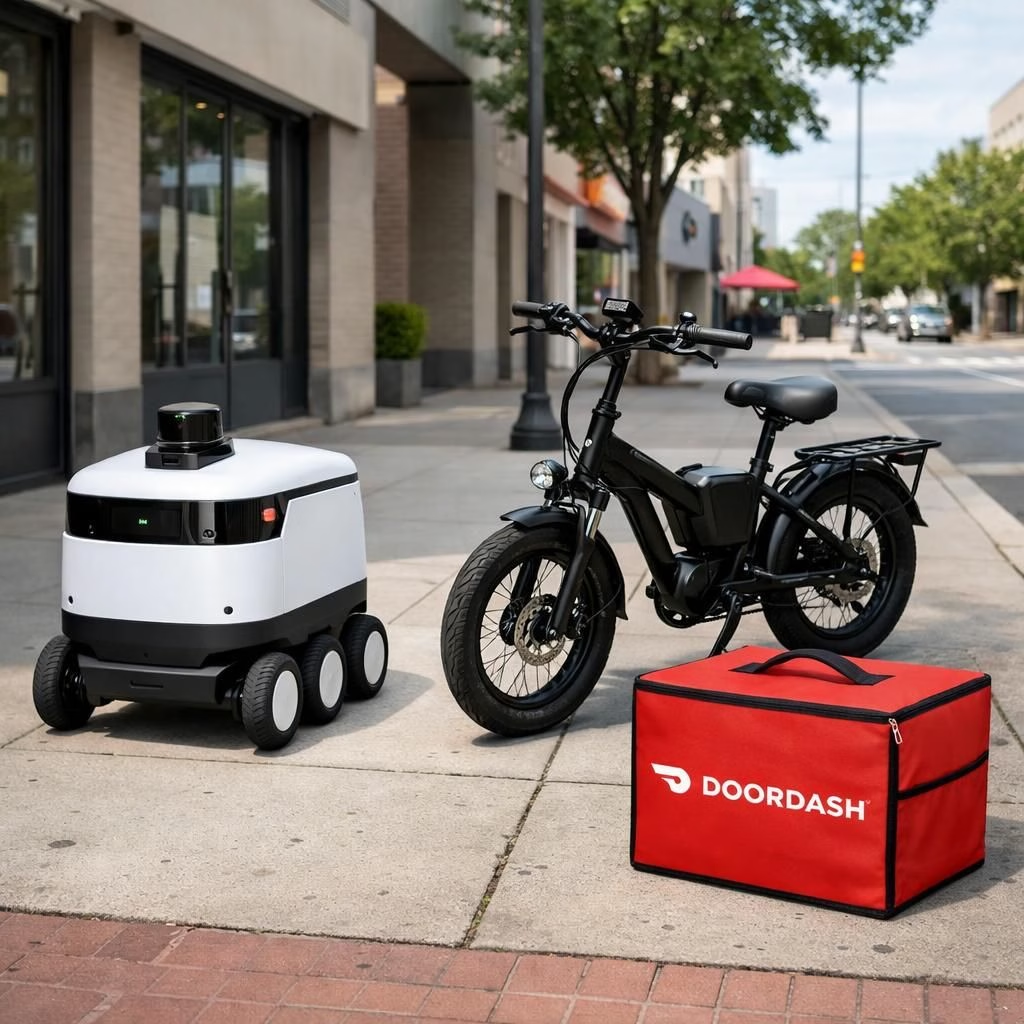
In 2026, autonomy and delivery are stepping into the spotlight as DoorDash partners with ALSO, a nimble maker of electric bikes and compact EVs. The deal includes an investment in ALSO’s $200 million Series C and a multi-year collaboration to advance autonomous delivery tech, with a roadmap that reads more like a practical game plan than a sci‑fi script.
Autonomy in Focus
DoorDash is expanding beyond meals and human couriers by embracing a future where autonomy works alongside customers and drivers. The ALSO tie‑in builds on the Dot delivery robot introduced last year, signaling a serious tilt toward automation while keeping a human-friendly vibe. Autonomy here means machines that can navigate streets and sidewalks with purpose, not a reckless joyride. When used together, autonomy can handle routine legs of the route, while humans stay nimble for exceptions. This balanced approach helps delivery stay reliable even as demand spikes and weather challenges arise.
The partnership leans into the idea that small autonomous EVs are optimal for spaces like bike lanes, shoulders, and quiet streets where optimization matters most. ALSO’s lineup includes a bike and two pedaled carts, designed to fit into places where bigger vehicles fear to tread. The eye-catching part is how these tiny EVs can still move a meaningful number of orders, especially when paired with DoorDash’s data-driven dispatch. The takeaway is practical: more options, fewer bottlenecks, and a last mile that isn’t a traffic jam in disguise.
Delivery Futures: Multi-Modal Networks and Real-World Tests
DoorDash Labs is cultivating a multi‑modal future that blends human couriers, robots, and drones into a cohesive ecosystem. It reads like a logistics symphony where curb access, order integrity, and on‑time arrival are the instrument, baton, and tempo. The ALSO collaboration adds an EV twist to this score. It’s not about gimmicks; it’s about building a fleet that can operate in the real world, with noisy streets and friendly but firm pedestrians. The goal: unlock new ways to meet customers and merchants where they are, without sacrificing reliability or speed.
ALSO, based in Palo Alto and quietly aligned with Rivian’s orbit, is maturing toward more autonomous ambitions. Its current vehicles don’t drive themselves yet, but the DoorDash partnership is designed to accelerate that learning curve while keeping the hardware pragmatic and robust. The focus is on a practical autonomy that can actually scale, rather than a shiny prototype that never leaves the lab. This is autonomy with a plan, backed by a delivery network that has seen demand surge and learned to adapt.
DoorDash has experimented with partnerships beyond ALSO, including collaborations with Serve Robotics to help expand this autonomous network. The logic is simple: if one path stalls, another might glide through. A multi‑modal network reduces single points of failure and makes DoorDash’s delivery options more resilient. In recent weeks, reports of glass incidents involving robots in Chicago bus stops have reminded everyone that the technology still has growing pains. Yet the industry learning curve is steep, and progress is measured in iterations, not headlines. DoorDash’s co‑founder and Head of DoorDash Labs, Stanley Tang, emphasizes that the details matter: curb access, order arrival times, and the condition of each package on delivery day all count toward a dependable experience. Autonomy is not about magic; it’s about predictable outcomes in a physical world that never stops surprising us with edge cases.
Delivery Milestones: EVs, Robots, and Real-World Pragmatism
Also’s EVs illustrate small-scale efficiency. The bike and pedaled carts are built for places where trucks fear to tread, or where sidewalk corners often become temporary warehouses. DoorDash’s investment and joint development plan are as much about hardware as they are about software: route optimization, vehicle coordination, and real-time feedback loops that let the system learn from every mile logged. The autonomy technology will be tested in controlled environments first, then gradually rolled into broader neighborhoods as reliability improves. The project isn’t about replacing human labor; it’s about extending it—empowering couriers with smarter tools that can handle routine legs while humans focus on complex deliverys, tricky addresses, and the occasional mystery order that requires a human touch.
From a practical standpoint, the autonomy push is about meeting customers where they are, literally and figuratively. DoorDash aims to create a network where options proliferate: human couriers for dense downtowns, autonomous EVs for calmer corridors and curbside zones, and drones for time-critical items when the wind cooperates. The four‑wheeled Dot is a symbol here—a robot that can roll along the road and slip onto a sidewalk when needed, a hybrid approach that tries to minimize friction for everyone involved. The collaboration with ALSO is a bet on speed, scalability, and the kind of reliability that keeps service levels high even as demand spikes. Autonomy and delivery become a paired strategy rather than a competing technology, delivering both efficiency and a touch of playful optimism to the last mile.
Critically, this is not hype. It’s a measured step with defined goals: better curb access, safer handoffs, and the ability to reallocate resources quickly when volumes heat up. ALSO’s EPV lineup and DoorDash Labs’ multi-modal planning are designed to deliver a practical, flexible fleet that technicians and operations teams can tune over time. The message to customers is simple: more options, faster responses, and the same dependable service you expect, now with a dash of automation that won’t overwhelm the nerves of a busy street corner. And yes, the humor stays intact—robots are learning manners, but they’re learning fast enough to be useful on a busy Friday night, not just in a lab notebook.
As 2026 unfolds, the DoorDash‑ALSO alliance is framed as a strategic, scalable move rather than a flashy pilot. It’s a prudent bet on a multi‑modal future where autonomy and delivery coexist, complementing each other rather than competing for attention. The result could be a more resilient, responsive network that adapts to regional variations, regulatory constraints, and evolving customer expectations. It’s not about replacing people; it’s about giving people better tools to do their jobs, which in turn makes customers happier and merchants more satisfied with the delivery experience. Autonomy helps speed, and delivery helps reach—the perfect two-step for a modern last mile that finally feels a little more human, even as it becomes a touch more robotic in the best possible way.
In short, the DoorDash/ALSO collaboration is a cheerful, pragmatic bet on 2026. It’s the kind of partnership that says: yes, we can keep delivery fast and accurate with smarter EVs and smarter software. It’s a collaboration that treats the city as a living, breathing logistics lab rather than a stage for grand demos. If you’re curious about where autonomy and delivery will take us next, stay tuned. And if you’ve got thoughts, share them below to keep this conversation honest, practical, and a little witty.
Original article: Thank you to the original coverage for the material that inspired this rewrite. You can read the source here: TechCrunch — DoorDash and ALSO Partner on Autonomous EV Delivery (2026). We’re grateful for the detailed reporting that helped shape this perspective.
Thank you for reading. If you enjoyed this take, please consider sharing it with friends and colleagues who love a good mix of tech, logistics, and a dash of humor.
FAQ
- What is the Dot robot and how does it fit into this plan?
The Dot is DoorDash’s four-wheeled robot that can move on streets and sidewalks, serving as a testbed for delivery automation while keeping human couriers engaged for edge cases.
- Why partner with ALSO?
ALSO provides purpose-built, compact EVs designed for non-truck environments, enabling a more flexible delivery network that scales with demand.
- What does multi‑modal mean for customers?
It means more options: human couriers for dense zones, autonomous EVs for calmer corridors, and drones for time-critical items, all coordinated to improve delivery speed and reliability.
Conclusion
In practical terms, the DoorDash/ALSO alliance signals a cautious but concrete step toward a multi‑modal future where autonomy and delivery work together to improve speed, reliability, and reach. It treats the city as a living logistics lab rather than a backdrop for demo stunts. For readers curious about what comes next, stay tuned—the plan is to scale, learn, and keep the customer experience at the center.
References
- TechCrunch — DoorDash and ALSO Partner on Autonomous EV Delivery (2026)
- Original article: DoorDash invests in EV startup to automate more deliveries