

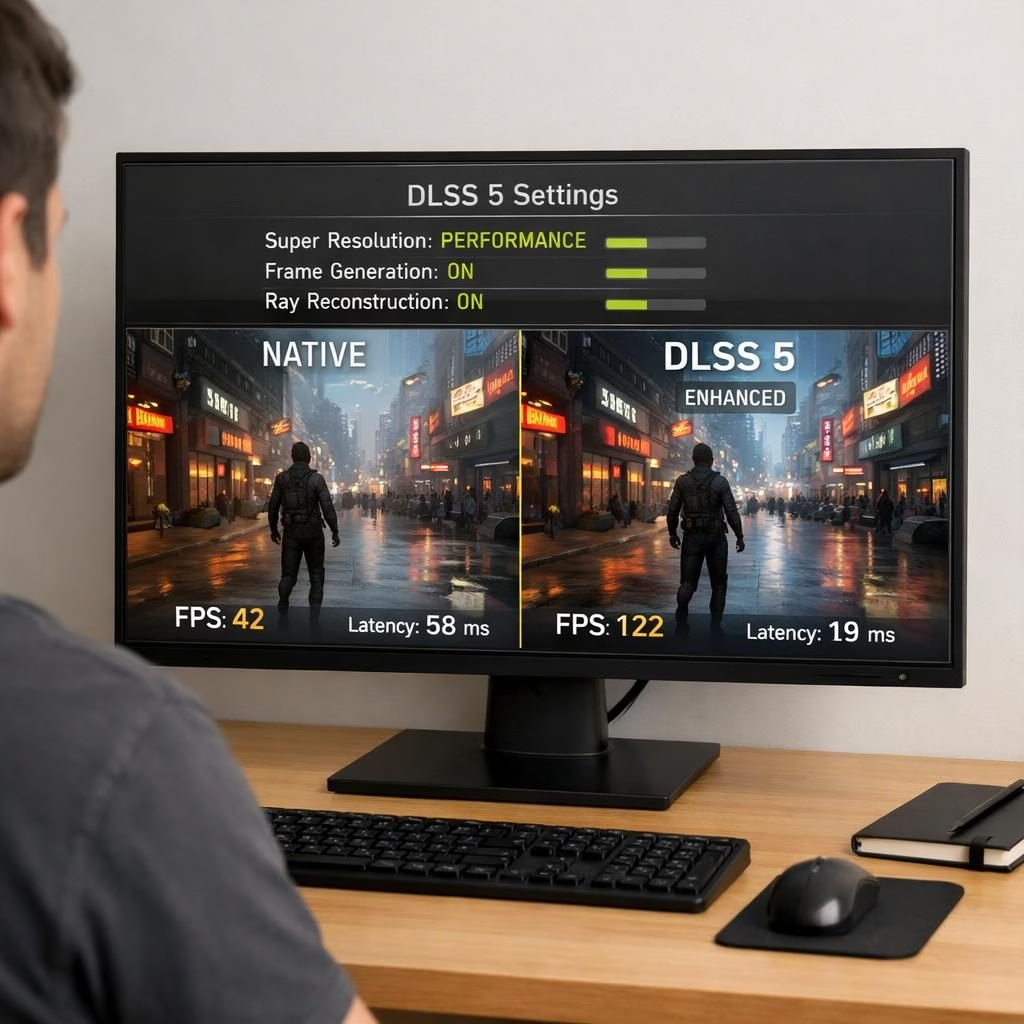
DLSS 5 lands at GTC conference with a splash. The chatter around this update is as mixed as a strong espresso. Some applaud the promise of real-time lighting boosts; others fear the AI slant on artists’ intent. Nvidia frames this as the GPT moment for graphics, blending hand-crafted rendering with generative AI to dramatically raise realism while preserving the control artists need for creative expression. If you crave crisp edges, cinematic lighting, and a dash of future tech, you’re in for a ride as DLSS 5 moves from glittering slides to in-game reality.
DLSS 5 at GTC: what it means for developers
The core pitch is not a gimmick but a design philosophy: end-to-end scene understanding that helps the AI rework lighting and materials without losing the essence of the original art direction. The GTC model is trained to understand complex scene semantics such as characters, hair, fabric, translucent skin, and lighting conditions. It analyzes a single frame to infer these details. DLSS 5 then uses this deep understanding to generate visuals that handle subsurface scattering on skin, fabric sheen, and the interplay of light on hair, while preserving the structure and semantics of the source content.
GTC-driven DLSS 5: end-to-end AI and controls
Developers are given practical knobs to keep the output tethered to intent: intensity, color grading, masking, and selective application are among the tools. The goal is not to paint every frame anew but to anchor enhancements in the game’s original look. In other words, artists can decide where the AI should flourish and where it should stay quiet, much like a colorist with a measuring tape and a magnifying glass.
What this means for games and artists at GTC
Demos shown by Nvidia — including Resident Evil Requiem, Starfield, Hogwarts Legacy, and EA Sports FC — illustrate a version of realism that looks impressive but occasionally uncanny. The new renders can alter character models and materials in ways that resemble an Instagram filter on Grace Ashcroft or a stage-lit shine on Starfield characters, while still tracing back to the original assets. The real question is whether these changes serve the scene or drift toward style drift. Early reactions from industry figures are mixed but instructive: some celebrate the lifelike lighting and shadows, while others caution that AI-driven tweaks should respect the source art’s intent.
At GTC, reactions from industry figures are mixed but instructive. The broader conversation centers on whether the new renders align with the game’s original intent. The promise is that DLSS 5 can shift mood and fidelity without rewriting a scene, provided studios use the controls to stay grounded. The challenge, as always, is applying AI in a way that respects the art direction while enabling compelling new visuals.
In public comments, Bethesda’s Todd Howard expressed enthusiasm: when DLSS 5 ran in Starfield, he noted it brought the game’s visuals to life and teased that players would enjoy similar results. The sentiment is warm in corporate showrooms, though critics remind us that a tool is only as good as the constraints it ships with. For context, this perspective sits alongside broader industry debate about AI-assisted artistry in games.
Among the voices in the wider community, independent creator Mike Bithell offered a sharp take. He argued that letting AI handle art direction in gaming could backfire if the output wanders from the creative brief. Nvidia counters that DLSS 5 ships with dedicated controls so developers can tune or even suppress AI-driven changes, preserving the original aesthetic while providing optional enhancements. The promise is that by fall, the on-screen results will reflect a spectrum from subtle refinement to bolder reinterpretation, depending on how studios configure the feature.
Shipping this fall with initial compatibility
According to Nvidia, DLSS 5 will run in real time up to 4K, and the rollout begins with a limited compatibility list. Expect support for The Elder Scrolls VI: Oblivion remake and Assassin’s Creed Shadows initially, with more titles to follow as studios integrate the new pipeline. Nvidia emphasizes that the AI model is trained on a broad range of scene types and that developers can selectively apply the AI to specific scenes or assets, maintaining performance headroom and artistic integrity. It is a cautious launch with potential for significant rewards if studios exercise restraint and creativity in tandem.
For players and creators, the key takeaway is that DLSS 5 is a tool in the painter’s palette, not a replacement for a director’s eye. The image becomes more convincing when the human artist sets the direction, the engineer provides robust controls, and the AI fills in only where it strengthens mood and detail without rewriting intent.
As the fall release window approaches, watchers across the industry will track real-world performance, compatibility, and the degree to which the feature respects and enhances an existing art direction. The balance between fidelity and imagination will determine whether DLSS 5 becomes a beloved upgrade or a cautionary tale about AI-assisted art.
Have thoughts on DLSS 5 and GTC? Share them in the comments below, and tell us how you’d prefer AI to handle lighting, skin tones, and fabrics in your favorite games.
Practical steps for developers
- Audit scenes to identify where AI-driven lighting and material tweaks add mood without changing the artistic brief; use per-scene masking to preserve style.
- Utilize the intensity and color grading controls to match the game’s palette, then test across front-lit, back-lit, and overcast lighting.
- Mask sensitive assets (faces, hair, fabrics) if needed to prevent unintended changes, preserving character silhouettes and silhouette clarity.
- Benchmark performance with and without DLSS 5 enabled to ensure stable frame rates and headroom for other effects.
FAQ
- What is DLSS 5? Nvidia’s latest AI-assisted rendering model that reworks lighting and materials frame by frame while attempting to honor the original art direction.
- Will DLSS 5 work on my game right away? Initially yes, but rollout starts with a limited set of titles and requires developer integration and tuning.
- Can studios disable AI-driven changes? Yes. DLSS 5 ships with controls that let developers limit or tailor AI enhancements as needed.
- Is there a performance impact? The aim is to improve visual fidelity without sacrificing performance; real-time operation up to 4K is possible in supported titles.
Conclusion
DLSS 5 marks a notable shift in how games could blend handcrafted rendering with generative AI. It is a tool that can lift mood, lighting, and materials when used with intention and restraint, but it also raises questions about preserving artistic intent. The fall launch will reveal how studios balance fidelity with imagination, and whether DLSS 5 becomes a trusted upgrade or a cautionary tale about AI-assisted art.