

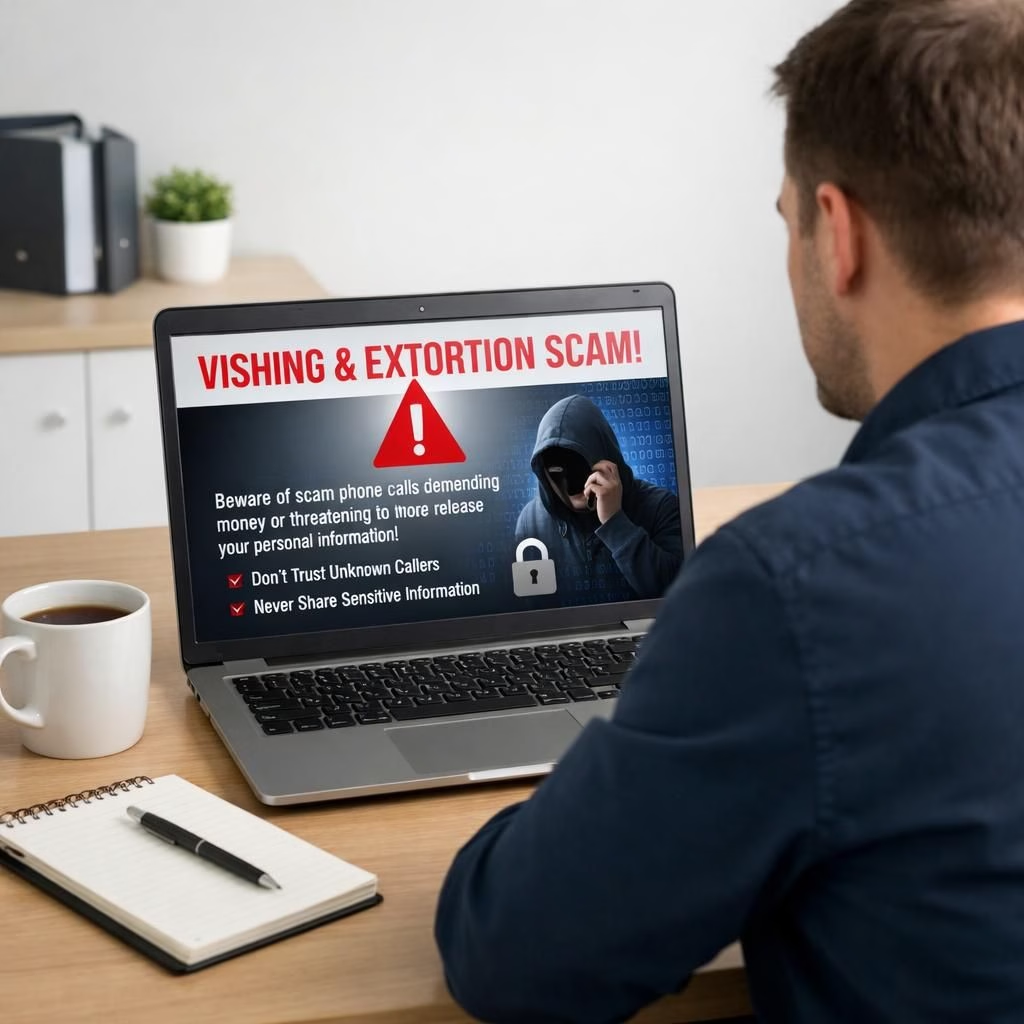
Welcome to a practical, cybersecurity briefing about vishing and extortion campaigns. Google’s Mandiant and Google Threat Intelligence Group warn that UNC3753 targeted dozens of U.S. firms with invoice-themed lures to gain footholds, then exfiltrate data or press for ransom talks. This briefing highlights how vishing and social engineering slip past defenses, starting with harmless-looking emails from actor-controlled consumer accounts. This isn’t a sci‑fi scenario—it’s real, and it reveals both the holes and the hardening moments in modern security.
Cybersecurity lessons from UNC3753’s vishing playbook
The UNC3753 report outlines a methodical playbook that prioritizes plausibility over panic. The group relied on invoice-themed lures to stay under the radar and avoided flashy links or malicious attachments in many initial messages. Instead, the emails were short, generic, and easy to label as routine correspondence. Once inside, they either performed targeted data searches or nudged users into taking actions that looked legitimate but were harmful in disguise.
From a cybersecurity perspective, several defense signals stand out. First, trust in content alone is a weak defense; initial access often relied on misdirection rather than broken links. Second, the attackers used a layered approach to move from entry to data discovery with surprising efficiency. Third, the extortion angle broadens risk beyond data loss to reputation and market value. The silver lining is that these patterns reveal where controls work—and where they must work better.
Organizations that map this playbook can turn the tables. A robust program focuses on three pillars: people, processes, and technology. People must be trained to recognize invoice anomalies and social prompts that arrive via vishing or email. Processes should enforce independent verification for vendor requests and sensitive actions. Technology must provide visibility into vendor communications, authentication anomalies, and suspicious file access patterns. Each layer you strengthen reduces the chance that a new invoice, a new request, or a clever voice call slips through the cracks.
Vishing Tactics in the Wild and How to Counter Them
vishing, or voice phishing, remains a core element of UNC3753’s technique. The attackers often begin with seemingly innocent messages and then escalate through a sequence of social-engineering moves. They pose as a trusted vendor, describe a looming deadline, and invoke fear of data loss. They avoid heavy malware and rely on convincing storytelling rather than brute force. The result is a psychological pressure test that targets routine business practices.
Countering vishing requires a blend of vigilance and confirmation rituals. Validate requests involving network access, data exports, or payments through a separate, known channel. Do not rely solely on the voice or the sender’s claimed identity. Use vendor master data, contact records, and independent confirmations. Implement voice risk scoring with call analytics so unusual patterns trigger a red flag—new numbers, odd call times, or escalation language should trigger a review.
Technology helps here too. Email gateways, outbound payment controls, and data loss prevention (DLP) tools can detect mismatches between a request and typical behavior. If a message claims to be from a trusted partner but asks for rapid transfers or unusual access, it should trigger an additional vetting step. The goal is to create friction for the attacker and a safety net for the defender.
Practical cybersecurity defenses you can implement today
- Enforce vendor verification: require a second contact method separate from email, such as a known phone number or internal chat channel, before acting on sensitive requests.
- Adopt multi-factor authentication (MFA) and privileged access management (PAM) for high-risk accounts to limit what an intruder can do after initial access.
- Improve email hygiene: apply more stringent checks on invoice-like messages and flag similar patterns for manual review.
- Strengthen data access controls: implement the principle of least privilege and conduct regular access reviews to reduce exposure of highly sensitive data.
- Enhance monitoring for unusual data movement: watch for unexpected searches, downloads, or rapid exfiltration attempts, even if files look ordinary at first glance.
Prevention works best when it’s practical. The UNC3753 case shows that a few careful controls can blunt even a polished extortion attempt. A defense that combines vendor verification, strong authentication, and intelligent monitoring makes it harder for attackers to turn a benign invoice into a breach. And yes, a security team that can laugh at a fake invoice while staying serious about risk stays one step ahead.
Vishing countermeasures: People, Process, and Tech
- People: run regular, scenario-based training on social engineering and vishing scenarios. Include vendor call-backs and payment-verification drills to keep staff sharp.
- Process: implement a clear escalation path for suspicious requests and automatic tickets for unusual vendor activity. Document standard playbooks for common extortion patterns.
- Tech: deploy call-scoring, anomaly detection on communications, and sensitive-data discovery alerts. Tie these signals to a centralized security operations workflow for swift investigation.
In short, keep the human element informed and the tech element vigilant. When cybersecurity teams combine education with enforcement and analytics, vishing loses some of its power and data thieves lose tempo.
Original article and material coverage: Google Security Blog – UNC3753 threat cluster report. A heartfelt thank you to Mandiant and Google Threat Intelligence Group for documenting these tactics so defenders can build better fences for tomorrow.
FAQ
- What is vishing? Vishing is a form of social engineering that uses phone calls to extract data or access. It often pairs with email lures to maximize impact.
- What should I do if I suspect a vishing attempt? Pause, verify via a known channel, and report to your security team.
- How can organizations defend against vishing? Train staff, verify vendor requests, and apply layered security controls like MFA, vendor vetting, and monitoring.
- Where can I read more about UNC3753? See the Google Security Blog post linked above for the original threat analysis.
We’d love to hear your perspective. How has your organization strengthened its defenses against vishing and similar social-engineering tactics? Share your thoughts and experiences in the comments, and let’s help each other stay secure in 2026.
Original article attribution: Special thanks to the original material from Google Security and Mandiant for their in‑depth analysis of UNC3753 and its impact. Your work informs safer practices across the industry.
References
- Google Security Blog – UNC3753 threat cluster report
- CISA Phishing Guidance
- NIST Cybersecurity Guidance
- Original source linkback: Times of India — technology: Google shares sample extortion email