

customer-funded restaurant tech meets a growth-minded model in 2026, and the results are delightfully unexpected. Ovation, a Provo, Utah-based company, builds tools for gathering and acting on customer feedback in real time. The core twist? It invited its customers to put real money behind the product, turning feedback into equity and momentum. What started as a handful of smaller gifts evolved into a robust, insider round where nearly a dozen operators stepped forward. Dave’s Hot Chicken’s Jim Bitticks and Cheba Hut Elevated Inc.’s Kyle Archer joined the parade, though many others kept their investments private for now. In the startup world, this customer-owned funding approach is rare, but the industry loves a good rarity when the product proves its worth in the kitchen and the dining room. Ovation’s backers include operators who actually use the product, not just venture folks seeking a quick return. This mix of customer trust and restaurant tech value creates a curious feedback loop that could redefine how restaurant tech gets funded and deployed. That customer-funded approach ties the product to real customers. In the broader world of restaurant tech, the story is a welcome reminder that revenue and feedback can align.
customer-funded restaurant tech wave: Ovation’s insider round
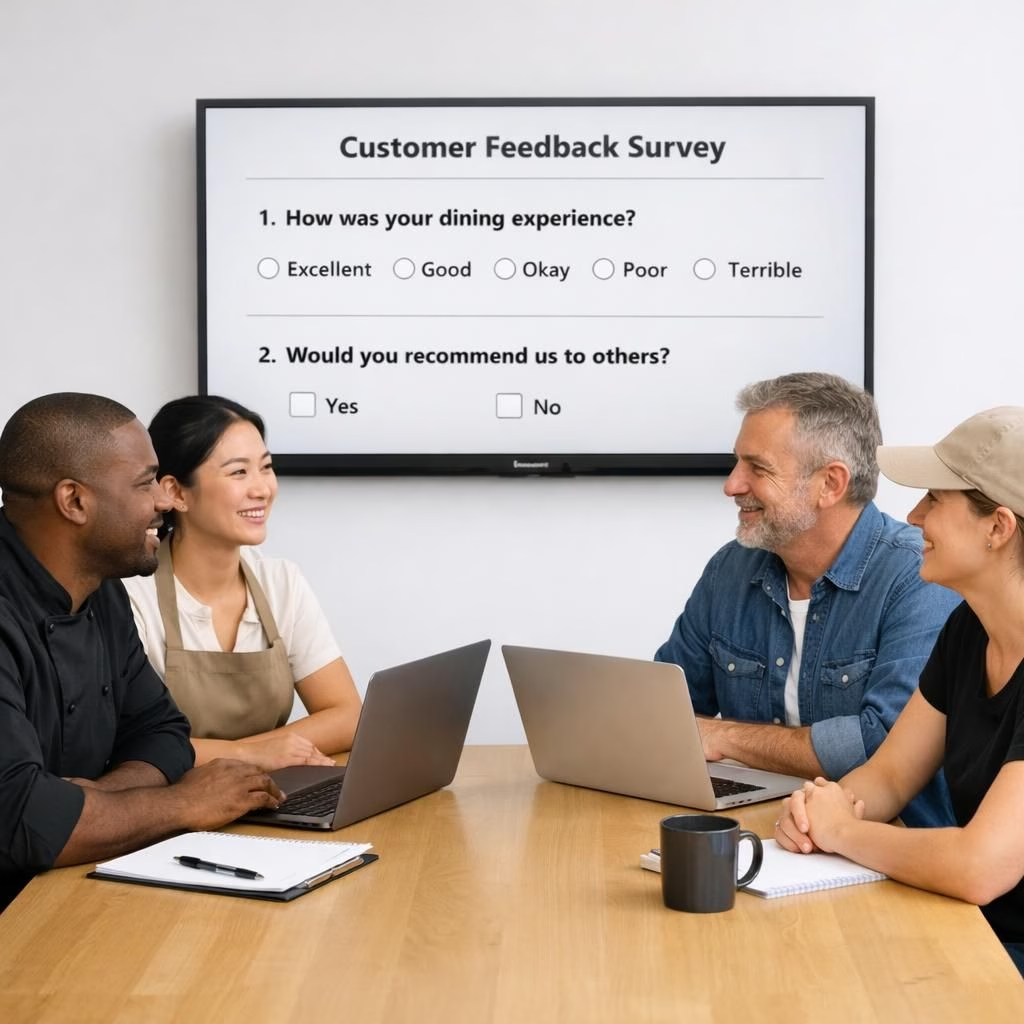
The move blends loyalty with liquidity in a way that makes competitors blink. Ovation already stitched together a small, steady revenue stream from operators who rely on its two-question feedback tool. The product is simple yet powerful: a quick emoji-scale survey and a thread for real-time replies with the customer. Too many companies confuse ambition with complexity; Ovation keeps it focused. The funds came not from a typical VC parade but from people who run kitchens, desks, and dining rooms. As a result, the fundraising felt less like a pitch and more like a collective promise to improve the guest experience. This is restaurant tech in its most pragmatic form: practical, observable improvement that happens when operators see their input drive real change.
Inside the customer-funded restaurant tech wave
Historically, restaurant tech funding leans on outside capital that wants scale fast. This time, operators stepped forward with sizable checks, sometimes surprising even the CEO. The rounds grew beyond expectations: some investors offered $100,000, some even millions, and the plan changed from a tight insider round to something bigger. Zack Oates notes that he declined some offers to keep control balanced and sustainable. The investors are not nameless angels; they are peers who use Ovation daily and expect a good return as a byproduct of better service. The move shows a unique blend of customer-driven finance with hands-on industry insight, a combination that tends to tighten the feedback loop between product and practice.
Elevated Inc.’s Cheba Hut chain has been using Ovation for years. Archer says the value isn’t merely in the product’s features but in the feedback loop itself. The two-question survey and emoji ratings provide a quick read on guest sentiment, while the real-time texting lets operators acknowledge a complaint or celebrate a win immediately. In a world where online orders rise, adding a direct line to guests helps brands adapt fast and stay human. Last year, Ovation was named partner of the year by Cheba Hut, a nod that helped convert curiosity into investment. This isn’t simply software; it’s a live conversation between brand and guest, facilitated by a thoughtful restaurant tech stack.
For Archer, putting money where his mouth is felt like a necessary test of conviction. He believes the concept could help many operators develop better products while ensuring the software has a fighting chance at long-term success. Oates describes the round as the highest honor since founding Ovation nearly a decade ago. It is also a bit daunting to carry a portfolio of customer wealth tied to your trajectory. The pressure is real, but the upside is realer: a stronger product, a stronger brand, and a broader customer network that earns as it helps grow the business. This is the upside of a well-executed restaurant tech platform that grows with its backers, not in spite of them.
Fundamentally, the arrangement realigns incentives. Investor-operators can ask for features that benefit their brand, but they can also see if such moves help the broader customer base. The question becomes: Will the desired change produce a win for Ovation and its customers? Oates says yes if it scales responsibly and respects the core mission. “We want to win with Ovation, not just with a single brand,” he notes, underscoring the peer-to-peer vibe at the heart of the initiative. This is not a mere cash infusion; it is a collaborative blueprint shaped by practitioners who know the day-to-day realities of hospitality.
From a growth perspective, Ovation is not just talking about a bigger user count. The plan includes beefing up the revenue organization, with a chief revenue officer on board before a year of major expansion. Current user locations sit at about 8,500; the team expects 20,000 or more in the near term. The technology team has also expanded, bringing AI-savvy engineers into the mix to elevate the product’s intelligence without sacrificing simplicity. The result is a more capable platform that still speaks the language of frontline operators and guests alike. In this restaurant tech journey, growth is paired with governance, a combo that keeps product quality front and center.
Ovation’s management emphasizes that the customer-led funding does not mean a free-for-all. It’s a disciplined approach that preserves product quality and company health. The investors’ practical feedback often mirrors what a restaurant tech franchise owner would ask for in a quarterly call: “Does this help us improve the guest experience today, and does it scale to many locations tomorrow?” The answer, when measured in real-world outcomes, appears to be a cautious yes with plenty of room for improvement. This is how restaurant tech matures: with steady, purposeful bets that respect the craft and the business alike.
There is risk in any model that makes customers financial stakeholders. The dynamics could erode if expectations outrun reality or if a few loud voices overwhelm the broader good. Oates answers this concern with a simple premise: the round remains grounded in a shared purpose. It’s less about power and more about partnership. The team tries to keep expectations realistic while chasing genuine, durable growth. It’s a delicate balance, but it is one they seem eager to learn and nurture. The process demonstrates that a well-managed, restaurant tech-driven approach can become a viable pathway for restaurant tech that earns its keep.
Ultimately, Ovation’s fan-turned-investor strategy reveals how restaurant tech can mature alongside the people who use it. It’s not a gimmick; it’s a proof point that strong product-market fit can inspire unconventional funding. If the model proves durable, the industry could see more customer-driven funding rounds that pair loyalty with liquidity and align incentives toward a better guest experience.
Thanks to the original reporting for the material and insights this piece builds on.
If you enjoyed this piece, share your thoughts in the comments below. Do you think customer-funded rounds could become a broader trend in restaurant tech? Let us know your perspective and experiences.
Practical steps for brands considering a customer-funded round
- Define what operators contribute in return (ownership, governance, or revenue share) as part of a customer-funded round.
- Prepare clear expectations for reporting, decision rights, and use of funds.
- Assemble a diverse investor group of users who actively use the platform.
- Engage legal counsel to align with securities rules and avoid missteps.
- Start with a pilot group and document outcomes to attract broader participation.
FAQ about customer-funded rounds
- What is a customer-funded round? A funding round where customers invest in the company that serves them, often in exchange for equity or other terms, aligning product outcomes with investor interests.
- What are the risks for operators? Potential conflicts over priorities, liquidity expectations, and exposure to the company’s financial performance.
- Can this model work for other software? It can, but it requires clear governance, regulatory clarity, and a shared understanding of value for all stakeholders.
Takeaway: this approach shows how loyalty can translate into growth and governance, with operators shaping the roadmap as real customers of the product.
Further reading
- Technology in the restaurant industry — National Restaurant Association
- The future of digital transformation in food & retail