

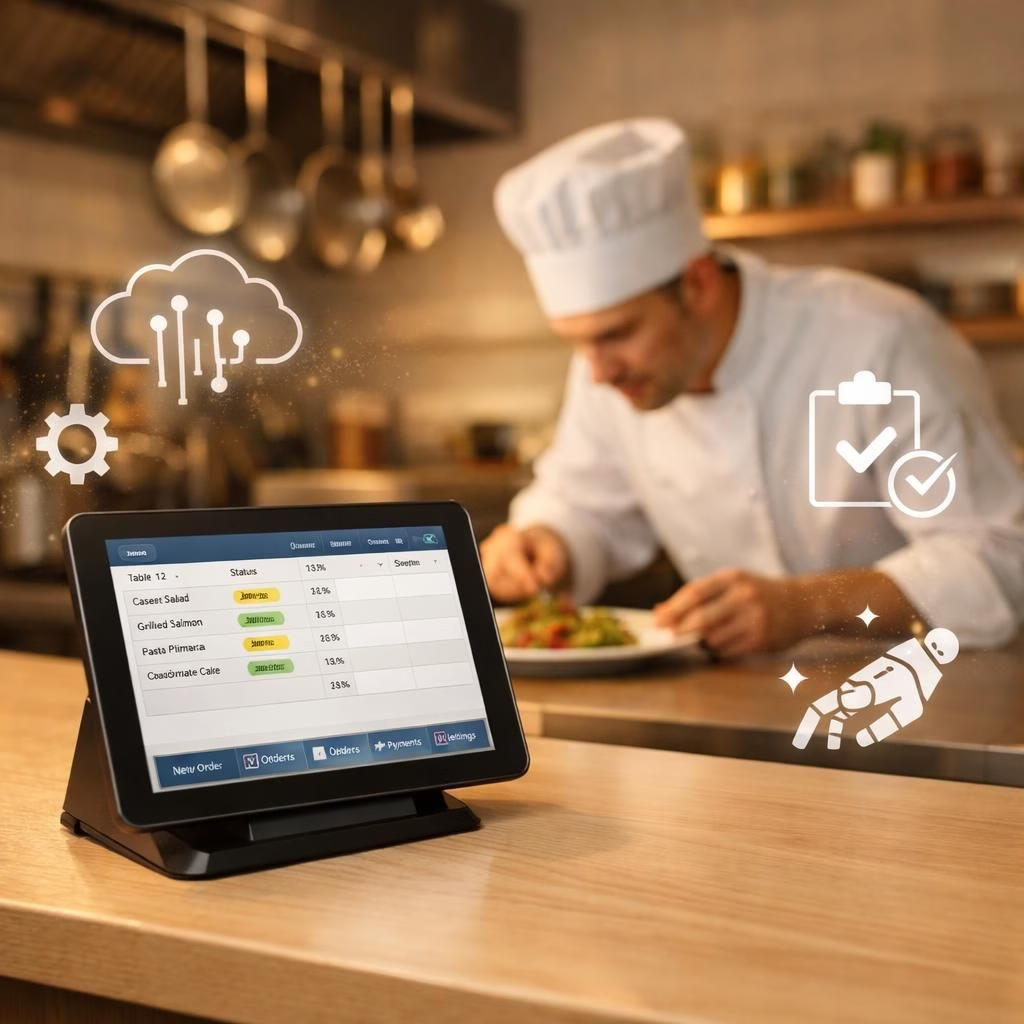
Editor’s note: This sixth and final story in a multi-part series on the state of full-service restaurants for 2026 takes a cheery, practical look at how operators balance AI and efficiency to squeeze more ROI from the same brick-and-mortar stage. The aim isn’t to chase every shiny feature; it’s about simpler workflows, reliable results, and preserving that hard-won hospitality flame even as you automate the dull parts.
Since 2020, technology flooded in like a midsummer thunderstorm. We learned that opening new channels is easier when you don’t have to explain to a weary host why a new tool isn’t speaking the same language as the existing ones. The result is a clearer map: consolidate, integrate, and pick solutions that actually deliver value without burdening staff with hours of retraining. The era of “more tools = more magic” has given way to “more rhythm = better service” and, crucially, a path to efficiency that their teams can feel in every shift.
According to TouchBistro’s survey of 600 full-service operators, 74% plan to invest more in tech over the next six months. The leaders aren’t chasing a gadget parade; they want positive ROI, consistent workflows, and tools that blend into the routine rather than disrupt it. The typical monthly tech spend held steady around $196, but the focus shifted toward outcomes—better guest experiences, faster service, and fewer misfires in the back of the house. efficiency becomes the measuring stick for value, not novelty.
In practice, operators are moving from implementation to optimization. They want to know not just what a tool can do, but how reliably it can do it on Tuesday lunch rush, Saturday night, and the holiday parade of orders. A guiding principle has emerged: consistency over customization. The idea of tailoring a single store’s tech stack to each location has lost steam. Today, 97% of multi-unit operators deploy the same system across all venues, up from 86% the year before. The ROI is not just financial; it’s operational because staff retraining becomes a routine exception rather than a rule, and efficiency gains are tangible across days that never sleep.
POS systems have become ubiquitous in the dining room, with 99% of operators using one. The focus isn’t novelty but reliability, ease of use, and predictable costs. The pace of POS change slowed; 53% flipped or bought a new system in the past year, down from 71% in 2024. Operators attribute this to a mix of satisfaction with current platforms and a reluctance to disrupt operations that keep guests seated and served. When changes do occur, the top reasons are clear: better features and functionality (60%), lower costs or fees (57%), followed by reliability (37%), ease of use (33%), and price/affordability (32%). The overall message is that efficiency comes from steady, smart upgrades rather than gadget overdoses.
Reservation tools have become nearly universal as well. About 90% of operators use some form of reservation platform to manage dining rooms, guest flow, and seating accuracy. Most operators lean toward a single provider to minimize friction and fit their workflows. OpenTable remains the most widely used option at 47%, with Eat App at 25% and TB Dine at 20%. The takeaway is simple: reservation tools are core infrastructure, not discretionary luxuries, and they set the pace for guest experience ahead of dinner service. The emphasis on efficiency through better reservations helps staff coordinate seating, kitchen pacing, and service timing without drama or drama-prone spreadsheets.
AI and efficiency: A turning point in restaurant tech
AI adoption sits in a practical middle ground: not a runaway lab experiment, but a steady partner that helps teams focus on hospitality. About 85% of operators feel positive or extremely positive about AI advances, a touch lower than 2024 but still robust. The most common use cases today are menu optimization, reservations and booking, and inventory management. AI helps adjust menus to demand, forecast stock levels, and alert teams when quantities are off the mark. The goal isn’t to replace human judgment but to give staff more reliable data and less drudgery. This is where efficiency shines: AI’s thoughtful application lightens repetitive tasks, keeping frontline staff free to engage with guests and curate memorable moments.
Where AI has room to grow reveals the human side of dining. Phone answering and voice ordering remain niche for now, indicating that many operators prefer behind-the-scenes AI to consumer-facing chatter. As costs rise and guests become more discerning, operators want to preserve human interaction at the point of impact—the moment when a smile and a well-timed recommendation can turn a meal into a memory. The best AI serves the staff, not the ego of the system, and the result is steadier operations and a warmer guest experience—an efficiency win that doesn’t feel engineered.
The big message about AI is restraint with intent. Operators don’t want tools that create more work. They want quiet AI that runs in the background, is easy to train, and yields a clear return. When AI behaves, efficiency improves and the guest experience feels effortless rather than engineered.
Beyond AI, general automation grows with fewer jitters. Automation handles routine tasks based on rules—think batch processing of orders, payroll tasks, and invoicing. Online ordering automation rose to 68% adoption from 57% year over year, while payroll (54%), invoicing (52%), and kitchen order routing (52%) all gained ground. The rationale is straightforward: faster service, fewer human errors, and more time for staff to attend to guests. Adoption barriers exist—reliability concerns (30%), high upfront costs (29%), and POS integration challenges (26%)—but many operators still see a favorable ROI when these hurdles are cleared and rolled out across a portfolio. This is automation working in tandem with efficiency: less busywork, more guest smiles.
In this economy of constant improvement, the best automation is the one that frees people to focus on guest-facing moments. The aim isn’t to crush hospitality under a pile of dashboards; it’s to preserve warmth while delivering consistency and predictability. Operators report that automation’s biggest benefits are faster service, time saved, higher sales, and happier guests. The numbers aren’t the punchline; they’re the proof that practical AI plus practical efficiency can coexist without turning a bustling restaurant into a control room.
So what does this mean on the floor and in the kitchen? It means you can keep your human touch where it matters while outsourcing the repetitive tasks to reliable automation. It means a single, clean workflow across venues, with a POS, a reservation system, and AI-backed inventory all singing from the same sheet. It means leaders can breathe a little easier knowing that the throughput is steady, the data is cleaner, and the team isn’t buried in friction. The future of full-service restaurant technology isn’t about chasing every new capability; it’s about delivering better service, consistently, with a lighter cognitive load on staff and managers alike. This is how efficiency and AI can dance together without stepping on anyone’s toes.
As the year unfolds, operators will keep refining their approach. The goal remains simple, even if the tech looks fancy: faster service, better guest experiences, and a workforce that can focus on hospitality rather than wrestling with rogue screens and rogue alerts. The trend lines point to more predictive analytics, more seamless integrations, and a steady drumbeat of ROI-focused improvements that are easy to learn and harder to forget. efficiency will likely continue to shape the rhythm of full-service restaurants in 2026, guiding operators toward steadier results without sacrificing warmth.
We’d love to hear how AI and efficiency show up in your own venues. Which automations surprised you with tangible ROI? Which flows did you simplify without losing warmth? Share your experiences in the comments, and let’s compare notes from 2026 and beyond.
Original article: TouchBistro’s 600 Full-Service Operators Survey (2025). Thank you to TouchBistro for the original material and insights that informed this discussion.
Practical steps to boost AI-backed efficiency
- Audit workflows to identify repetitive tasks that can be automated, freeing staff for guest interactions.
- Standardize the tech stack across all locations to reduce training time and data drift.
- Implement AI-driven inventory alerts to cut stockouts and waste, with frontline teams empowered to adjust orders quickly.
- Roll out a staged, metrics-driven plan with simple retraining paths and clear milestones.
FAQ
-
Q: How can AI lift staffing without reducing jobs?
A: By handling repetitive tasks in the background, AI frees staff to focus on guest moments, training becomes routine, and teams stay agile without burning out.
-
Q: How should a operator measure ROI from AI and automation?
A: Track changes in service speed, order accuracy, guest satisfaction, and labor productivity over a 90-day window, plus recurring cost savings from reduced waste and errors.
-
Q: Where is the best place to start with automation?
A: Begin with predictable, high-volume tasks such as online ordering, payroll, and invoicing, then extend to inventory and reservations as you confirm reliability.
References
References
Original source linkback: Restaurants reach a technology turning point rooted in simplicity