

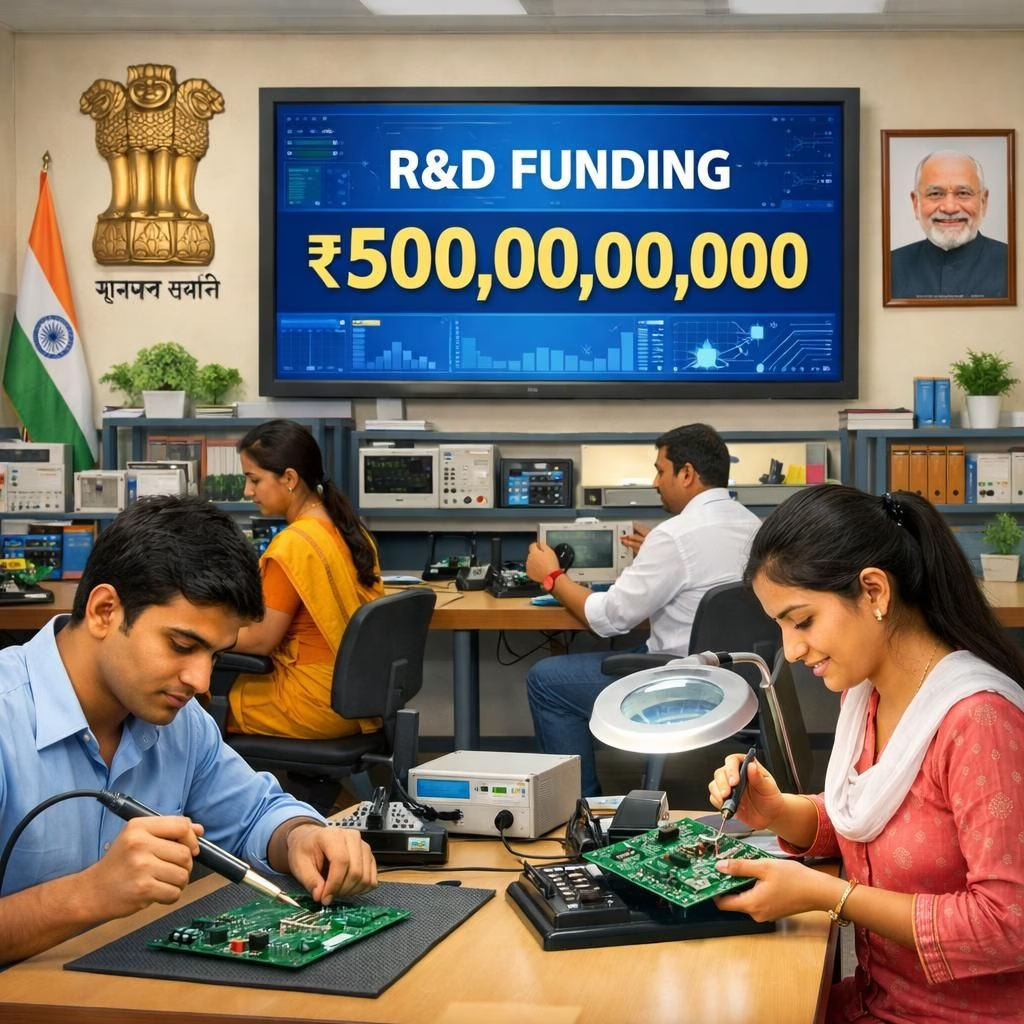
India is preparing to launch an $11 billion fund to turbocharge domestic chip design and semiconductors manufacturing. The plan, expected within two to three months, will subsidize chip design projects, manufacturing equipment, and supply-chain upgrades. It signals that Prime Minister Narendra Modi is accelerating India’s semiconductors push as part of a broader effort to turn the country into a global manufacturing hub. The Apple footprint in India—assembling a meaningful share of iPhones there—frames this move as more than policy chatter; it is a practical blueprint with real economic heft.
For readers who track policy as closely as processors track heat, the Bloomberg report underscores a global trend: nations pour resources into semiconductors to secure supply chains and meet rising demand across AI, mobile devices, cars, and gadgets. The India plan aims to mirror large-scale incentives that have moved chips from sketches to silicon. It borrows playbooks from around the world, including the U.S. CHIPS Act in spirit, and even draws on China’s state-backed investment logic. The goal is simple: India should produce more of the chips it uses, and build a strong chip industry.
chip momentum and subsidies: a 2026 milestone
The new fund complements India’s $10 billion program launched in 2021, which subsidized up to half the cost of setting up chip projects. The continuity matters: policy stability attracts serious players who want predictable incentives. Early results included Micron’s Gujarat facility and Tata Group’s fabrication and packaging unit in the same state, with Foxconn’s test and assembly venture following suit. These wins show that the chip journey is real, not a forecast. The plan broadens the subsidy scope to cover chip design activities, factory upgrades, and supply chains, aiming for resilience across the ecosystem. Investors gain a clearer path that reduces risk and speeds up timelines.
The government’s broader ambition is to push India toward more sophisticated semiconductors, not just easier-to-mraft lines. Technology Minister Ashwini Vaishnaw has articulated a target to reach chipmaking capabilities that compare with leaders such as Taiwan, South Korea, and the United States by 2032. Reaching that milestone will require funding plus a steady stream of talent, research collaboration, and a regulatory environment that reduces friction for manufacturers. In short, the chip journey is a marathon, not a sprint, but the starting blocks are set and the race is officially on. A strong chip ecosystem also hinges on robust equipment suppliers and local engineering talent.
semiconductors: learning from global playbooks
Global peers have shown that strategic subsidies can accelerate domestic ecosystems when paired with a clear industrial policy. India’s plan aims to attract not just assembly jobs but the entire value chain: design, materials, equipment, and packaging. The emphasis on supply chain development addresses a persistent risk—over-reliance on external suppliers for critical components—by encouraging local suppliers and regional hubs that can weather trade tensions and market swings. The result could be a more resilient Indian semiconductors ecosystem that supports mobile devices, AI accelerators, automotive systems, and enterprise compute platforms. The rhetoric aims to turn India into a hub where chipmakers see a future in a familiar neighbor of suppliers and engineers, not a distant outpost facing unpredictable import flows.
As the world adapts to faster AI cycles, the need for reliable semiconductors supply looks less like a luxury and more like a necessity. The Bloomberg report frames India as an active participant in this global reshuffle, with subsidies designed to lower entry barriers for new players and to encourage refinements in design and manufacturing pipelines. This is not mere handholding; it’s a structural nudge toward creating an environment where chip design teams can collaborate with fabrication facilities, test labs, and packaging houses in a virtuous circle that reduces time-to-market and improves yield. In practical terms, the emphasis on a robust supply chain translates into fewer bottlenecks when demand surges for devices across various sectors, from education to energy to everyday consumer tech.
building on past incentives: real companies, real footprints
The 2021 $10 billion program laid down a practical foundation: subsidies, project-specific incentives, and a signal that India could be a serious partner for global chipmakers. Micron’s Gujarat project, Tata’s fabrication and packaging unit, and Foxconn’s test and assembly initiative are not just line items on a policy page; they are on-the-ground signals that the plan is working. The current push expands the scope—from ensuring basic chip fabrication to spurring the development of a homegrown ecosystem capable of handling higher-end process nodes and more complex designs. This pragmatic approach starts with building blocks and adds advanced capabilities as the ecosystem matures.
Industry observers note that the journey toward advanced semiconductors requires more than money. It requires talent pipelines, academic-industry collaboration, a steady supply of specialized equipment, and a regulatory environment that minimizes friction for long-term capital investments. India’s strategy, if executed with discipline, could gradually reduce the knowledge-and-capital gap with leading hubs. And if the Apple story in India serves as a compass, the domestic market can anchor the global supply chain, attracting more companies to locate design and manufacturing activities in country-friendly locations and time zones.
toward advanced chips and a 2032 horizon
The pivot toward more sophisticated semiconductors will not happen overnight. It will require patient, consistent policy, upgrades to infrastructure, and a workforce adept at new fabrication techniques and design software. The 2032 target is ambitious, but the logic is straightforward: establish a robust ecosystem that can compete for high-value work and maintain resilience in the face of global demand fluctuations. For India, a mature chip sector will rely on subsidies, talent development, and global partnerships, with design activities expanding alongside more advanced wafer fabrication and packaging.
Amid this push, the political leadership remains mindful of realistic expectations. The goal is not a quick fix but a sustainable upgrade to the country’s technological backbone. If successful, this initiative could help reduce import dependence, spur local innovation, and create high-skilled jobs. The broader economic narrative is optimistic: a country that historically excelled at services can turn its engineering prowess toward hardware that powers the future. The synergy between policy, industry, and education will determine how quickly India can climb the semiconductor value chain, and the signals so far suggest a thoughtful, ambitious, and well-calibrated ascent.
outlook, challenges, and practical implications
Like any large-scale industrial push, the India chip and semiconductors agenda faces challenges that test resolve and timing. Talent acquisition and retention will be central, as engineers, process technologists, and equipment specialists are in high demand globally. Regulatory clarity, ease of doing business, and predictable fiscal incentives will help sustain investment over the long term. Execution matters: milestones, audits, and transparent reporting will build trust with investors and partners. If the government pairs cash with clarity and a clear pathway to advanced fabrication, India’s chip story could move from aspirational headlines to measurable, multi-year outcomes.
As the ecosystem expands, expect a broader collaboration network to emerge—universities, start-ups, multinational corporations, and regional suppliers all playing synchronized roles. This is not just about a fund; it is about forging an integrated national semiconductors capability. With the right mix of policy support, private sector dynamism, and engineering talent, India can translate the current momentum into enduring capability that serves both local needs and global demand.
We invite you to share your thoughts in the comments. Original article and thanks: Bloomberg for the initial reporting and framework that sparked this thoughtful update on India’s semiconductors journey in 2026.