

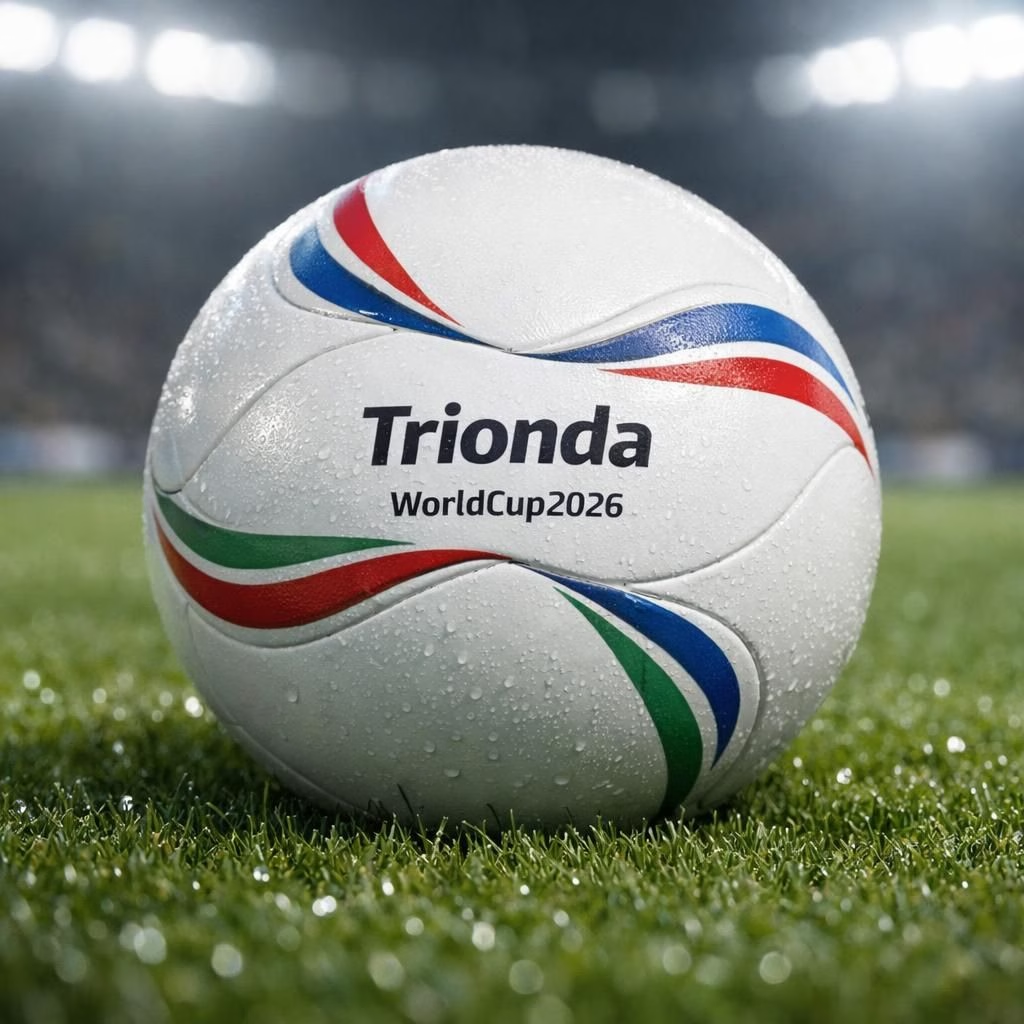
Trionda lands on the WorldCup2026 stage with a wink and a whirr. The ball pays homage to three host nations while promising smarter officiating and more consistent play. In this guide, we unpack the tech, the design, and the implications for players, referees, and fans alike.
Trionda in WorldCup2026: What It Is and Why It Matters
First, let’s name what we’re dealing with. Trionda is Adidas’ new match ball for the 2026 tournament. It carries a side-mounted chip system, not a body-wide sensor. The upgrade is deliberate, not a gimmick. The name itself translates to three waves, a nod to Canada, Mexico, and the United States sharing the hosting duties.
The external look follows the three-nation theme with a four-panel layout that connects to a central triangle. Engineers designed the geometry to emphasize unity while keeping the ball stable in flight. Engineers use a thermal bonding process to join the panels, which reduces water uptake and keeps performance steady in rain or dew. That keeps it predictable during long matches on slick surfaces.
WorldCup2026 Officiating Edge: How the Ball Helps VAR
Inside lies a 500Hz inertial measurement unit (IMU) motion sensor chip, built with Kinexon. The sensor samples movement five hundred times per second. It captures speed, spin, and direction with impressive granularity. The data streams to the Video Assistant Referee (VAR) in real time. That data allows two main wins for officiating.
First, offside calls speed up. When combined with player-tracking cameras, the chip clock can identify the exact kick moment. That precision helps VAR catch close decisions faster and reduces delay. Second, touch recognition helps determine who touched the ball last. This reduces time spent on shoulder-to-shoulder disputes and handball checks in crowded zones near the goal.
For fans, this WorldCup2026 officiating edge brings greater clarity without slowing the game.
Aerodynamics and Exterior Design
The Trionda exterior is a technical feat with a simple look. The four-panel construction forms a triangle at the center, symbolizing the three host nations. The geometry isn’t just a design flourish; it guides air flow and reduces water uptake with thermal bonding. The result is a ball that feels steady in the air, even in damp conditions.
The surface wears a polyurethane skin over a durable butyl bladder. The skin helps keep air pressure through 90 minutes of action. Embossed icons on the surface give extra grip when conditions are humid or wet. You don’t notice them at first glance, but players notice when the humidity spikes.
Design Notes: Playability and Practical Questions
Does placing the electronics inside affect how the ball behaves? Yes, it changes the balance slightly. Adidas included counter-balances across the other panels to keep balance, spin, and flight close to traditional balls. The team preps each Trionda with a charge before a match. A charged ball is a non-starter, so technicians ensure it is ready and powered.
With Kinexon’s system, teams gain more than just data. Referees get a clearer picture of on-ball events. The goal is to improve fairness and reduce controversial decisions. In practice, the result should feel seamless to players who trust the ball as much as their footwork.
From a fan’s view, the WorldCup2026 tech brings clarity without turning every kick into a data download. It’s about better decisions, not micromanagement. It’s about keeping the spectacle intact while adding a layer of precision. And yes, the ball still feels like a ball when it’s in motion.
Practical Takeaways for Teams and Fans
Coaches can plan games with more confidence. Players learn the ball’s quirks and how the off-center chip might affect kicks and passes. The improved consistency helps teams develop set plays and training routines. And fans get faster, more reliable VAR decisions without slowing down the pace of play.
Economically, Trionda is a statement product. It blends a symbolic design with cutting-edge sensors. Adidas shows that sports tech can be both meaningful and practical. The ball isn’t just a prop; it’s a platform for smarter officiating and smarter play.
To keep the article practical, we’ve focused on real-world implications: balance, flight stability, and how data flows to VAR. The system emphasizes reliability and predictability, not showmanship for the data nerds. The goal is a better game experience for everybody involved.
In short, Trionda marks a new era for the WorldCup2026 era. It shows how engineering and sport can cooperate for better decisions and better play. It is as much a piece of sports hardware as a statement about how we referee big tournaments.
Notes on Maintenance and Usage
Chargers and technicians prepare each ball before kickoff. The 500Hz IMU chip needs power, and the system is designed for rapid recharging between matches. Teams should handle the ball carefully to avoid damage in transit; the electronics demand gentle treatment when it’s packed in gear bags. The four-panel design makes the ball both light and robust, with deep seams that help in high-speed flight.
Adidas’ approach balances innovation with the familiar feel players expect. The result should encourage experimentation without undermining the trust players have in the ball. This is sport engineering at a scale that matters for refereeing, coaching, and the fans in the stands.
Original article: FIFA World Cup 2026 Ball Tech Overview. Thank you for the original source material.
Trionda in practice for players
Players may notice a balance shift at first, but counter-balances keep flight close to familiar ground. Technicians ensure each ball is charged and ready for kickoff to maintain reliability in the heat of play.
FAQ
- What is Trionda?
Adidas’ new match ball for 2026, featuring a side-mounted chip and an advanced IMU sensor partnered with Kinexon.
- How does it help VAR?
Real-time ball data supports offside timing and last-touch recognition, speeding up decisions and reducing ambiguity.
- Does the electronics change how the ball feels?
There is a small balance shift, but counter-balances are designed to preserve a traditional feel for players.
- How is the ball powered?
Each ball is charged prior to use; technicians verify power levels to ensure readiness for 90 minutes of action.