

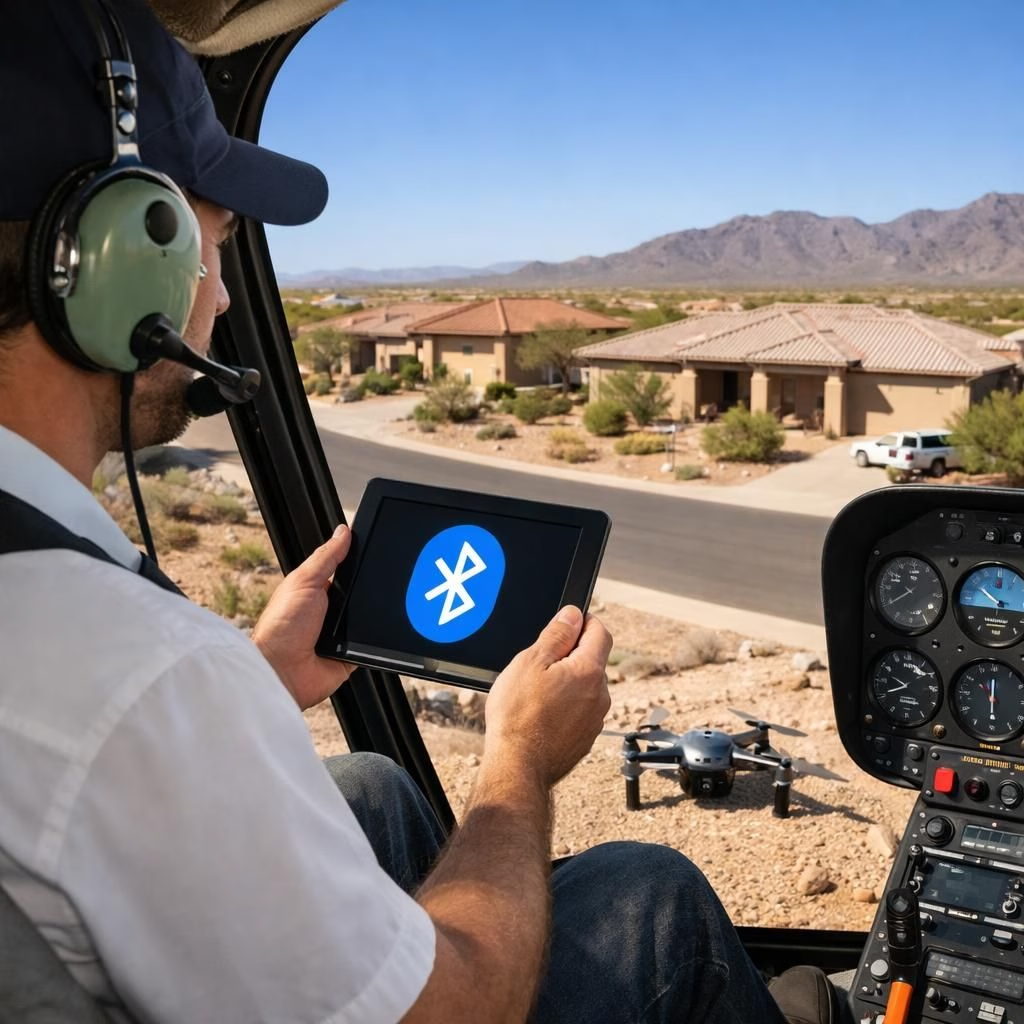
In 2026, the Tucson missing-person case blends gadget optimism with fieldwork grit. A helicopter carries a BLE beacon and a signal sniffer that listens for Bluetooth Low Energy pings from Guthrie’s pacemaker. The pings arrive every two to three minutes, offering a steady breadcrumb rather than a hunt for a single trail. This approach is practical, not sci fi: it relies on solid radio basics, careful choreography, and good old fashioned teamwork. The story shows how a modern toolkit can aid the persistent human effort at the heart of every missing-person case.
BLE Boosts Tucson Search: the signal sniffer in action
The device is mounted on a helicopter and watches Guthrie’s pacemaker signals. BLE, shortened for Bluetooth Low Energy, is designed to sip power while transmitting small bursts. The device can pick up pings every two to three minutes, giving investigators a moving beacon to follow as conditions allow. The setup feels practical: air support plus portable sensors that turn scattered clues into directions.
Experts note the basic range sits around 10 to 15 feet; with clever amplification and high gain antennas, the range can expand to hundreds of feet. That jump in reach matters: it means crews can cover larger swaths of ground more quickly and keep the signal sniffer working even when buildings or terrain block direct lines of sight.
David Kennedy, a former NSA hacker who helped bring the device into this case, explains that his tests used a drone and off the shelf parts to push detection out to roughly 800 feet. He emphasizes that using drones or helicopters is about speed and scale: a broader net lets investigators narrow down the probable area faster, then zoom in on the actual signal sniffer with handheld devices and ground teams.
signal sniffer magic: amplifiers, drones, and coverage
The pacemaker beacon emits every two to three minutes, and a signal sniffer can capture it to guide response teams. From there responders can stitch a path on Guthrie’s phone or a linked map, then steer resources to the most promising zones. The idea is to shift from broad sweeps to data guided sweeps, a small but meaningful upgrade in a long running search. In practice, a drone or car can carry the sniffer without causing metal or concrete structures to jam the signal. The drone route is more efficient, since it can leap over obstacles and cover fresh ground faster than a ground vehicle would.
Officials acknowledge this capability is new, and building the necessary infrastructure will take time. They envision dozens of drones in the air over wide areas, working in concert and feeding live location data to a central command. The result is not a silver bullet, but a significantly faster way to track a moving beacon and shrink the search radius from days to hours. In short, the technology offers a practical complement to boots on the ground rather than a replacement for human investigators.
Practical takeaways and what to watch next
For readers, the key takeaway is how the blend of BLE and the signal sniffer can expand coverage without draining resources. The 10 to 15 foot norm is historical; the modern toolkit uses amplifiers, drones, and high gain antennas to extend that reach. Importantly, the approach relies on careful planning and coordination with air and ground teams, not just gadgets. The success depends on staffing, drone operator availability, and the ability to process incoming signals quickly. If properly coordinated, a few drones versus a handful of ground teams can dramatically shorten the time needed to pin down a probable location, which matters when every minute counts in a disappearance case.
Beyond this case, the technique could become part of standard practice for similar searches. Agencies may publish best practice guidelines that balance investigative gains with privacy and safety concerns. As technology evolves, we might see smarter filters, better battery life, and even smaller hardware that can ride in a car trunk or a backpack, ready to deploy when a beacon is detected. And while the picture is still unfolding, the story in 2026 shows how mix and match tools can turn a long, uncertain search into a sequence of informed decisions rather than hopeful guesses.
We invite you to share your thoughts in the comments below.
FAQs
- What is BLE and how does it help in missing-person cases?
- BLE stands for Bluetooth Low Energy, a power-efficient wireless standard used by many medical devices and trackers. In missing-person searches, BLE can emit regular signals that responders can detect from the air or ground to approximate a beacon’s location.
- What is a signal sniffer and how does it work?
- A signal sniffer is a device that detects Bluetooth transmissions and converts them into usable location data for investigators. It can operate on drones, helicopters, or vehicles to build a moving picture of where a beacon has been.
- Are these technologies widely used by authorities?
- New tools like the signal sniffer are being tested and gradually integrated with traditional search methods. Deployment depends on resources, training, and privacy considerations.
- What about privacy and safety?
- As with any surveillance technology, privacy and safety are essential. Agencies typically publish guidelines to balance investigative benefits with civil rights and public safety concerns.
Conclusion: takeaways and next steps
The Tucson case demonstrates how a careful blend of BLE and targeted sensing can complement boots-on-the-ground searches. The takeaway is simple: technology accelerates careful human work without replacing it. As agencies refine protocols, we can expect smarter filters, longer battery life, and more portable hardware ready to deploy when a beacon is detected.