

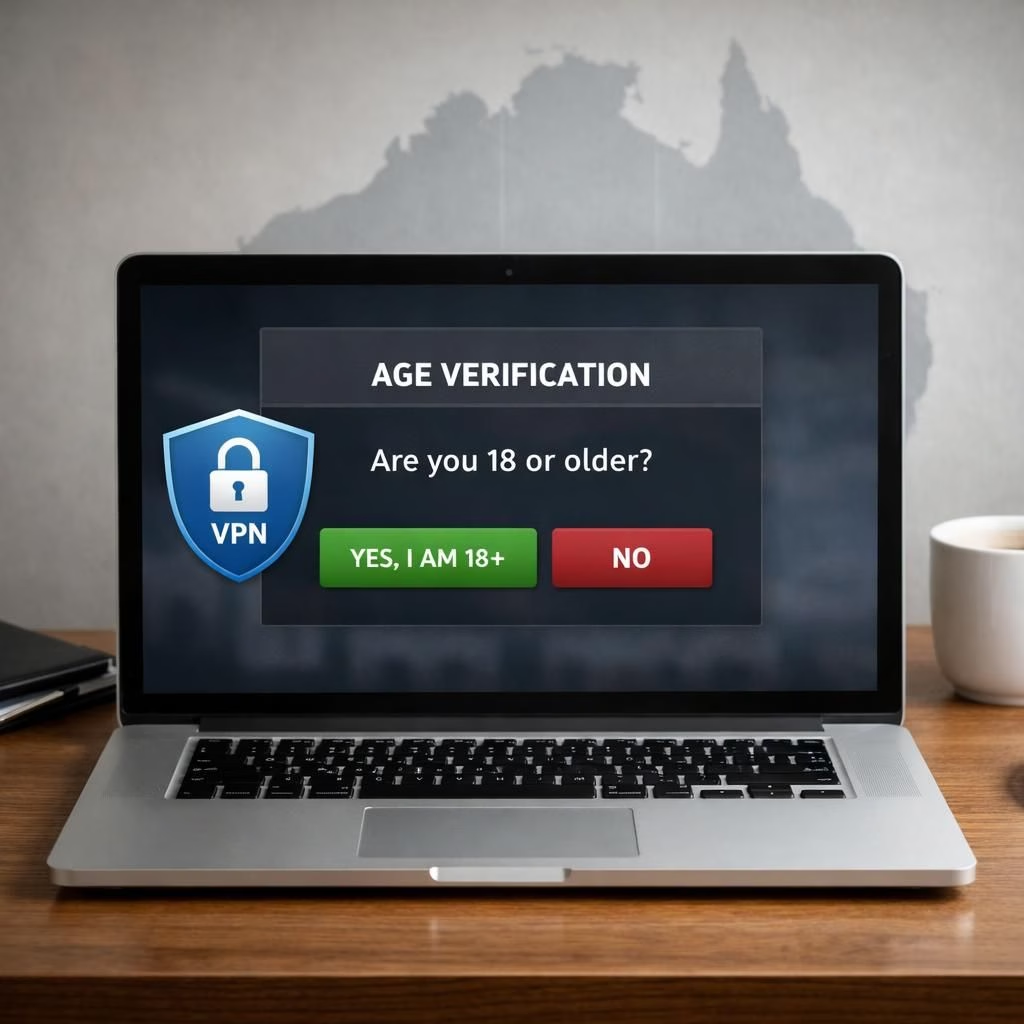
Australia sits at the center of a bold, noisy shift in online safety, and VPN enthusiasts are quietly cheering the implementation while regulators stand guard. The package aims to shield minors online, deploying AI chatbots and app age checks to bar access to pornography, extreme violence, and self-harm content. Noncompliance could trigger fines up to A$49.5 million, a figure that makes corporate lawyers blink and parents breathe a sigh of cautious relief. The move aligns with parallel steps in the UK, France, and several US states, pushing websites to verify the user is over 18 and forcing app stores to enforce age gates. In essence, the goal is to translate real-world protections—absent at the bar or casino—into the digital realm, where the screen has become the new threshold. For VPN advocacy circles, this adds a new layer of context to the ongoing debate about online privacy and access.
Australia and VPN: A Safety-First Digital Reboot
Australia’s age-verification drive frames itself as a public-safety reboot for the internet. E-Safety Commissioner Julie Inman Grant framed it as closing a decades-old gap: a child cannot walk into a bar or casino, so the digital world should mirror that standard. The policy requires AI chatbots to screen content and denies access to porn, extreme violence, and self-harm or eating-disorder material for anyone under 18. It also extends to app stores, with 18+ labeled apps requiring age gates before download. The practical effect is a shield that aims to reduce exposure without turning every click into a compliance quiz. Firms will face fines if they fail to comply, nudging the market toward clearer rules and predictable enforcement. For the Australia tech scene, this is a test of whether protection and freedom can coexist online, with the VPN and privacy advocates watching closely.
VPN Barriers in Australia: Real-World Effects
On the ground, the policy has led to genuine shifts in how people browse and access content. Aylo, the Canada-based owner of several big porn sites, began blocking Australian users. A banner greets Australians who visit RedTube or YouPorn, saying the platforms are not currently accepting new account registrations in your region. Aylo stated that access was restricted in multiple locations, including the UK, France, and various US states, due to what it calls ineffective and haphazard age-verification laws elsewhere. The result is a mixed reality: minors may be better shielded, but adults face a patchwork of regional rules and friction. For readers, this highlights the broader tension between national policy and global platforms, where a VPN can feel like a tool or a loophole depending on the moment.
Original reporting and inspiration: Reuters. Thank you for the original material that helped shape these insights.
In short, the Australia
What this means for everyday users
- Expect tighter age checks on sites that host adult content or extreme material. If a site cannot verify age reliably, access may be blocked by design.
- When downloading apps labeled 18+, you’ll encounter age gates in the app store before you can install them.
- Privacy-focused tools like VPN services may experience more friction as platforms implement stricter verification measures. If you rely on a VPN to browse, be prepared for occasional blocks or prompts to verify identity.
- For families and guardians, this is an important moment to discuss online safety, setting boundaries, and understanding how providers enforce rules across borders.
Frequently Asked Questions
- What changed in Australia? Age verification is now required for some online content and for 18+ apps. AI-powered chatbots must screen content to block minors from accessing pornography, extreme violence, and self-harm or eating-disorder material.
- Are there penalties? Yes. Noncompliance can lead to fines of up to A$49.5 million, underscoring how seriously regulators view online protections for minors.
- Will VPN services be banned? No outright ban is described, but privacy tools may face greater scrutiny as platforms enforce age gates and verify user ages.
- How does this affect privacy and cross-border platforms? Platforms must balance local rules with global reach. Some sites have started restricting access in Australia to comply with stricter verification requirements.
Takeaway and next steps
The Australia-VPN story is still evolving. Authorities aim to strengthen protections for young users while prompting platforms to be more explicit about age verification. For readers, the practical takeaway is to stay informed about which sites and apps enforce age gates, and to understand how VPN tools fit into a privacy-conscious browsing strategy. As enforcement unfolds, expect more guidance from regulators and more clear policies from platforms and app stores.
References
- Reuters — Australia’s age restrictions for minors
- Australian eSafety Commission
- Times of India — original source material