

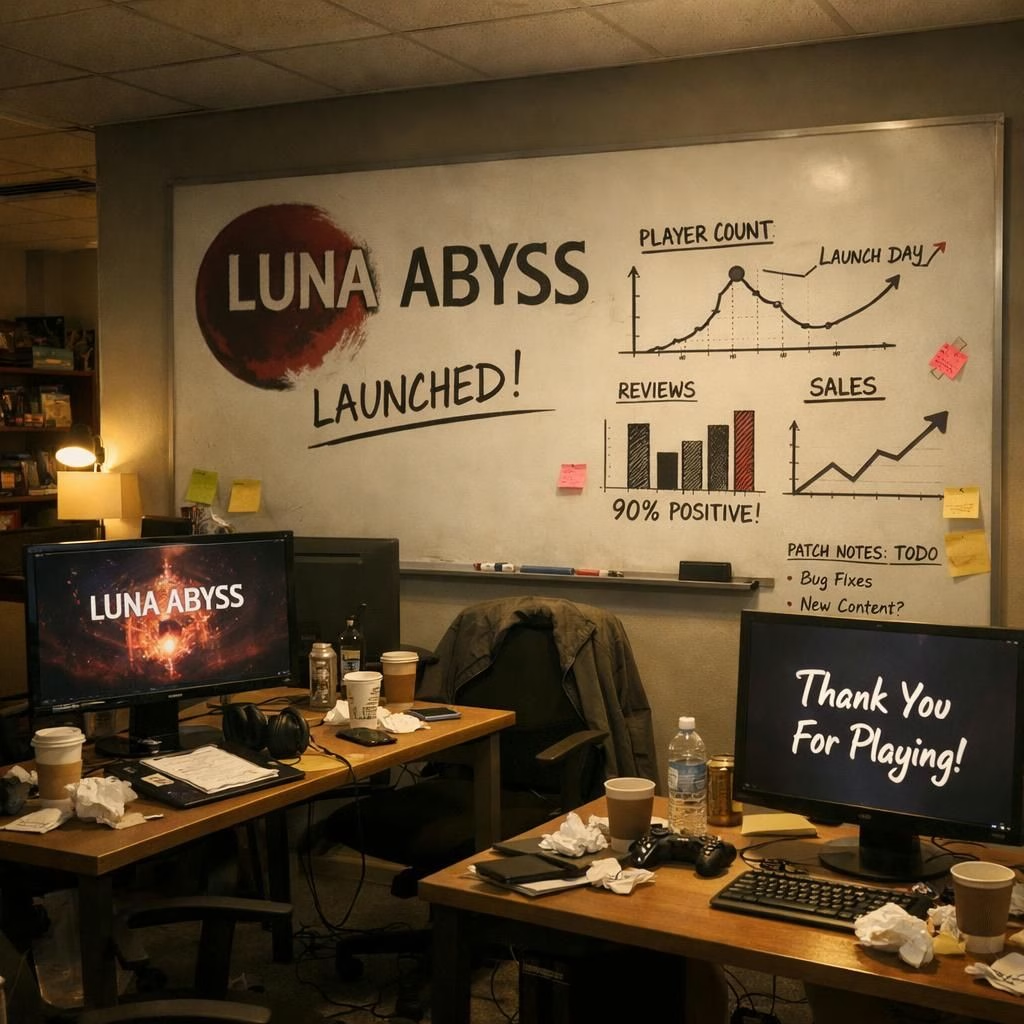
Weeks after Luna Abyss launched, Kwalee Labs shocked the industry by laying off the entire development team. The move hit like a well-timed punchline in a serious meeting—a reminder that a big splash can come with a sharper cost. The launch itself felt like a victory lap: trailers sparkled, streams buzzed, and press chatter hummed with optimism. Then the receipts arrived. This is not a morality tale about corporate cruelty; it is a practical snapshot of how studios balance ambition with cash flow. People poured months, sometimes years, into art, code, and puzzles, only to face a horizon that shifted as soon as the credits rolled. The tale isn’t merely grim; it’s a data point in the ongoing experiment of modern game development. Luna Abyss became a case study in momentum, risk, and the delicate balance between creative risk and fiscal discipline. Kwalee Labs turned a triumphant launch into a serious lesson about staffing, forecasts, and the stubborn arithmetic of a sustainable business model.
Luna Abyss: Afterglow, Risks, and Real Costs
Shortly after the glow faded, the numbers told the story: user engagement plateaued earlier than hoped, forecasts slipped, and the burn rate rose as ongoing costs persisted. Kwalee Labs attracted attention, but attention alone does not pay rent. The marketing push that drove the launch can become a heavy cost center if not matched with durable revenue streams. The design and engineering teams faced pressure to patch and polish while simultaneously plotting the next wave of content. In practice, post-launch life means balancing live operations with a backlog that never fully clears. The sudden absence of the original team creates a void not only in code, but in memory, mentorship, and studio culture. Still, there is a silver lining: such events force sharper prioritization, clearer roadmaps, and a renewed focus on modular design, robust QA, and lean production workflows. The practical takeaway is straightforward for managers and players alike: celebrate the win, then plan for the follow-up with realism and restraint.
Kwalee Labs: Pivot, Finance, and The Hard Lessons
Kwalee Labs isn’t the villain; it is the other character in a difficult industry drama. The leadership team faced the pressure of performance metrics, investor confidence, and a credible path to profitability after the initial splash. The layoffs reflect a portfolio strategy: a studio bets big on a handful of titles, and if the crown jewel underperforms, adjustments follow. This isn’t a victory montage; it’s a reminder that growth capital has cycles and that human costs ride along. The company may shift talent toward live service development, data-driven decision making, or outsourcing where appropriate, but the core aim remains: build durable products that can weather the quiet between updates. The hard truth is that a successful launch does not guarantee year two. The better response is proactive planning: reserve capital for patches, empower managers to course-correct, and keep open lines of communication with the teams that carry the work forward. Kwalee Labs can emerge leaner, smarter, and more humane, with a culture that values people as much as pixels.
Ultimately, Luna Abyss still shines, and Kwalee Labs still learns.
Please share your thoughts in the comments.
Original reporting and inspiration from Game Informer. Thank you to Game Informer for the original coverage. Read here: Game Informer.
Luna Abyss: Practical steps for future launches
- Adopt a lean live-ops plan that prioritizes critical fixes and player feedback.
- Set aside a dedicated patch budget to avoid sudden firefighting costs.
- Align content cadence with revenue milestones and clear metrics.
- Document learnings to improve modular design and future updates.
Further Reading
- Reuters: Gaming cash-flow pressure
- The Verge: Gaming industry layoffs
- Harvard Business Review: Product management for the long game