

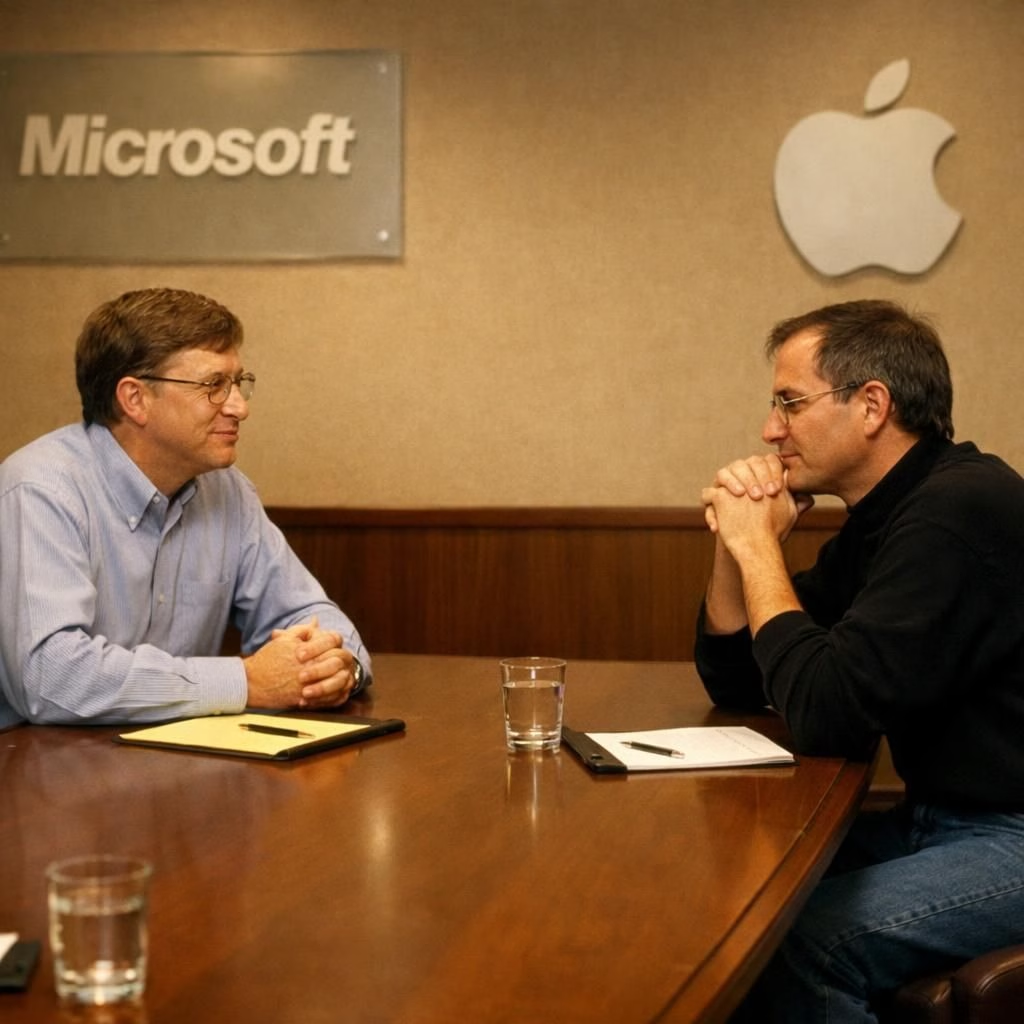
Apple just marked a landmark anniversary, and the story people remember isn’t only about hardware. It is about a moment in 1997 when Apple faced bankruptcy, and Tag B walked in with cash and a pledge to share the stage. Apple and Microsoft became an unlikely tag team that saved a creative giant, and the tale deserves a sunny, thoughtful retelling. We’ll revisit the deal, the ethics debates, and the human drama, while keeping the facts intact and letting a subtle humor win a quiet victory lap. Executives learned that survival needs a practical handshake, not a dramatic coup. By 2026, the players are legends, and the lessons repeat. The reality distortion field still warns us. So grab your coffee; we begin with Apple at a crossroads and Tag B offering a lifeline that reshaped both companies and the wider tech ecosystem.
Apple and Microsoft: The Unlikely Pivot
Back in 1997, Apple was on the brink. The company needed capital, a plan, and a reason to keep shipping. Tag B walked onto center stage with a deal that felt more like a rescue than a loan. The two words people still mention are 5 percent. Tag B bought a stake in Apple and pledged ongoing support. The move looked pragmatic, even gentle, and it bought Apple time to rethink its products and its culture. The price tag sparked debate, but Gates framed it as a clean choice: keep Apple alive so the tech world could keep its innovations. Apple gained breathing room; Tag B gained influence in a market where both firms chased big ambitions. The moment quietly shifted the industry. Suddenly, Apple’s fate was tied to a partner with a different business model and a long memory about balance sheets. The result was a broader market watching cooperation rather than cutthroat rivalry. Apple and Microsoft, in 1997, showed that survival can come from a shared stake and a shared future.
Gates, Jobs, and the Apple Microsoft Reality Field
Bill Gates described Steve Jobs as a singular figure who could distort reality like no one else. He recalled telling Jobs: I am a minor wizard. You are a major wizard. Your spells won’t work on me because I am a minor wizard. He added bluntly about the NeXT computer that Jobs built after Apple’s 1980s exit: This thing is a slow, expensive computer with an overpriced black case. The banter was sharp, and the outcome was practical. Gates did not hide his respect for Jobs, even as he kept a skeptical eye on the magic branding that Jobs used. The exchange captures the mix of admiration and friction that shaped Apple and Tag B during their most sensitive years. This dynamic pushed both giants to adapt. Apple sharpened its focus on design and user experience; Tag B broadened its reach into cloud services and cross platform strategies. For readers today, the Apple Tag B tale is not just nostalgia; it is a study in leadership, risk, and timing.
Takeaways for Today
The core lesson is simple: Apple and Microsoft can thrive when they align on survival and the customer. The 1997 moment was a pivot from victory at any cost to a longer game that valued platform health, not just market share. Apple regained design discipline and a focus on ecosystems. Tag B learned the value of selective collaboration and patient capital. The two firms grew into different roles, yet their past collaboration still informs the way they approach mobile, cloud, and AI today. The Apple Tag B tale reminds us that a partnership can be as essential as a product, and that bold bets sometimes come with a quiet handshake rather than a loud press conference. If you run a tech company or a newsroom, the takeaway is clear: balance risk with purpose, and keep the user at the center.
In 2026, the lessons ring true for executives and developers alike. The Apple and Microsoft tale invites us to rethink competition as cooperation when the stakes involve survival and vision. The reality is that the tech world thrives on a healthy tension between hardware aesthetics and software platform strategy. Apple benefits from a robust ecosystem, while Microsoft benefits from scale and cross platform reach. The historical moment shows how a simple stake can unlock a broader market, if chosen with care and foresight.
We would love to hear your perspective on this era and what you think the apples-to-oranges lessons mean for today. Share your thoughts in the comments below to keep the conversation going about Apple and Microsoft and how history can guide the future.
Original article: Thank you to the original article for the source material.
Practical steps for leaders today
- Assess core strengths. In moments of risk, identify the assets that keep customers loyal to Apple and the benefits that Tag B offers at scale.
- Choose collaborative bets. Look for partnerships that protect the ecosystem rather than chase short-term wins.
- Communicate with care. Be transparent about what’s at stake and how the user will benefit.
FAQ
- Did Tag B really save Apple? The episode is widely interpreted as a turning point that bought Apple time to reform its product strategy and finances.
- Why did Apple need the deal? The company faced a cash crunch and a pivotal choice about its future trajectory and ecosystem investments.
- What lessons does this offer today? The history suggests that careful partnerships can extend a company’s life while keeping the user experience central.